Cart
Sub-Total: $0.00
23 min read
March 17, 2026
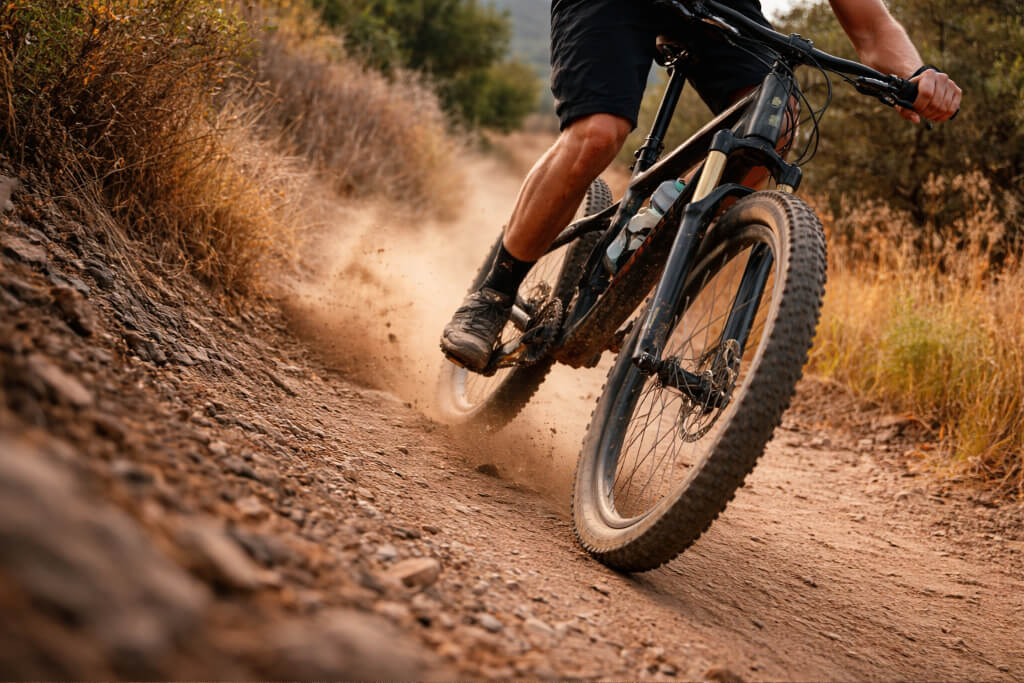
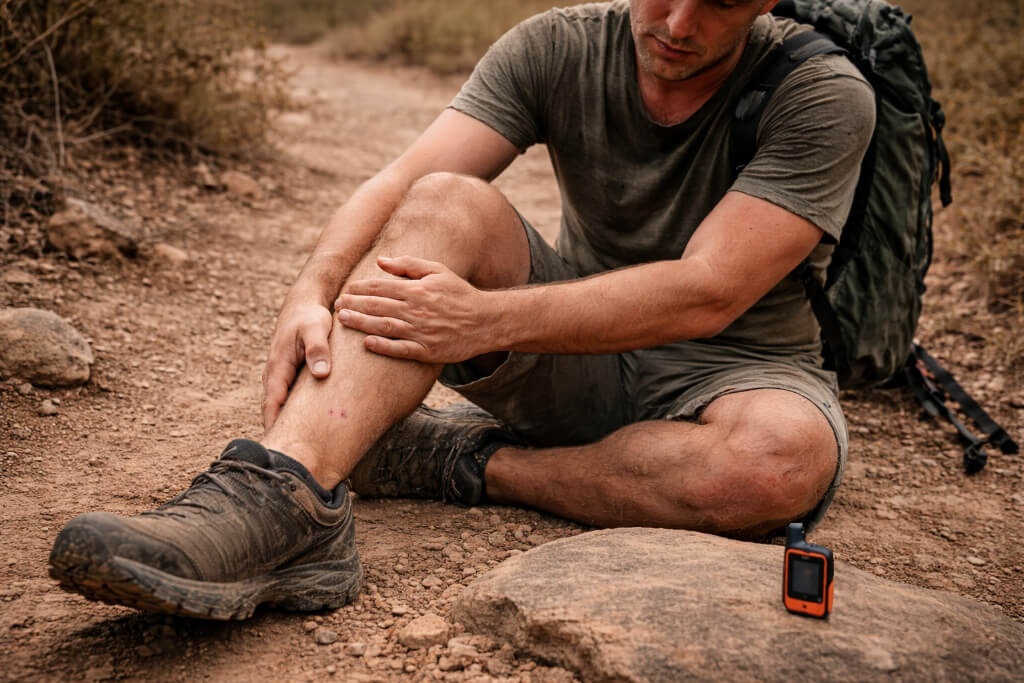
In early February 2026, 25-year-old Julian Hernandez was mountain biking in the Irvine Open Space area of Southern California, a place that many people would consider relatively safe and well-traveled. This was not some remote backcountry expedition deep in the wilderness. This was a popular trail system where people ride every day without thinking twice about the risks. At some point during his ride, Julian stopped on the trail, either to wait for a friend or adjust something on his bike. According to reports, he lost his balance and fell into nearby brush, where he was bitten by a rattlesnake on his lower leg. From everything that has been reported, he was alert immediately after the bite and attempted to get himself to medical care rather than wait.
He got back on his bike and rode out.
While exact mileage has not been clearly published, what is known is that he continued riding after the bite, which means sustained physical effort. That matters more than most people realize. He eventually made it to medical care and received antivenom. At that point, many people would assume the worst was over, but that was not the case. His condition deteriorated after arrival. He went into a coma and remained in the ICU for more than 30 days before ultimately dying on March 4. This is what makes the situation so important to understand. He survived the immediate event, made it out of the field, and still did not survive the outcome.

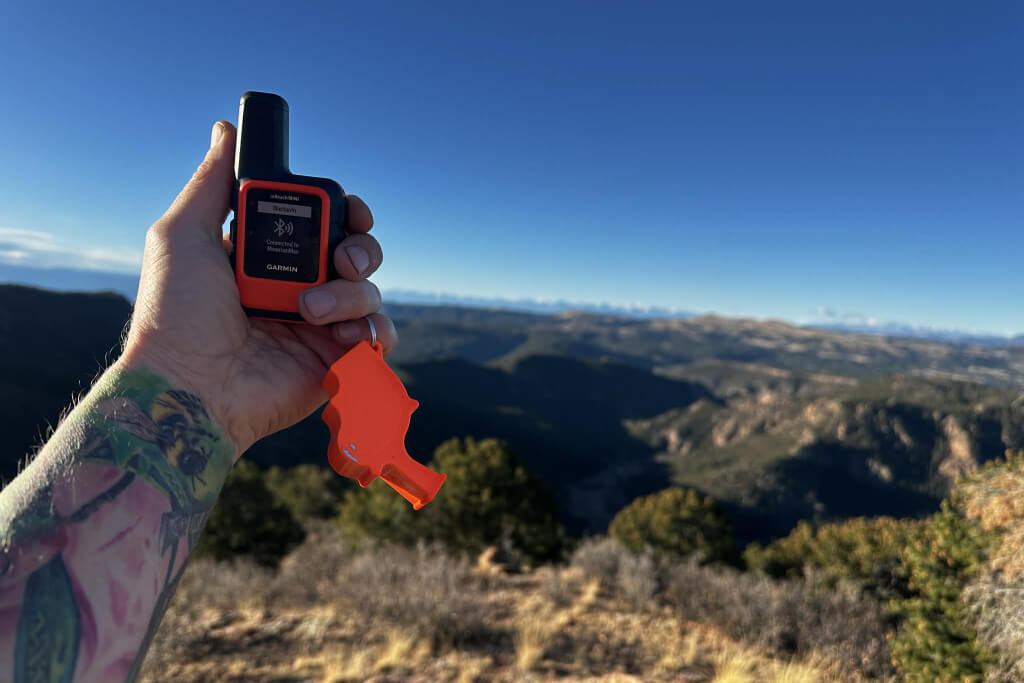
This is one of those cases where a single piece of gear may have completely altered the trajectory of what happened. If Julian had stayed where he was, limited his movement, and used a satellite communicator or personal locator beacon to call for help, the timeline likely would have looked very different. Devices like a Garmin inReach or SPOT allow you to send an SOS with your exact GPS location, even without cell service, and in many cases offer two way messaging so you can communicate directly with responders while help is on the way. That means you do not have to move. You can stay put, conserve energy, and let help come to you.
Instead of pushing his body and forcing the venom to spread faster, he could have slowed the process and allowed responders to reach him. That difference matters more than people think.
A signal device gives you options. Without one, people feel like they have no choice but to self-rescue, and that often leads to decisions made under stress that unintentionally make the situation worse. With one, you can make the hard decision to stay put, control the situation, and wait for help to come to you. In a case like this, that shift alone could be the difference between a localized envenomation and a fully systemic one.
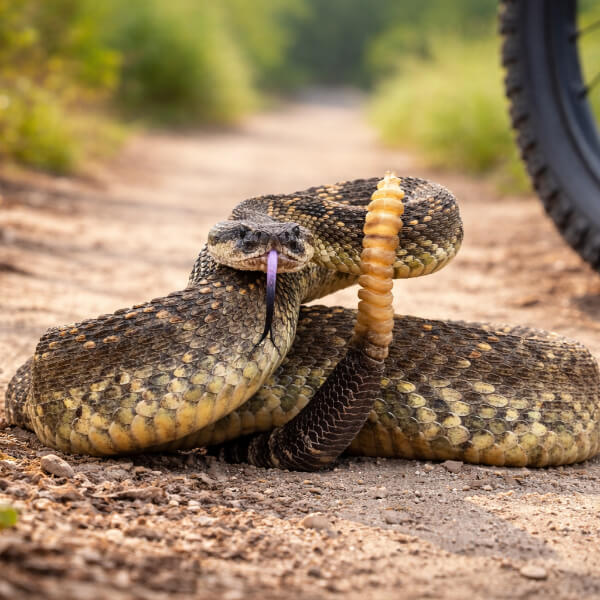
After a rattlesnake bite, venom spreads primarily through the lymphatic system rather than immediately through the bloodstream. The lymphatic system is heavily influenced by muscle movement. Every time muscles contract, they help push fluid through that system. When someone begins exerting themselves, especially at a high level, they are effectively accelerating the spread of venom throughout their body.
Mountain biking is not light movement. It involves continuous leg drive, elevated heart rate, and full-body engagement. That combination creates the conditions to move venom quickly out of the bite area and into circulation. Instead of remaining more localized early on, the venom is pushed deeper into the system where it can begin affecting organs, blood chemistry, and overall physiology. By the time he reached medical care, the problem was likely no longer contained to the limb. It may have already become a full-body issue.
There is another piece to this that is uncomfortable to talk about, but it matters if people are going to learn from it. Julian’s family is now raising money and looking for answers about what happened in the hospital, and that is understandable given the outcome. Losing someone like that leaves a lot of questions. At the same time, none of us outside that hospital room have the full picture of every decision that was made once he got there. What we do know is what happened before he ever reached medical care, and that part cannot be ignored.
A rattlesnake bite is not just about the bite itself. What happens in the minutes immediately after can shape everything that follows. The decision to push hard and get out, especially through something like mountain biking, likely changed the severity of the situation before he ever reached help.
That does not mean anyone made a conscious bad decision in the moment. It means that under stress, people do what they think gives them the best chance to get out. The problem is that with snakebite, the instinct to push harder can work directly against you. It is entirely possible that by riding out the way he did, he made the situation significantly worse before he ever reached the hospital. That is not a criticism. That is a reality people need to understand.
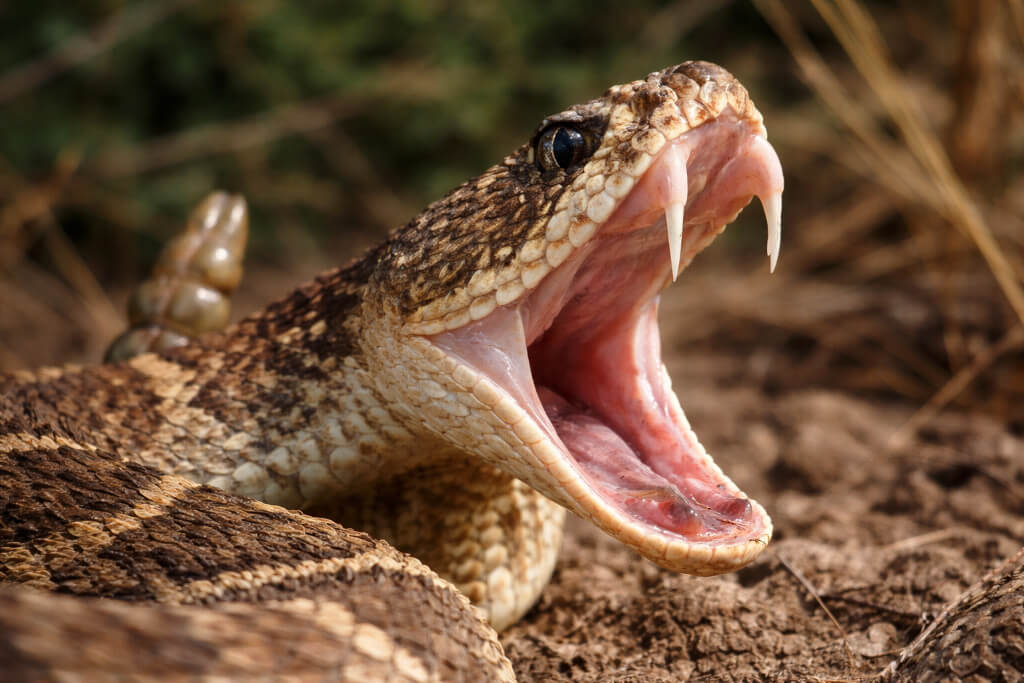
Rattlesnake venom is a complex mixture of enzymes and proteins that are designed to break down tissue and disrupt biological systems. It is primarily hemotoxic with strong cytotoxic effects, meaning it targets blood, tissue, and the structural integrity of the body at the bite site. It is not just a toxin in the traditional sense. It is a destructive process that begins almost immediately after envenomation. In most cases, the first thing people notice is intense pain and swelling at the bite site. That swelling can become severe, and the tissue can begin to break down as the venom damages cells and blood vessels.
One of the major effects of rattlesnake venom is its impact on the body’s ability to regulate blood clotting. The venom interferes with normal clotting mechanisms, which can lead to uncontrolled bleeding or abnormal clot formation. At the same time, the breakdown of muscle tissue releases substances into the bloodstream that can overwhelm the kidneys and lead to renal failure. In more severe cases, the venom can trigger widespread inflammation, shock, and multi-organ failure.
In more severe cases, that process accelerates. Instead of remaining more localized early on, the venom spreads quickly and begins affecting the body on a larger scale. This is when things can deteriorate rapidly, even with medical intervention. The body is no longer dealing with a contained injury. It is dealing with a cascading failure of multiple systems.
While most rattlesnake discussions focus on hemotoxic and tissue-damaging effects, there are important exceptions. Mojave rattlesnakes are well known for venom that can vary by population, with some carrying strong neurotoxic components and others showing more hemorrhagic and tissue-damaging effects. California also has Southern Pacific rattlesnakes that have demonstrated Mojave toxin in some populations, with documented cases of neurotoxic symptoms in humans.
In the real world, this means you should never assume a rattlesnake bite will follow only one pattern. You are not diagnosing venom type in the field. You treat every bite as serious, limit movement, and get to medical care.
There is a common misconception that antivenom works instantly and completely reverses the effects of a snakebite. In reality, antivenom works by binding to venom molecules that are still circulating in the body. It helps stop further damage, but it does not undo damage that has already occurred. If tissue has been destroyed or organs have been affected, antivenom cannot reverse that.
Treatment usually starts with around 4 to 6 vials, but it rarely ends there. Many patients require 10 to 20 vials before the venom is brought under control, and in more severe cases it is not uncommon to see 25 or more. There are documented cases where patients have required 30 or more vials to survive. Each vial typically has a base price of around $3,000, but hospital charges can be significantly higher, sometimes reaching $5,000 to $15,000 per vial depending on the facility. That means even a moderate case can quickly reach tens of thousands of dollars, while severe cases can push well into six figures for the antivenom alone.
Antivenom is not given as a fixed dose. It is administered in response to what the venom is actively doing inside the body, with doctors monitoring swelling, blood chemistry, and organ function while continuing treatment until they can get control of it. Even then, recovery can be slow and complicated. If venom has already spread widely through the body, the challenge becomes much greater. The medical team is not just neutralizing venom. They are managing the consequences of what the venom has already done.
As mentioned earlier, antivenom is expensive, and that alone plays a major role in how it is stocked and distributed. It is not something every hospital keeps in large quantities, and in some cases, smaller or more remote facilities may have very limited supply or none at all. On top of that, antivenom has a shelf life, which makes it even less practical for every hospital to carry significant amounts unless they regularly treat snakebites.
Because of that, there is a real difference between facilities. Some hospitals, especially those in areas where snakebites are more common, are well equipped and have experience treating envenomations. Others may need to transfer patients or coordinate additional resources if a severe case comes in. That gap in preparedness can affect how quickly and effectively treatment begins.
If you spend time in areas where venomous snakes are present, it is worth taking a few minutes beforehand to understand where the closest capable facility is and how long it would realistically take to get there. In some rural areas, even veterinary clinics carry antivenom because animals are frequently bitten, which gives you an idea of how common the issue can be in certain regions. They are not a substitute for proper medical care, but it highlights how uneven availability can be depending on where you are.
Do not attempt to catch or kill the snake. In most North American bites, treatment does not depend on exact identification, and trying to get a closer look can put you at risk of a second bite. Do not take the snake to the ER with you under any circumstance. They do not need it.
When a rattlesnake bite occurs, the priority is not to fight the venom in the field but to slow everything down. The body’s response and the spread of venom are heavily influenced by movement and stress. The more you move and the harder you push, the faster that venom is going to move through your system. Staying calm and limiting movement as much as possible can make a real difference in how things play out.
The affected limb should be kept as still as possible. If it is an arm, keep it supported and close to the body. If it is a leg, avoid unnecessary walking and keep your movements slow and deliberate. This is not the time to push through discomfort or try to power your way out. The goal is to reduce how much you are driving circulation and lymphatic flow.
Anything restrictive like rings, watches, or tight clothing should be removed early before swelling begins. Swelling can become severe, and once it sets in, those items can turn into a serious problem.
Positioning is one area where guidance has changed over time and is still debated. Some medical professionals often recommended keeping the limb slightly below heart level to avoid encouraging venom movement. Some medical professionals still support that approach. More recent guidance from groups like National Snakebite Support leans toward keeping the limb at heart level or slightly elevated to help reduce swelling and tissue damage.
The honest answer is that this is still evolving, and there is not complete agreement across the board. What matters far more than exact positioning is keeping the limb still, staying calm, and avoiding unnecessary movement. Those factors have a much bigger impact on how quickly venom spreads than whether the limb is a few inches above or below heart level.
Getting to medical care is still the objective, but how you get there matters. If you have a signal device, use it. Calling for help and staying put is often the better option than forcing a self rescue. If you do have to move, it should be controlled, steady, and as low output as possible. Take breaks. Manage your breathing. Think in terms of conserving rather than escaping the situation.
This is one of those situations where discipline matters more than toughness. The instinct to move fast and get out is strong, but with a rattlesnake bite, that instinct can work against you. Slowing down is not doing nothing. It is actively improving your chances.
Simple Field Checklist (North American Rattlesnake Bite)
If you take nothing else from this, this is the short version:
Positioning is still debated. Some current guidance supports keeping the limb at heart level or slightly elevated, while other sources still recommend at or slightly below heart level. What matters most is minimizing movement.
Avoid the following:
Your job is not to fix it in the field. Your job is to not make it worse and get to medical care.
After calling 911, you can go to the National Snakebite Support page for additional real-time guidance from medical professionals who handle these cases regularly.
There are a lot of outdated ideas and bad advice floating around about snakebites, and some of them can make a bad situation significantly worse. This is one of those areas where doing the wrong thing with confidence can cost you.
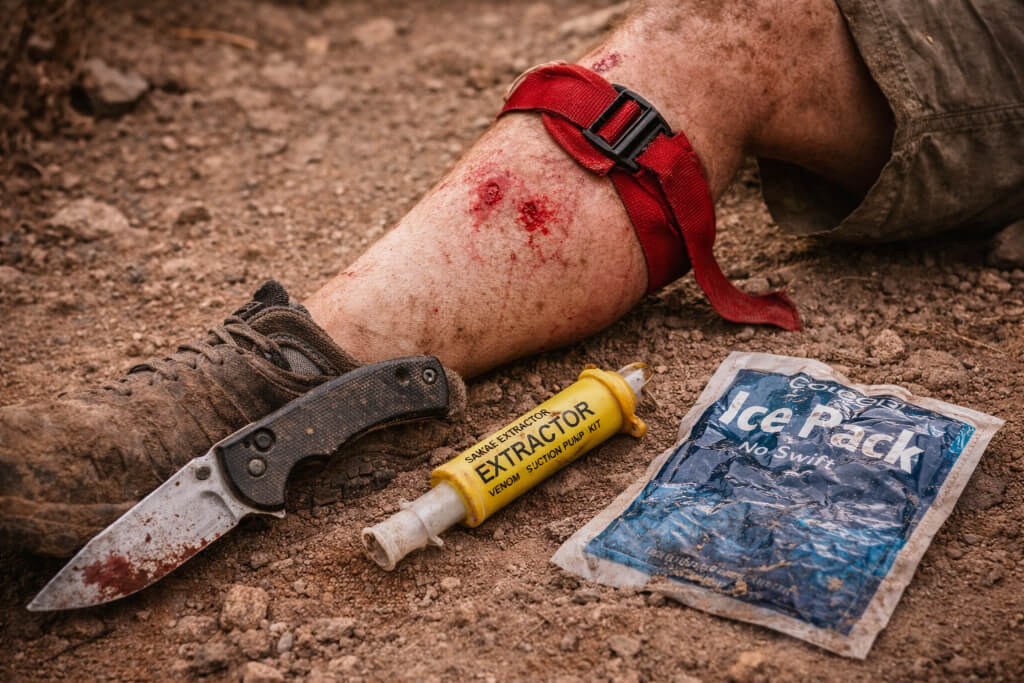
One of the most common myths is that you should cut the bite and try to “bleed the venom out.” That does not work. By the time you are even thinking about doing that, venom has already begun moving through your lymphatic system. Cutting into the wound does nothing to remove it and only adds more trauma, increases the risk of infection, and can make tissue damage worse.
Another long-standing myth is that you can suck the venom out. Whether that is by mouth or with a suction device, it does not work. You are not pulling venom out of the body in any meaningful way. What you are doing is damaging tissue further and delaying real treatment. This includes commercial kits that are marketed for this exact purpose.
The Sawyer snakebite kit is one of those products that should not still be on the market. It is essentially a suction device dressed up as a solution. It does not remove venom in any effective way and gives people a false sense that they are “doing something” when in reality they are wasting time. Sawyer makes great water filtration systems, but this product is not in the same category. It is outdated thinking packaged as gear, and it has no place in a real-world response.
Tourniquets are another thing people jump to, and they should not be used for rattlesnake bites. The idea sounds logical at first. People think they can trap the venom in the limb and keep it from spreading. That is not how it works in the real world.
A tourniquet does not create a sealed container. Venom begins spreading through the lymphatic system almost immediately after the bite, and by the time a tourniquet is applied, some of it is already moving through the body. What the tourniquet actually does is cut off blood flow to the limb, which starts a separate problem. Without blood flow, tissue begins to die. At the same time, the venom that remains in that area becomes highly concentrated and continues breaking down muscle, blood vessels, and connective tissue in a contained space.
That combination of oxygen deprivation and concentrated venom can rapidly lead to severe tissue destruction, increased pressure within the limb, and in some cases compartment syndrome. Instead of helping, the tourniquet can turn a survivable limb injury into one that requires amputation.
There is also a second problem that develops over time. When circulation is eventually restored, whether in the field or in a hospital, everything that has been building up in that limb gets released at once. That includes venom, cellular waste, and breakdown products from damaged tissue. This sudden surge can hit the body all at once and make the systemic effects worse rather than better.
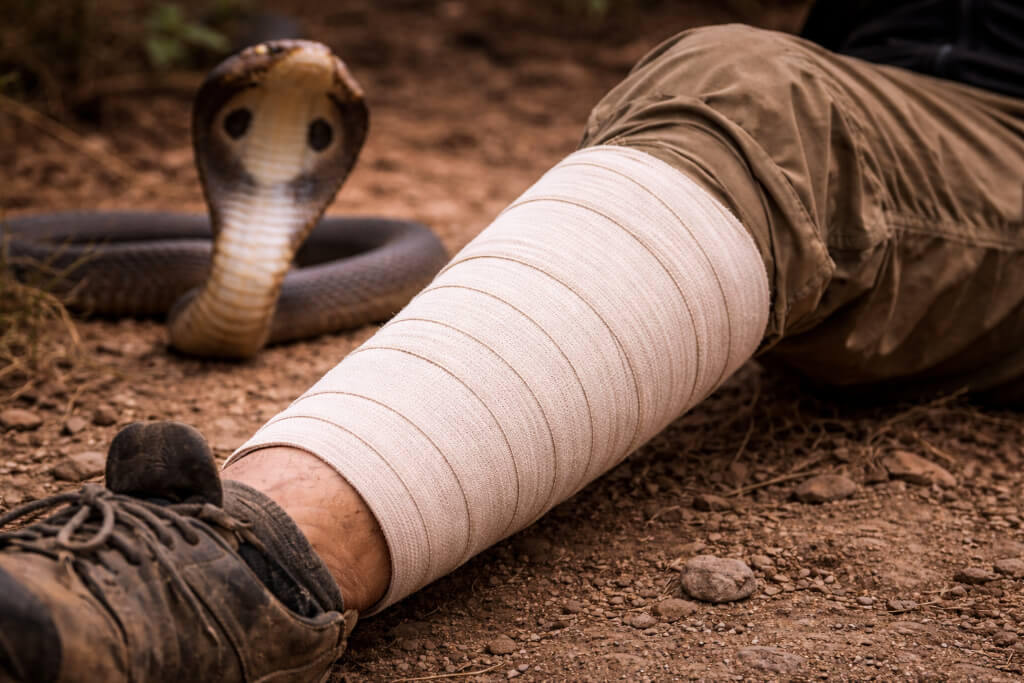
The same principle applies to tight compression wraps. With rattlesnake bites, trapping venom in the limb does not neutralize it. It allows it to keep working in one place while increasing pressure and damage. The goal is not to contain the venom in the limb. The goal is to avoid accelerating its spread while getting to proper medical care.
Ice is also a bad idea. It may seem like it would slow things down, but it reduces blood flow and can increase tissue damage in an area that is already under attack from the venom. You are not helping the situation by trying to “freeze it out.”
The pattern here is simple. Most of the old-school tricks are based on the idea that you can remove or contain the venom in the field. That is not how this works. By the time you are reacting, the process has already started. The goal is not to fight it in the field. The goal is to avoid making it worse while you get to proper medical care.
Not all snakebites behave the same way, and the type of venom involved changes how they are managed. As a reminder, rattlesnakes are primarily hemotoxic with strong cytotoxic effects, meaning their venom attacks blood, tissue, and the structural integrity of the body at the bite site. That is why you see severe swelling, tissue breakdown, and issues with clotting.
In many parts of Africa, Asia, and Australia, neurotoxic snakes such as cobras, kraits, and mambas are more common. These snakes affect the nervous system, leading to paralysis and, in severe cases, respiratory failure.
Because these venoms act differently, the approach to treatment in the field can also differ. In some regions, pressure immobilization techniques are used to slow the spread of venom. There is also a narrow and controversial perspective among a small number of specialists working with fast neurotoxic African snakes. In very specific circumstances, such as a confirmed Black Mamba or Cape Cobra bite when a person is alone and more than 90 minutes from care, a properly applied arterial tourniquet has been discussed as a last resort option. This is not widely accepted and is considered high risk, but it reflects how different environments and species can shift decision-making in extreme situations.
Coral snakes in North America are another example of a neurotoxic species. Their bites can appear mild at first, with symptoms developing hours later. The danger lies in delayed respiratory paralysis, which makes early medical evaluation important even when symptoms are not immediately severe.
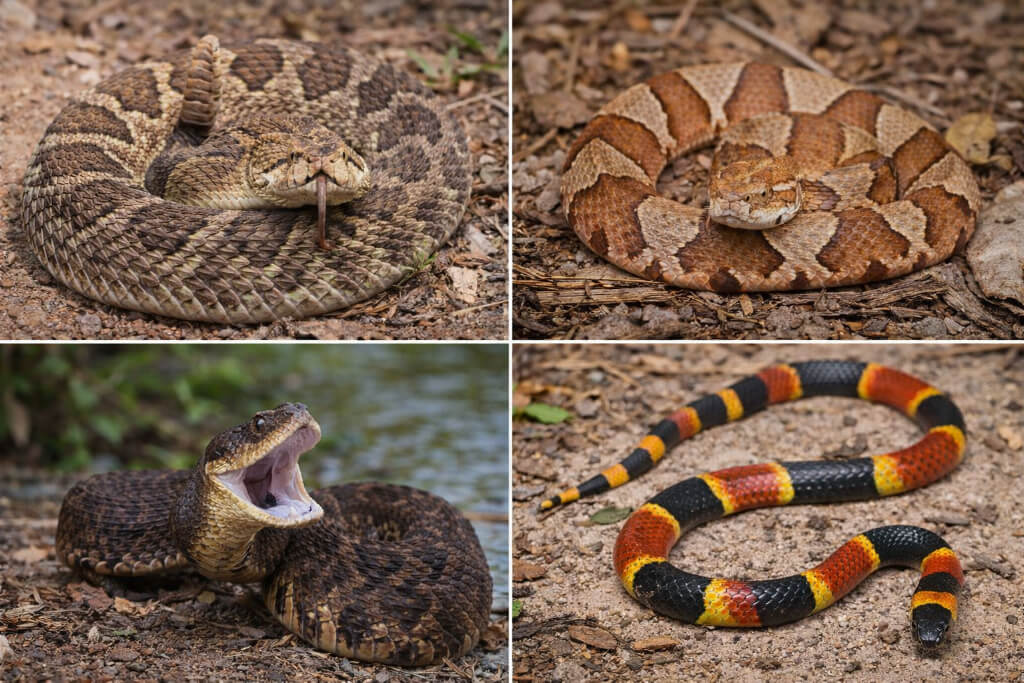
While identification can be helpful, it is not always reliable in the moment. In North America, pit vipers such as rattlesnakes, copperheads, and cottonmouths tend to share a few common traits. They usually have a broader, triangular-shaped head, vertical slit pupils, and a heat-sensing pit located between the eye and the nostril on each side of the head. That pit is what gives them the name “pit viper.” It allows them to detect heat signatures from prey, which makes them extremely effective ambush predators. That said, relying on head shape or pupils alone can get people into trouble, especially under stress or poor lighting conditions.
Coral snakes are a completely different category and deserve special attention because they look nothing like pit vipers. They are slender, brightly colored, and have distinct bands of red, yellow, and black. In North America, the traditional saying is “red on yellow, kill a fellow; red on black, friend of Jack,” which is meant to distinguish venomous coral snakes from nonvenomous mimics like king snakes. In true coral snakes, the red and yellow bands touch. In many harmless species, red and black touch instead. The problem is that this rule is not universal, especially outside of North America, and even within the U.S. there is enough variation that it should never be treated as foolproof. If you are close enough to study color patterns in detail, you are already closer than you should be.
Adding to the confusion, many nonvenomous snakes mimic venomous ones. This is not random. It is a survival strategy. Harmless species will flatten their heads to appear more triangular, rattle their tails in dry leaves to imitate a rattlesnake, or adopt aggressive postures to bluff their way out of a threat. Bullsnakes are a good example of this. They will hiss, coil up, and act like they are ready to throw down, but in most cases it is all for show. In contrast, rattlesnakes in my experience are not bluffing. When you run into them, they tend to be direct and defensive, and you know exactly where you stand. That difference matters, but it is not something you should rely on as a form of identification.
Cottonmouths and water moccasins are the same snake, just different names for the same species. They are another type of pit viper and are commonly found in or near water in the southeastern United States. They get the name “cottonmouth” from the white interior of their mouth, which they will display as a warning when threatened. Like other pit vipers, they have heat-sensing pits, heavy bodies, and a more deliberate, ground-holding posture compared to many nonvenomous water snakes.
The problem with all of this is that real-world conditions are rarely ideal. Lighting is bad, angles are off, adrenaline is high, and you are making decisions quickly. Identification becomes much less reliable when it actually matters. The safest approach is simple. If you do not know what you are looking at, treat every snake as if it could be venomous and give it space.
In other parts of the world, identification becomes even more complex, which makes relying on visual rules even less dependable.
The most important principle is not to rely on identification alone. In a real situation, the focus should be on managing the bite and getting appropriate care rather than trying to confirm the species with certainty.
Julian Hernandez made it out of the field, which is what most people assume is the hardest part. His case shows that what happens immediately after a bite can shape everything that follows. Movement, decisions under stress, and preparation all play a role in how these situations unfold. Sometimes the instinct to push through and get out can work against you, and the better option is the one that feels counterintuitive in the moment.
What this really comes down to is understanding how these situations actually work, not how we wish they worked. Most people picture a race against time where speed is the answer, where getting out as fast as possible is the goal. With a rattlesnake bite, that mindset can make things worse. The body is already dealing with a destructive process, and every bit of unnecessary movement feeds into it. Slowing down, staying calm, and making deliberate decisions is not passive. It is an active choice that can directly affect the outcome.
Preparation matters long before anything goes wrong. Carrying a signal device, knowing where you are, understanding how far you are from help, and having a basic grasp of how venom works are all things that can shift your options when it counts. Without those, people fall back on instinct. And instinct, especially under stress, is not always aligned with what actually helps.
There is also a bigger lesson here about how people interpret outcomes. When something ends badly, the focus often shifts to the last place the person was, which in this case is the hospital. That is understandable, but it can also miss the fact that the trajectory of the situation may have already been set much earlier. What happens in the first minutes after an incident like this can carry more weight than anything that happens later.
This is not about placing blame. It is about understanding cause and effect so people can make better decisions if it happens to them. The goal is not to second guess someone in a moment we were not there for. The goal is to learn from it so the next person who finds themselves in that position has a better chance of making decisions that work in their favor.
If there is one thing to take from this, it is that discipline under stress matters more than toughness. The urge to act fast and push hard is powerful, but in the case of a rattlesnake bite, control and restraint are what give you the advantage.
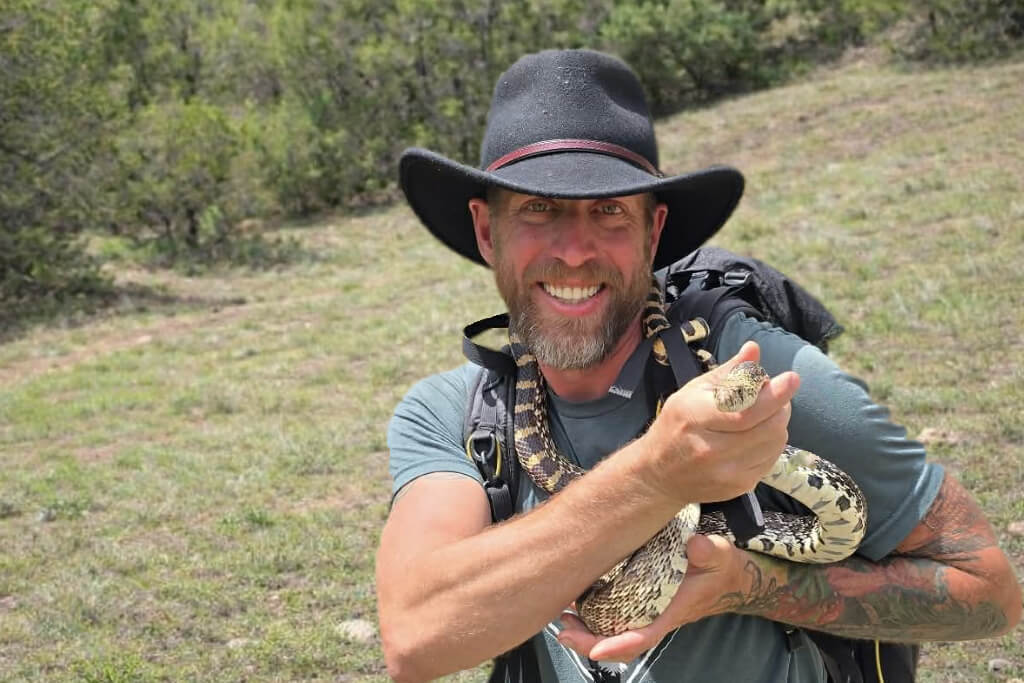
A relaxed, nonvenomous Bullsnake being handled in open terrain. While Bullsnakes can act defensive, they are often calm when handled properly. Do not attempt this with a rattlesnake.
Photos in this article are a mix of real images and AI-generated visuals. The real photos reflect actual encounters and conditions, while the AI images help illustrate details and scenarios that would require me to get closer to venomous snakes than I’m willing to.

Jason Marsteiner is the founder and lead instructor at The Survival University, where he’s turned his obsession with staying alive into a mission to teach real-world survival skills. Forget fancy gear, Jason’s all about the know-how that gets you through the wild or a city crisis. A published author of Wilderness Survival Guide: Practical Skills for the Outdoor Adventurer, he’s distilled years of hard-earned wisdom into lessons anyone can use.
Raised in Colorado’s rugged mountains, Jason’s survival chops were forged in the wild—from Missouri forests to Arizona deserts to Costa Rican jungles. He’s navigated it all with next to nothing, earning creds like Wilderness First Responder (WFR) and SAR tracking along the way. He’s trained thousands to keep cool when 911’s out of reach, proving survival’s not just for grizzled adventurers, it’s for hikers, parents, and city slickers alike.
Jason’s mantra? Everyone should make it home safe. When he’s not running courses, he’s designing knives, mentoring newbies, or chilling in the city like the rest of us, always sharpening the skills that turn panic into power.
A rattlesnake bite is not just about the moment it happens. What you do in the minutes that follow can change everything. This breakdown looks...
I appreciated this article but I kept looking for steps on what he should have done?
Jen, I appreciate you reading it and taking the time to comment. The steps are in there, but they’re woven into the explanation rather than laid out as a simple checklist. The goal was to help people understand the why behind the actions, not just memorize steps.
At a high level, what he should have done is remain calm, limit movement as much as possible, remove anything restrictive, and call for help or get to a place where he can. If possible, staying put and waiting for help is often the better move.
Alison also laid out a solid rule set in another comment that’s worth a read. I’ll likely add a clearer step by step summary to the article to make that easier for people to follow.
Hi Jason, thanks for the inclusive information on snake bites. It’s truly life saving and anyone going out into snake habitat should know most if not all of this info.
I would add that the @NationalSnakebiteSupport Facebook page provided direct communication to doctors specializing in snakebites nationwide. They can look at bloodwork, talk directly to Poison Control, assess severity using photos and give locations of hospitals with antivenom and how to advocate for yourself when bad medical care is practiced.
Everyone on Facebook who is an outdoorsman should follow that page.
First rule: know where the nearest hospitals with antivenom are located in your vicinity
Second rule: call for help or move to a location where you can call for help.
Third rule: swelling is a confirmation of envenomation. Appropriate action is mandatory. New guidelines recommend extreme elevation as the primary way to slow lymphatic transfer over heart based elevation in pit vipers.
Fourth rule: Advocate for yourself. Insist on proper health care or move to a hospital that provides it. Consult National Snakebite Support for correct guidance.
Thanks again,
Alison Young
Alison, I appreciate you adding this and taking the time to lay it out. That’s a solid resource, and I agree that having access to people who are actively treating snakebites brings real value.
I do touch on knowing where the closest capable facility is ahead of time in the article, but it’s definitely worth reinforcing the way you broke it down. Most people don’t think about that until they need it.
On positioning, I agree that guidance is shifting and I’m continuing to dig into that so I’m putting out the most accurate information I can.
Good addition to the conversation. I appreciate it.
Wholeheartedly agree with Alison Young. The @NationalSnakebiteSupport Facebook page also provides critical and supportive information on the steps to take if a pet is bitten, which appears to be more common than bites to humans.
For hikers in the San Jacinto range of California, the rattlesnakes in that area are both hemotoxic and neurotoxic; a rare exception to the pit viper family.
Meg, I appreciate you adding this. After digging into it, I found it’s a solid source with people who are actually working in this space. A lot of Facebook groups are just people talking like experts when they’re not, so it’s good to see one that’s grounded in real experience. Here is their website too: https://www.nationalsnakebitesupport.org/active-snakebite
Good info all around. Thanks for sharing it.
I found it interesting that the Mojave green rattler was not mentioned. I have walked up on one here in Arizona and I think it bears mentioning that their venom can be either hemotoxic or neurotoxic.
Very informative article. Thank you so much. The snakes are out in force here now. I almost walked up on a rattler while on my horse last weekend and he was very angry. He even came after me a little bit. Us horse riders try not to let our horses put their heads down to grab a bite at this time of year, but most of us also carry snakebite kits, which consist of Vaseline, 6″ of hose, and vetwrap. If a horse get bitten on the nose it can be fatal fast, when the swelling closes their nostrils. The snake kit allows them to breath while help if sought.
Good call on that. I added a section covering Mojave rattlesnakes and the neurotoxic component, along with some of the variation you see in different populations.
Appreciate you pointing it out.
Jason, do you have some brands or models you recommend for signal devices? We just moved to Colorado and plan to do lots of hiking, so it would be a good investment for us. Thanks!
I personally use the Garmin inReach Mini 2, and a few guys on my team run other Garmin inReach models. That’s really the only system I have hands-on experience with, and overall they work well for what they’re designed to do.
https://www.garmin.com/en-US/c/outdoor-recreation/satellite-communicators
They use satellite communication, so they’ll work where your phone won’t, which is the whole point. But like any piece of tech, they’re not perfect and you shouldn’t rely on them as your only plan.
They do require a subscription for the communication features like messaging and SOS , which is something a lot of people don’t realize up front.
The Mini can be used by itself, but for the more advanced features it’s a lot easier when it’s paired to your phone. That’s kind of the tradeoff. The pro is that everything is easier to use on your phone. The con is now you’re managing two devices instead of one.
Another solid option is SPOT. The SPOT X is probably the closest competitor to the inReach because it does two way messaging and SOS, while the Gen4 is more of a basic one way check in and emergency beacon. I’ve checked out SPOT and they look solid, but I haven’t used them in the field myself.
https://www.findmespot.com/en-us
For what you’re talking about with hiking in Colorado, it’s a solid investment. Just don’t let it replace good decision making.
Several years back while working ar Emanuel Hospital in Portland Oregon I took care a patient that was bitten by a rattle snake . He survived, but I’m sure he had some tissue damage to his left arm . He developed compartment syndrome and had to surgery to release the pressure.
I’m heading down to Baja Sur for some mountain biking. Would wearing shin guards help reduce the risk of being bitten? Thanks for the myth busting article. Michael
A family member just ran into a situation where there was a rattlesnake sunbathing across the trail and high brush on both sides, making it unsafe to go around. They remembered an episode of a kids’ show called Wild Kratts that recommended spraying some water from a distance. They did that cautiously and the snake slithered away. Thoughts? Is this a good option?
The subject of DRY bites (no venomization) will come up. An estimated 25% to 50% of rattlesnake bites are “dry,” meaning the snake strikes without injecting venom. These bites occur because snakes use them as a warning, seeking to conserve venom for hunting rather than wasting it on a defensive, non-prey target. The answer is the same, get medical attention ASAP. Infection is still a real challenge, and it is injected deep into your tissue. You as a recipient of the bite can’t tell if it was dry or wet.