
Cart
Sub-Total: $0.00
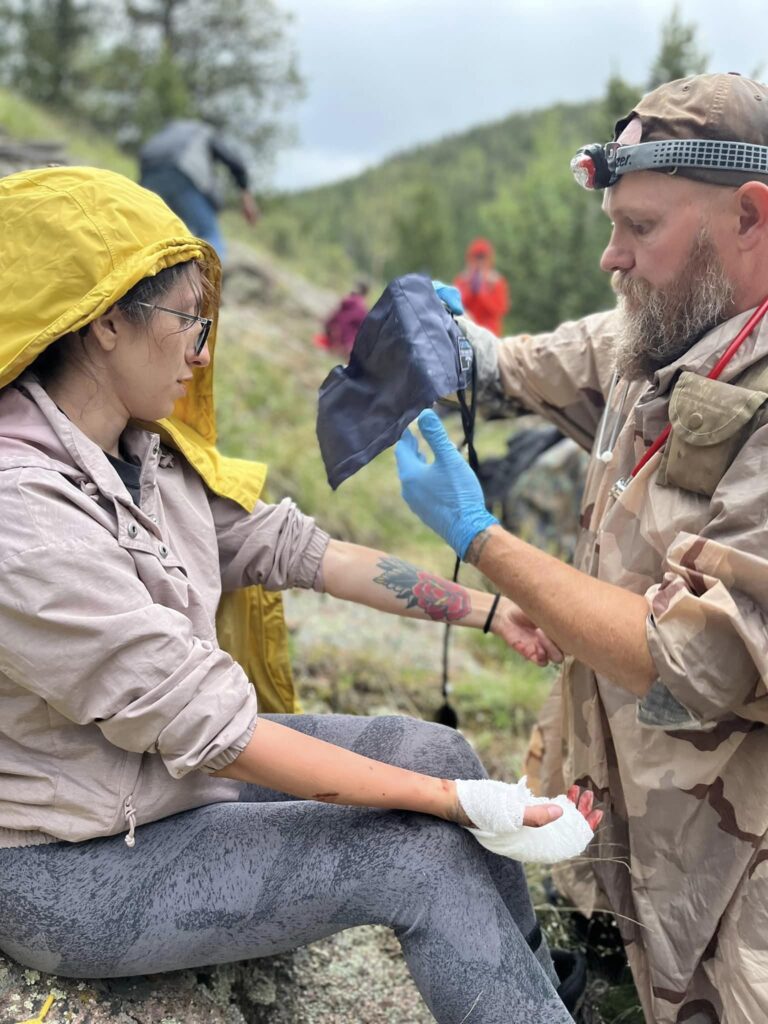
Wilderness First Responder is not just for guides and backcountry addicts. It is real medical skill that works in a backyard, a parking lot, or on the side of the highway. The difference is simple. You learn to think and act when there is no perfect kit, no neat supply closet, and no time to Google a checklist. You learn to improvise with what is in front of you and take calm action when everyone else is frozen.
Real emergencies do not wait for ideal conditions. Lawn mowers bite. Ladders slip. Cars collide. WFR training gives you a way to see the scene, make good choices, and do the simple things that keep a person alive until EMS arrives. It is confidence you earn by doing, not by watching.
Scene safety comes first. You learn to pause, scan for hazards, and move the patient only when it makes sense. You learn to talk like a leader even if you are the only one who feels calm. Clear voice. Short directions. You, call nine one one. You, grab a clean towel. That steadiness changes outcomes.
Safety. Look for traffic, fire, electricity, weapons, unstable structures, or angry dogs.
First glance. Are they breathing? Are they conscious? Is there major bleeding?
Airway. Open the mouth, clear what you can see, position the head to open the airway if there is no suspected spinal injury.
Breathing. Look, listen, and feel. Expose the chest. Support a comfortable position.
Circulation. Find and stop heavy bleeding. Feel for a pulse. Watch skin color and temperature.
Disability. Quick check for big problems like a suspected spinal injury or altered mental status.
Exposure and environment. Prevent heat loss. Protect from wind and ground.
Direct pressure is king. Use a clean cloth, a shirt, or a towel and press hard. Do not peek. Keep the pressure on and add more cloth on top if it soaks through. Elevation can help when it does not cause more pain. If bleeding soaks through strong pressure, you can improvise a tourniquet with a wide strap and a sturdy windlass, but understand the risks.
Better yet, carry a real tourniquet and know exactly how to use it. WFR training gives you the judgment to choose what makes sense in the moment.
If the person is unresponsive and breathing, roll them on their side to keep the airway open and let fluids drain. If they are not breathing and you are trained, begin CPR. If you suspect chest trauma and they are struggling to breathe, keep them warm, keep them calm, and avoid tight wraps around the chest. Comfort and position can make a big difference while you wait for EMS.
Shock is common after crashes and falls. The person may look pale or sweaty, feel cold, or seem confused. Lay them flat if they tolerate it, loosen tight clothing, and keep them warm from the ground and from above. A picnic blanket, a jacket, even floor mats from a car can block heat loss. Warmth buys time.
Support the limb in the position you find it unless there is no pulse or the limb is trapped. Pad the gaps. Immobilize the joint above and below. Everyday items work.
Magazines or a small cutting board for stiffening
Clothing, towels, or foam for padding
Tape, belts, or cloth strips for securing
A simple sling from a triangular bandage or a T shirt
You do not need a brick in your glove box. You need a few things that you will actually keep with you.
Nitrile gloves
Tourniquet you have practiced with
Compressed gauze or a clean bandage roll
Medical tape
Compact face shield for CPR
Small bottle of hand sanitizer
Pain reliever and antihistamine you tolerate
Large trash bag or space blanket for wind and moisture
Those four hundred piece kits look impressive until you open them. Most of the count is tiny bandages and packets you will never touch. What matters is the quality and size of the few items that stop bleeding, protect wounds, and secure dressings.
In WFR we show you what to keep, what to toss, and how to build a lean kit that works. Fewer items. Better outcomes.
Safety first. Control the scene. Direct pressure with a clean towel. Add firm packing if the wound keeps bleeding. Wrap to hold pressure. Lay the person down if they feel faint. Keep them warm. Call for help and give a clear handoff.
Park to shield the scene if it is safe. Turn on hazards. Size up fuel, fire, traffic, and power lines. Talk to the patient without moving them. If there is heavy bleeding, control it through a window or door if you can. Do not drag someone unless there is a life threatening hazard. Keep the airway open, reassure them, and wait for EMS.
Support the hand and forearm in the position found. Pad and splint with a magazine and a sweatshirt. Secure gently with tape or cloth strips. Check circulation before and after. Calm the child and parent. Transport.
Shade, rest, cool fluids if they are awake and can swallow, loosen clothing, and use evaporation. Wet a shirt, fan gently, and keep them out of direct sun. If mental status is off or vomiting starts, call for help.
When EMS arrives, a clear handoff saves time. What happened. What you saw first. What you did. How the person changed. Time of events. If you can, write it on a piece of paper and send it with them. Calm and simple wins.
You cannot learn calm hands from a screen. You learn by doing. WFR puts you in realistic scenarios with time pressure, low light, loud backgrounds, and limited gear. You make choices, you see what worked, and you try again. That is how the skill becomes part of you.
If you want real skill that works in a driveway, a school gym, or a windy ridgeline, take our Wilderness First Responder course. You will learn to assess, treat, improvise, and lead with what you have, anywhere you stand.
