
Cart
Sub-Total: $0.00
22 min read

March 6, 2026
Spend a few minutes scrolling through outdoor content online and you will run into them almost immediately. The clever survival hacks. The quick tricks that promise to make wilderness living easier with a little creativity and a few household items. Someone cuts up a plastic bottle, mixes together random materials, or builds some strange little gadget and suddenly it is presented as a brilliant discovery. The idea is usually framed as if the person has just unlocked a secret that outdoor instructors and experienced woodsmen somehow missed all these years.
These videos spread quickly because they are easy to watch and easy to share. Someone films the trick with their phone, edits together a quick demonstration, and posts it online where it gets pushed through the algorithm. Within hours it starts collecting likes and comments from people who think they have just learned something clever. To someone who does not spend much time outdoors, or who has never tried these things outside of a controlled setting, the idea can look impressive. It feels like discovering a shortcut.
The problem is that most of these demonstrations are not built around real outdoor conditions. They are built around attention. The goal is to make something look unusual enough that people stop scrolling and watch the video. The more creative or strange the trick appears, the more engagement it tends to get. Whether the idea would actually work when you are cold, tired, wet, and dealing with real environmental conditions is usually not part of the equation.
To someone who has spent real time outdoors, many of these hacks fall apart the moment you think about them for more than a few seconds. They ignore basic principles of heat, materials, effort, or efficiency. They often require more work than the simple solution they are trying to replace. In some cases they are clearly staged for the sake of the video, with outcomes that would never happen the way they are presented.
That does not mean experimentation is a bad thing. Some of the best skills in the outdoors come from curiosity and trying new ideas. But there is a difference between experimenting and presenting a gimmick as if it were legitimate survival knowledge. When people who do not know any better start repeating those ideas, the line between entertainment and education gets blurred.
The result is a growing pile of “survival hacks” that look clever on a phone screen but have very little value in the real world. And once you start paying attention, you begin to notice the same types of gimmicks appearing over and over again in slightly different forms.
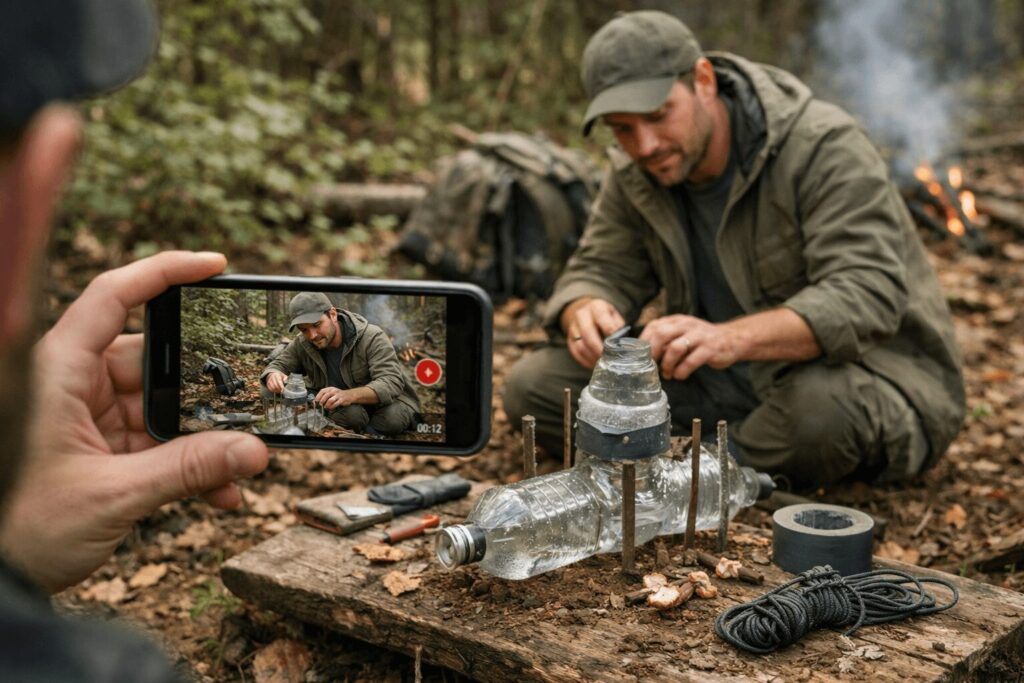
Many internet survival hacks are designed to look clever on camera rather than solve real problems in the field.
At this point it helps to pause and separate two ideas that often get lumped together. People online use the terms survival hack and survival tip almost interchangeably, but they are not the same thing. In fact, they often represent completely different approaches to learning outdoor skills.
A survival hack usually revolves around novelty. It is built around the idea of doing something clever or unconventional with an object that was never really meant for the job. The goal is to surprise the viewer with a trick that feels inventive. In many cases the hack exists primarily because it looks interesting in a short video. The problem is that novelty does not automatically translate into reliability, and reliability is the only thing that matters when conditions stop being comfortable.
A survival tip, on the other hand, tends to come from experience. It is usually simple and rooted in methods that have worked repeatedly in real environments. A good tip is not trying to impress anyone. It is trying to make a task more efficient, safer, or easier to repeat when conditions are not ideal. Most of the time the best tips are the ones that sound almost boring because they rely on straightforward techniques rather than clever tricks.
Another difference between the two is where they come from. Hacks often originate from experimentation that is performed once or twice and then presented as if it has already been proven. Tips tend to emerge from repetition. Someone does something dozens or hundreds of times in the field, notices what consistently works better, and passes that information along. Over time those small pieces of practical knowledge accumulate into reliable skills.
This is also where the idea of shortcuts gets misunderstood. People naturally want shortcuts because they promise faster results. In the outdoors there are sometimes ways to simplify a process or make it more efficient, but those improvements usually come from understanding the fundamentals first. A person who already knows how something works can streamline the process. Someone who is trying to replace the fundamentals with a clever trick is usually building on very shaky ground.
A simple comparison makes the difference clearer. Imagine someone caught in cold conditions without proper insulation. One practical survival tip is to stuff dry leaves, grass, or other loose natural materials inside your clothing. Those materials trap pockets of air, and your body heat warms that trapped air. The leaves act as insulation in much the same way that down or synthetic fill works inside a jacket. It is simple, it uses materials that are actually available in the environment, and it is based on a principle that has been used by people living outdoors for generations.
Now compare that to something that often shows up online as a clever survival hack, such as building a shelter out of plastic wrap stretched between trees. In these demonstrations someone pulls out a roll of kitchen plastic wrap and begins wrapping trees or branches to create a transparent shelter. It might block a little wind or precipitation, but it adds almost no insulation and does nothing to slow the heat loss happening around your body. Even more importantly, almost no one is carrying a roll of plastic wrap into the woods in the first place. The idea looks inventive on camera, but it ignores the actual problem you are trying to solve.
A useful survival tip usually has a few things in common. It solves a real problem, uses materials or tools you are likely to have, relies on simple principles, and can be repeated under less than perfect conditions. Most of the time it is not flashy. It is simply dependable.
Simply throwing a clever gadget or improvised device into your pack does not mean you are prepared. The only way to know whether something works is to actually use it repeatedly and under conditions that are less than comfortable. Lighting a fire in your backyard on a warm sunny afternoon using a clever internet hack proves very little about whether it will actually work when conditions are bad. Doing the same thing when the wind is blowing, your hands are cold, and the ground is wet will tell you far more about whether your system actually holds up.
That is the real dividing line between hacks and useful knowledge. Hacks tend to live in controlled demonstrations and short videos. Practical tips survive contact with real environments because they have already been tested there. Once you start looking at survival advice through that lens, it becomes much easier to tell which ideas belong in the field and which ones belong on the internet.
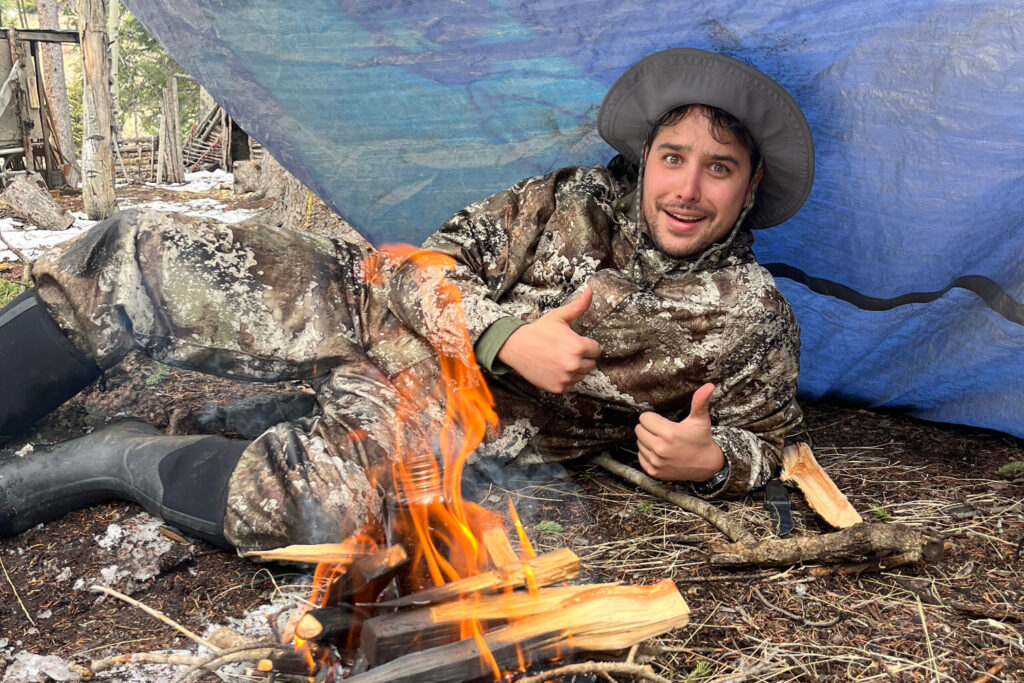
A simple tarp shelter and small fire provide warmth and protection in cold conditions. Reliable solutions are usually simple and based on methods that have worked for generations.
One reason survival hacks spread so easily is that people are naturally drawn to shortcuts. If someone claims there is a clever trick that replaces practice and experience, people want to believe it. The idea that a small piece of knowledge can suddenly make a difficult skill easy is extremely appealing.
Part of what makes these hacks so appealing is that they make preparedness feel easy. They offer the illusion that a little creativity can replace repetition, discomfort, and time in the field. That is a seductive idea, especially for people who want the confidence of being prepared without the slower process of building real skill.
The problem is that shortcuts in the outdoors rarely work the way people imagine. In many cases what looks like a shortcut is simply a misunderstanding of how experienced people operate. Skilled outdoorsmen often do things quickly and efficiently, but that efficiency usually comes from years of repetition and familiarity with the environment. From the outside it may look like they have discovered a trick, when in reality they are just applying well practiced fundamentals.
Internet survival hacks tend to promise the opposite. Instead of learning the fundamentals and building competence over time, the viewer is offered a clever workaround that supposedly bypasses that entire process. The message is subtle but powerful. If you know the right trick, you can skip the hard part.
In reality, most of those tricks simply add unnecessary complexity. A simple skill that has been practiced many times will almost always outperform a clever idea that someone tried once for the sake of a demonstration. Experience tends to strip things down to the methods that consistently work, while hacks often pile on extra steps in order to look inventive.
This is why experienced people tend to rely on simple systems. They choose tools and techniques that are easy to repeat, easy to maintain, and easy to apply under pressure. When something goes wrong outdoors, the last thing you want is a complicated setup that only works under ideal circumstances.
Real skill usually looks simple from the outside. That simplicity is not a shortcut. It is the result of experience removing everything that does not actually help solve the problem.
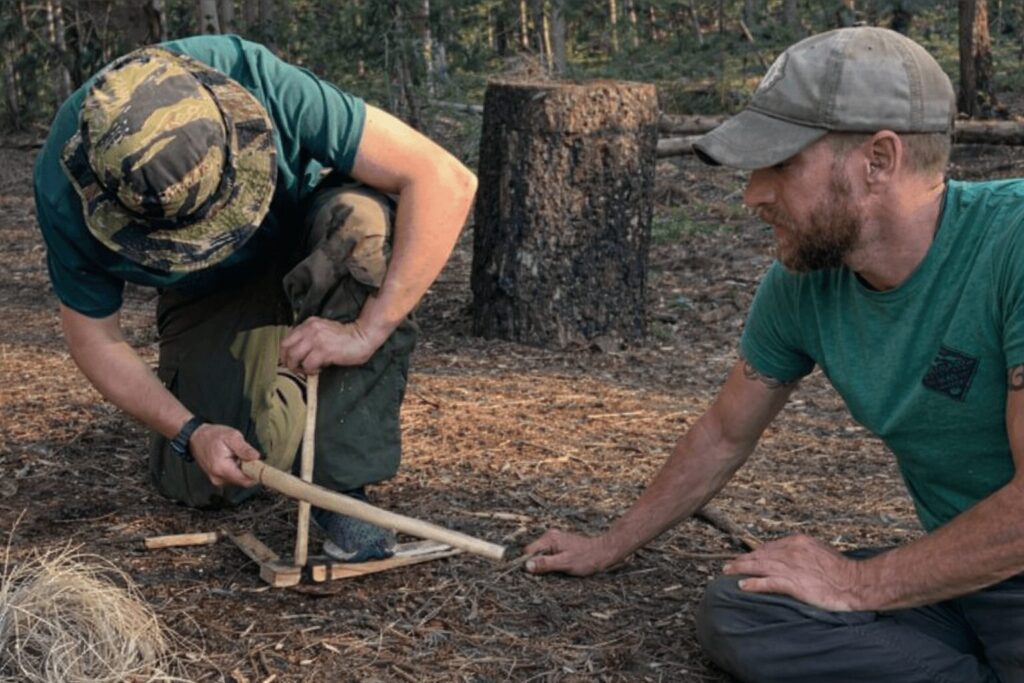
Primitive skills like the bow drill teach an important lesson: where shortcuts work and where they do not. In the modern world a lighter makes this skill unnecessary, but learning the process shows why fundamentals matter.
One of the biggest problems with internet survival hacks is that they are almost never tested under the kinds of conditions where survival skills actually matter. Most demonstrations happen in controlled environments where everything is working in the creator’s favor. The weather is calm. The ground is dry. The person filming the video is comfortable, well fed, and in no real hurry. Under those circumstances almost anything can be made to look like it works.
The wilderness rarely provides those kinds of conditions. Wind, cold, moisture, fatigue, and frustration all change how things behave. Materials that worked perfectly in a carefully staged demonstration may fail once they are exposed to rain, snow, or even a little bit of wind. Fine motor skills disappear quickly when your hands are cold. Tasks that felt easy when you were relaxed can suddenly become difficult when you are tired or stressed.
That difference is why testing skills where it actually matters is so important. A technique that seems reliable in comfortable conditions can reveal weaknesses very quickly once the environment starts pushing back. Fire starting methods that worked easily with dry materials might struggle when everything around you is damp. Shelter ideas that looked clever in a calm backyard may not hold up when wind begins pulling at them.
Real confidence in a skill does not come from seeing it work once. It comes from watching it succeed repeatedly when conditions are less than ideal. It comes from practicing until the process becomes familiar even when your hands are stiff, your patience is thin, and the situation is uncomfortable.
This is also where experience begins to separate useful knowledge from gimmicks. Methods that are simple, repeatable, and grounded in basic principles tend to keep working when the environment becomes difficult. Complicated tricks and clever hacks often reveal their weaknesses the moment the situation stops being convenient.
Learning outdoor skills has always involved a certain amount of trial and error. Sometimes things fail. Sometimes an idea that looked good in theory turns out to be less reliable than expected. That process is not a problem. In fact, it is one of the most valuable parts of learning. The key is to discover those weaknesses during practice rather than when the situation is real.
The outdoors has a very effective way of sorting ideas into two categories. Some methods continue to work even when the conditions get rough. Others only work when everything goes exactly as planned. The difference between those two outcomes usually becomes obvious the moment a skill is tested where it actually matters.
The internet is full of these so called survival hacks. What follows are just a handful of the ones that show up again and again. This is only a tiny fragment of what is out there. There are hundreds more. Question everything you see.
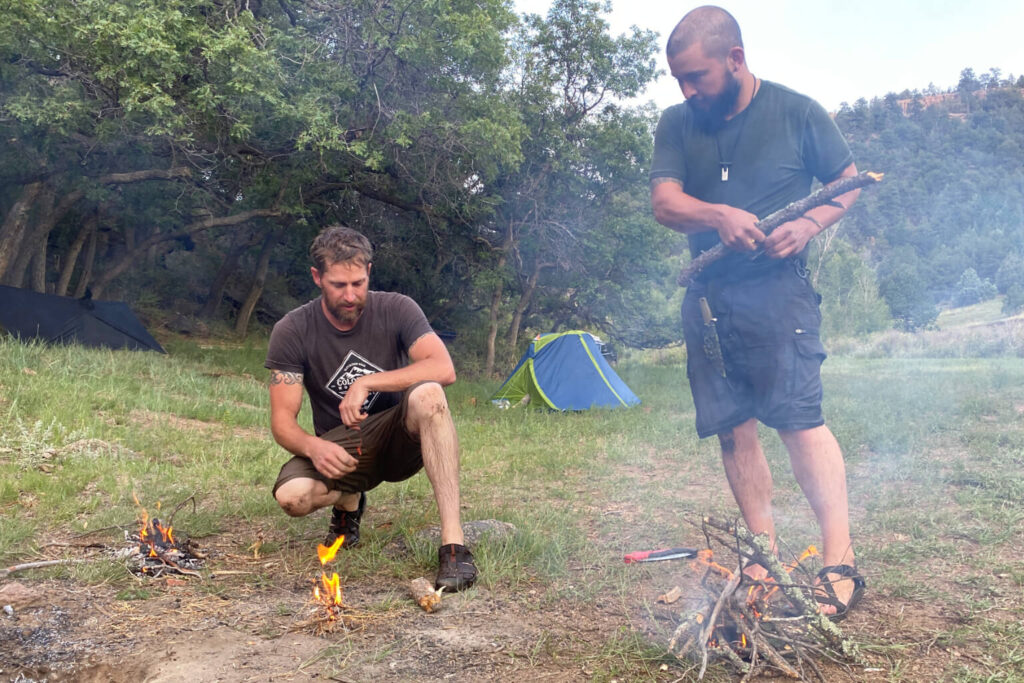
Jason Marsteiner and one of his instructors testing fire starting methods while soaked and cold in real outdoor conditions. Practicing skills when the weather is bad reveals far more about what actually works than any comfortable backyard demonstration.
Another survival hack that shows up online involves repairing a broken axe handle using melted pine pitch mixed with crushed charcoal. In these demonstrations someone collects sap, melts it over a fire, mixes in charcoal powder, and then glues a snapped axe handle back together before immediately going back to chopping wood as if the repair restored the tool to full strength. The basic concept of pine pitch glue is real. Mixtures of resin and charcoal have been used historically as natural adhesives for tools and weapons. The problem is that the internet version dramatically overstates what it can do. Pine pitch glue is nowhere near strong enough to permanently repair a broken axe handle that is about to absorb repeated impact forces. The first few swings would likely break the handle again. Where the idea becomes more useful is in a different application. If an axe handle is beginning to split rather than completely broken, wrapping the area tightly with cordage and coating it with a pine pitch and charcoal mixture can help stabilize the crack and slow the damage. It is not a permanent repair, but it can extend the life of the handle long enough to finish the job or get you back to camp. That difference highlights the larger point: many survival hacks contain a kernel of truth, but the internet version often exaggerates what the technique can realistically accomplish.
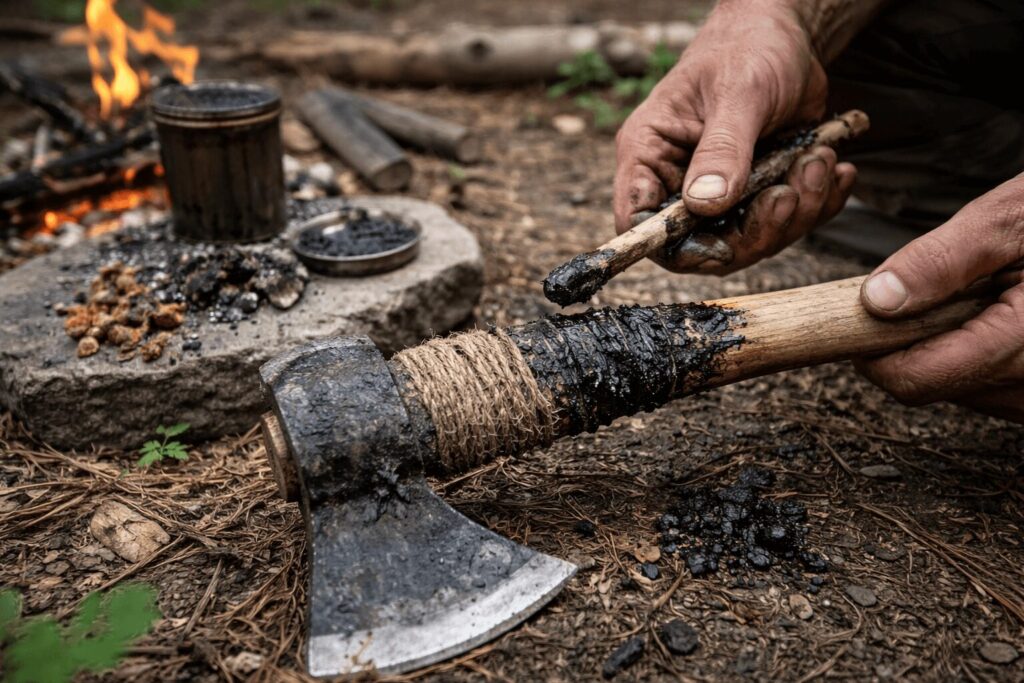
Many internet survival hacks show the wrong way to do this repair. Natural adhesives like pine pitch can help stabilize a splitting axe handle when used correctly, but they are not a magic fix for a broken tool. Like most outdoor skills, there is a right way and a wrong way.
One of the more common survival hacks online shows someone taking an empty toothpaste tube or small container and packing it with wood shavings, petroleum jelly and other materials to create a so called “super fire starter.” It looks clever at first glance, as if someone has engineered a compact device that burns hot and long. In reality it is unnecessarily complicated and often unreliable. Wood shavings packed into a tube compress and clog together, making them harder to ignite and difficult to pull apart when you actually need them. The entire process takes far more time than it should.
We actually tested this hack along with several others. It did technically work, but it was messy, awkward to assemble, and required more tools and effort than it was worth. Compared to something as simple as cotton balls and petroleum jelly, it offered no real advantage and created more problems than it solved. You can watch the video of us testing it here.
Meanwhile one of the most reliable fire starters available has been around forever: cotton balls and petroleum jelly. They ignite easily, burn hot, and take seconds to prepare without containers, complicated packing, or fiddling with compressed materials. When your hands are cold and conditions are poor, the simplest method that works consistently is the one that matters.
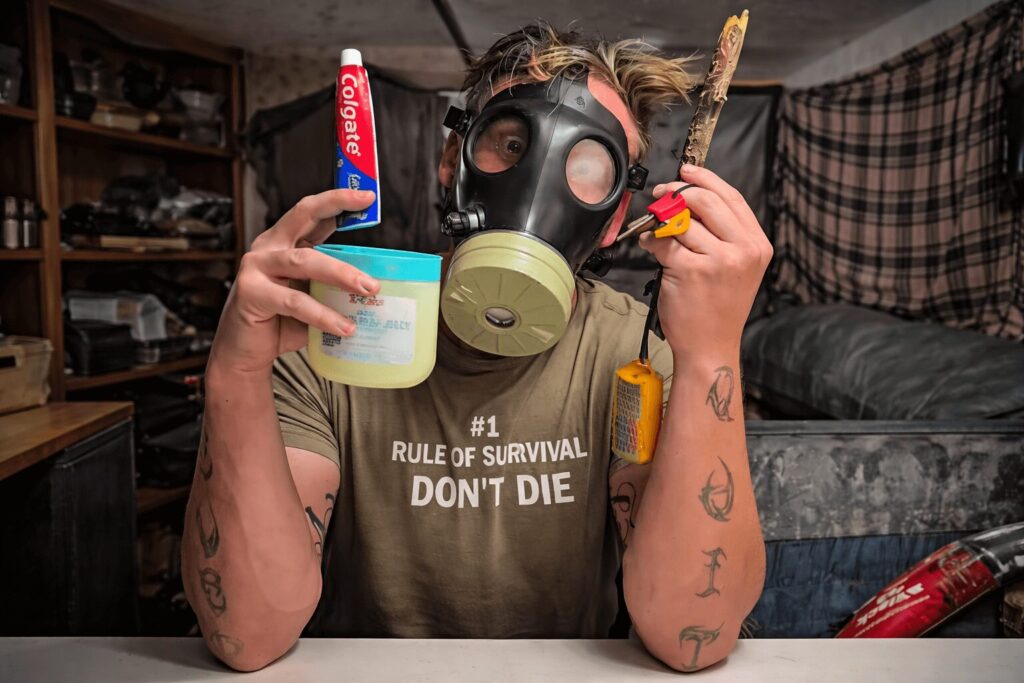
Some survival hacks are far more complicated than influencers make them appear on camera. What viewers often do not see is the number of failed attempts behind the scenes before a clean result finally makes it into the video.
Another video that circulates regularly shows someone digging a hole in the ground, placing a raw chicken inside, covering it with moss, putting dirt back over the hole and then building a fire directly on the ground above it. Later the person digs it up and reveals what appears to be a perfectly roasted chicken. It looks impressive until you stop and think about how heat actually behaves. Heat rises. It does not travel downward through soil in a way that would cook a buried chicken. What you would realistically end up with is a dirty raw chicken sitting in cool dirt, nowhere near cooked. Real underground cooking methods do exist, but they rely on heated stones, insulated pits, and a structure designed to trap heat around the food. Simply burying something and lighting a fire above it does not replicate that process. It makes for a dramatic video, but it ignores the basic mechanics of how cooking actually works.
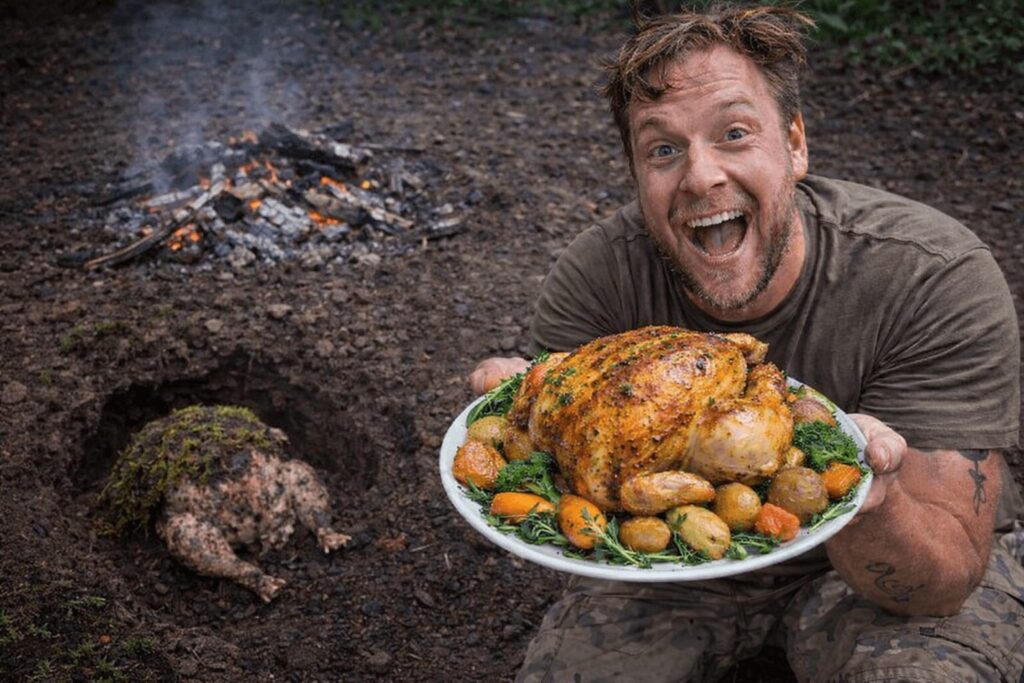
Many internet videos show people burying a chicken under dirt and building a fire above it as if that will magically cook the meat. In reality heat rises, and simply covering a chicken with soil and lighting a fire on top is not how underground cooking actually works.
Every once in a while someone demonstrates a shelter made entirely from plastic wrap stretched between trees and presents it as a clever alternative to traditional shelter materials. The obvious question is simple: who is packing plastic wrap into the woods for shelter construction in the first place? A lightweight tarp does the job far better. It is durable, reusable, and designed specifically for outdoor shelter building, with multiple ways to pitch it and enough strength to handle real weather. Plastic wrap shelters are not solving a real problem. They are simply creating a novelty solution for a situation where better tools already exist.
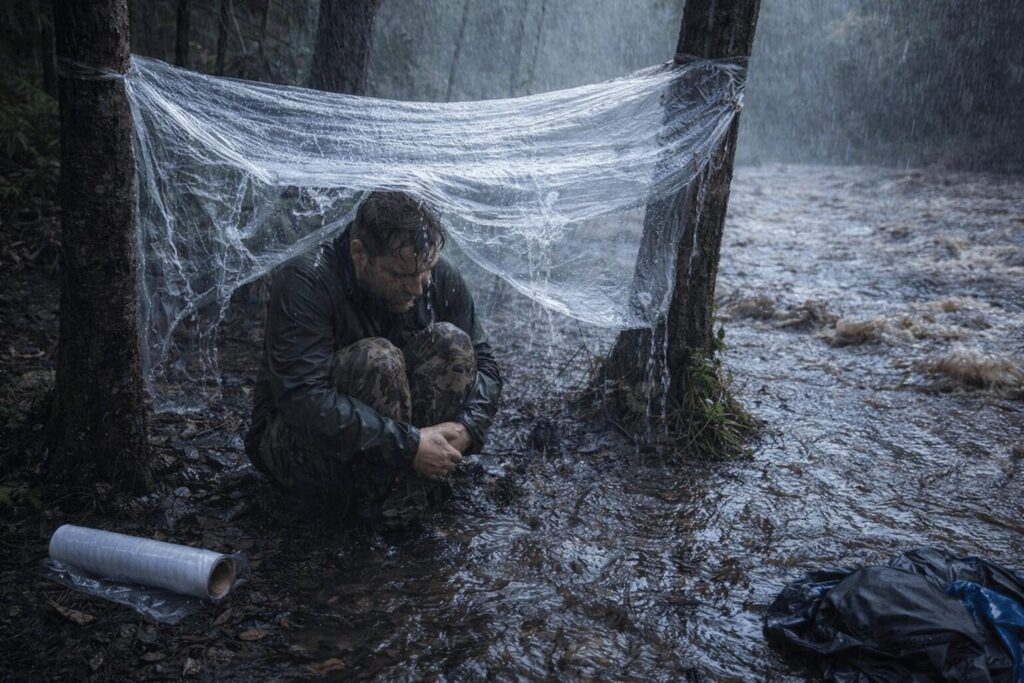
Who is packing this much plastic wrap into the backcountry? Bring a tarp, not kitchen supplies. Improvisation has its place, but good preparation means bringing tools that are actually designed for the job.
This one appears constantly online. Someone takes a large plastic water bottle, cuts slices into it so it will sink, stuffs chunks of raw chicken inside, ties fishing line and hooks to the outside, and tosses the whole thing into a stream. Moments later they pull it out and somehow it is covered in fish supposedly caught on the hooks. Look closely at many of these videos and something often stands out immediately. The fish are already dead. They were placed there ahead of time to create the illusion that this strange contraption instantly produced a meal.
To be fair, simple funnel style bottle traps can work when they are built properly. They operate on the same basic concept as traditional fish baskets. Small fish or minnows swim through the funnel opening and then struggle to find their way back out. Those smaller fish can be eaten or used as bait to catch larger fish. What shows up in many internet videos, however, is something completely different. Stuffing large chunks of meat inside a plastic bottle, attaching hooks to the outside, and instantly pulling it out of the water loaded with fish is not how fishing works.
Real fishing still relies on simple principles: good locations, well built traps, proper lines, and patience. If someone actually had that much raw chicken available, they would be far better off eating it rather than throwing it into the water hoping something swims by. When a video shows someone tossing a plastic bottle into a stream and pulling it out seconds later covered in fish, what you are usually watching is not a clever survival trick. It is staging.
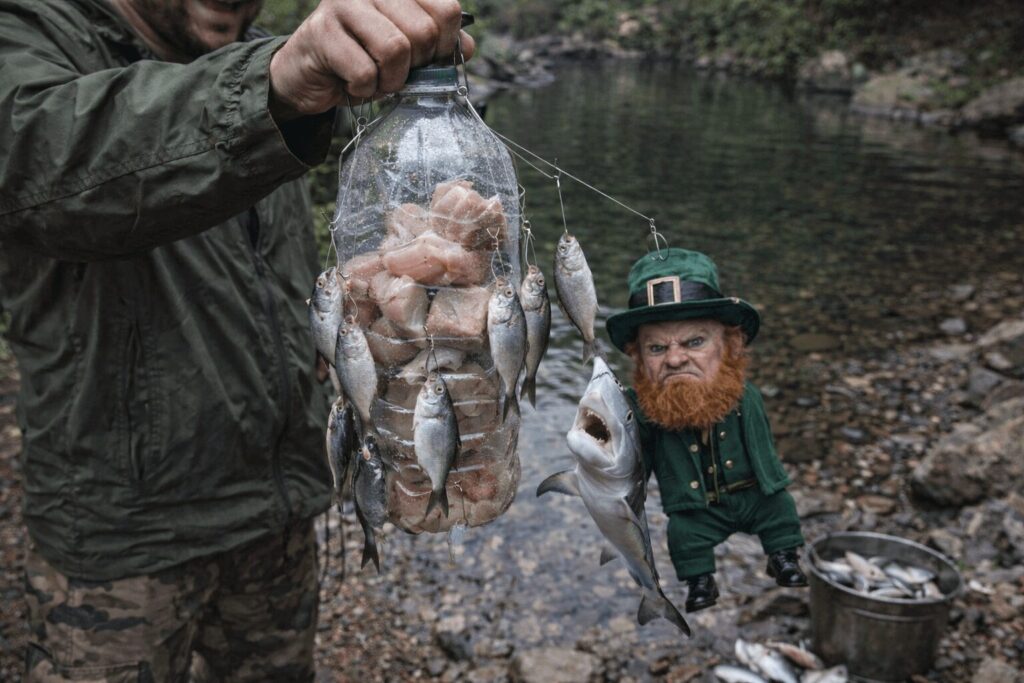
With gimmicky traps like this, you probably have about as much chance of catching a leprechaun as you do a fish.
Another trend shows people hauling elaborate kitchen setups into the woods and presenting it as some kind of survival technique. A cutting board, multiple knives, marinades, seasonings, and a full cooking kit all appear on a log as if the forest has suddenly become a backyard kitchen. At that point you are not demonstrating survival skills, you are simply cooking outdoors. There is nothing wrong with outdoor cooking and it can be a lot of fun, but it has nothing to do with survival.
Real survival cooking is usually much simpler and far less glamorous. It often means working with crude tools, open fire, and whatever food happens to be available at the moment. There are no countertops, spice racks, or neatly arranged prep stations in the woods. It is closer to butchering, roasting, boiling, and making the most of what you have.
If you are interested in learning how food preparation actually works in a wilderness setting, we cover these skills in our Field to Feast class.
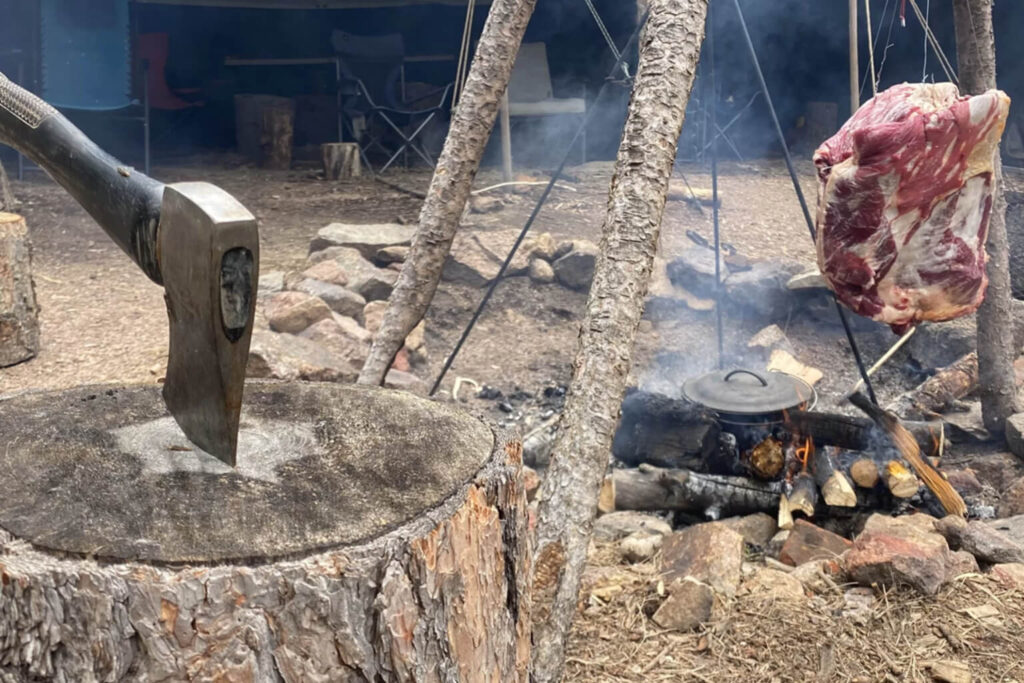
Real survival cooking is about working with limited tools and simple methods. When the setup begins to resemble a full kitchen counter in the woods, it has moved from survival into convenience camping.
The real danger with survival hacks is not just that they are silly. The real danger is that they create a false sense of preparation. Someone watches a video, tries the trick once, and it appears to work. In their mind the problem is now solved. That technique gets mentally checked off the list and maybe even added to a survival kit. The person walks away believing they are more prepared than they actually are.
That kind of confidence can be misleading. Real preparedness is built on familiarity and repetition. It comes from understanding how and why something works, not just from seeing it succeed once under comfortable circumstances. When a person relies on a trick they barely understand, they are depending on something that has never truly been tested.
The problem becomes obvious when conditions start changing. Stress rises. Time becomes limited. The body begins to lose energy and fine motor skills start to disappear. Techniques that once seemed simple suddenly become more difficult to perform, especially if they have not been practiced repeatedly. This is why experienced outdoorsmen tend to rely on methods that are simple and well understood. They choose techniques that have been used enough times that the process becomes familiar even when the situation is uncomfortable.
The next time you see a survival hack online, do not ask whether it looks clever. Ask whether it solves a real problem, whether you would actually carry what it requires, and whether it would still work when the weather turns bad and your hands stop cooperating. That is a much better filter than likes, comments, or dramatic editing. In the woods, reality sorts all of this out very quickly.
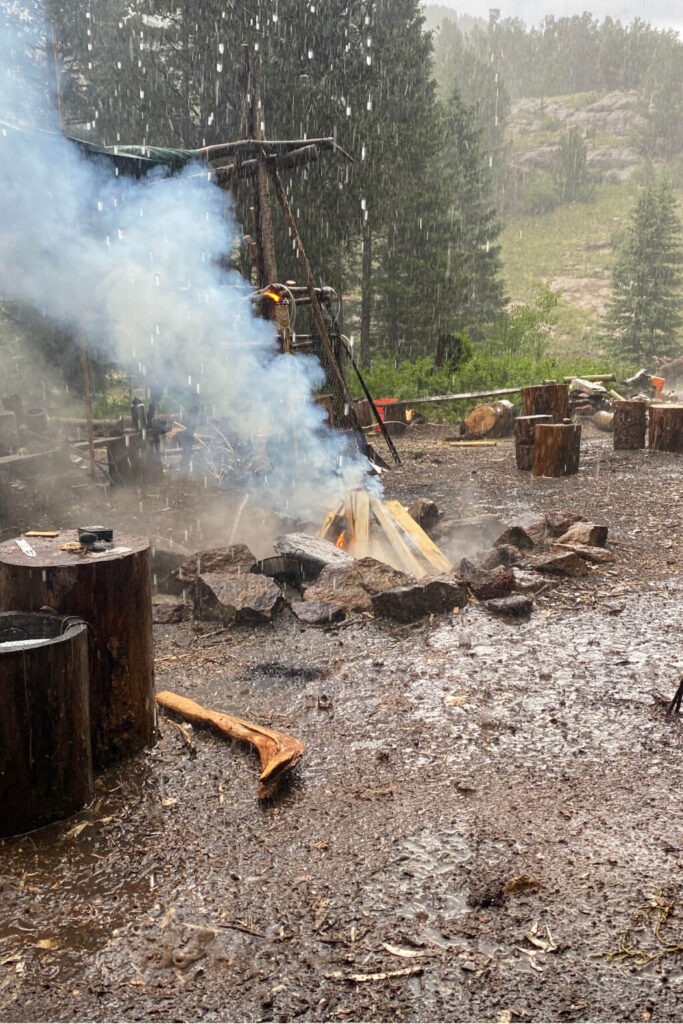
Skills that seem easy in comfortable conditions often become much harder when weather, fatigue, and stress enter the picture. Real preparedness comes from practicing until those skills still work when everything around you gets uncomfortable.
Some images in this article are real photos from training at The Survival University, while others are AI generated illustrations used to humorously demonstrate common internet survival hacks

Jason Marsteiner is the founder and lead instructor at The Survival University, where he’s turned his obsession with staying alive into a mission to teach real-world survival skills. Forget fancy gear, Jason’s all about the know-how that gets you through the wild or a city crisis. A published author of Wilderness Survival Guide: Practical Skills for the Outdoor Adventurer, he’s distilled years of hard-earned wisdom into lessons anyone can use.
Raised in Colorado’s rugged mountains, Jason’s survival chops were forged in the wild—from Missouri forests to Arizona deserts to Costa Rican jungles. He’s navigated it all with next to nothing, earning creds like Wilderness First Responder (WFR) and SAR tracking along the way. He’s trained thousands to keep cool when 911’s out of reach, proving survival’s not just for grizzled adventurers, it’s for hikers, parents, and city slickers alike.
Jason’s mantra? Everyone should make it home safe. When he’s not running courses, he’s designing knives, mentoring newbies, or chilling in the city like the rest of us, always sharpening the skills that turn panic into power.
Internet survival hacks are everywhere online, promising clever tricks that supposedly make wilderness living easier. The problem is that many of these ideas are designed...
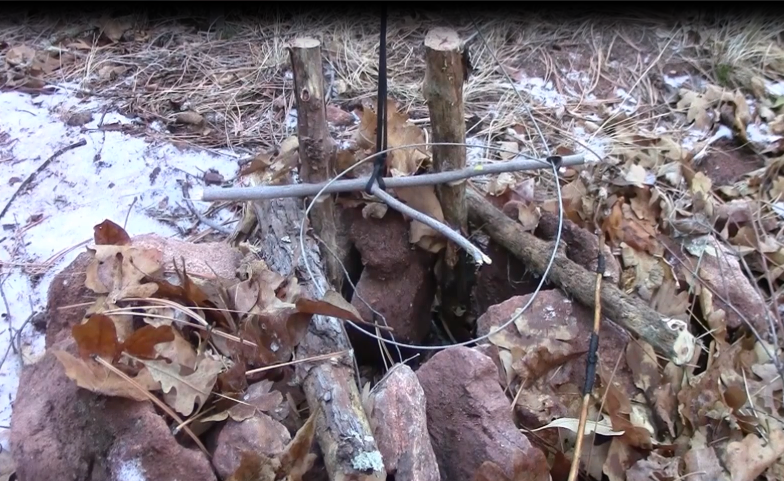
Learn how to set up the effective T Bar snare trap for survival situations. Discover tips on notching uprights and using the Penny Snare.