Cart
Sub-Total: $0.00
$595.00
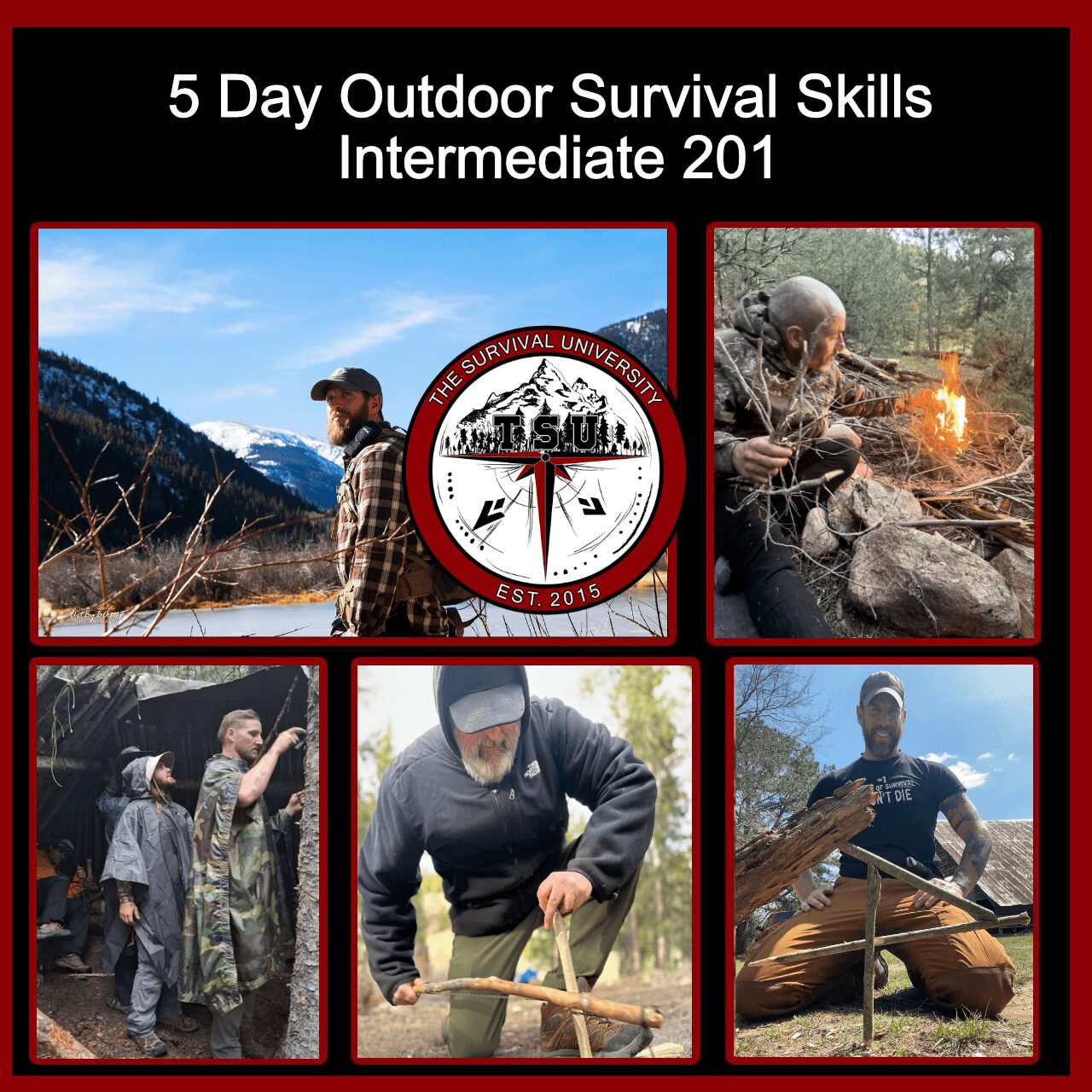
Once a student finishes Outdoor Survival Basics 101, they have a strong foundation in the skills needed to handle most short-term wilderness survival situations. Survival Skills 201 is the next step.
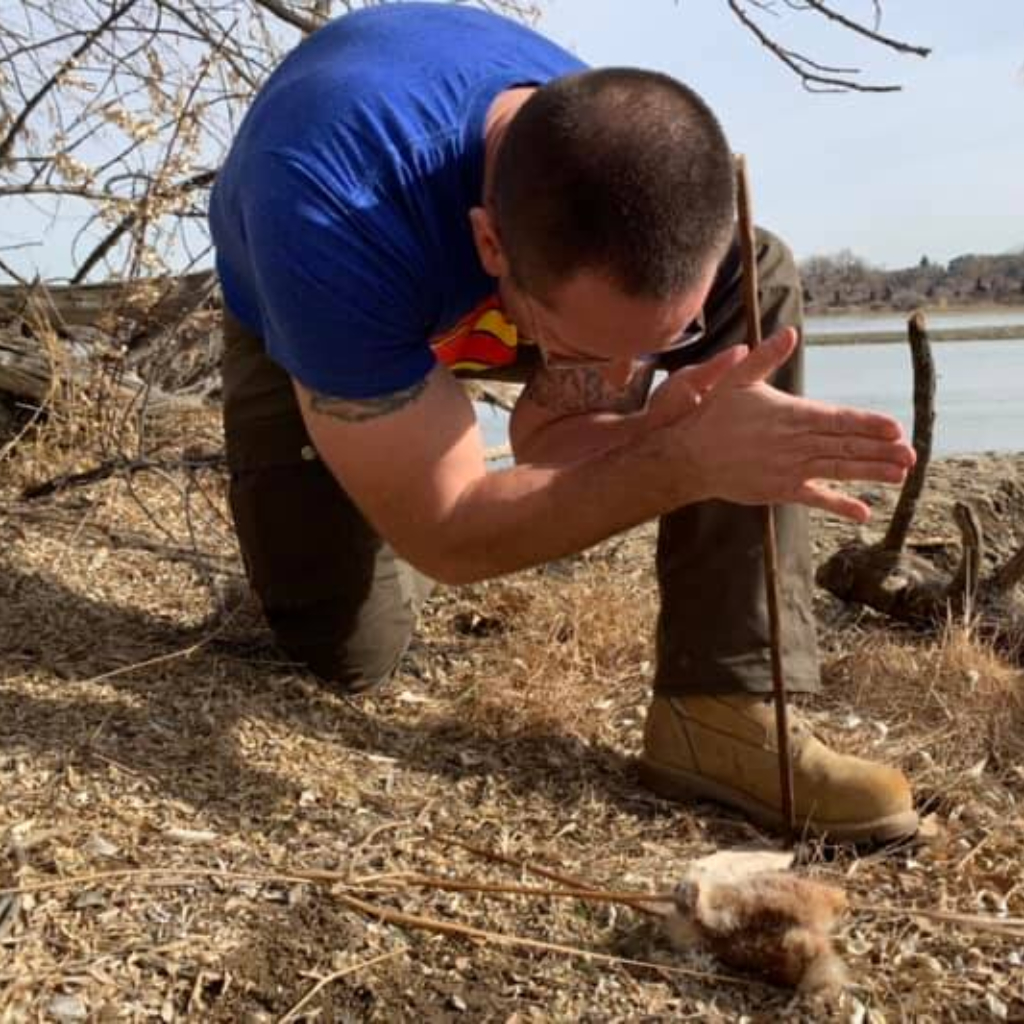
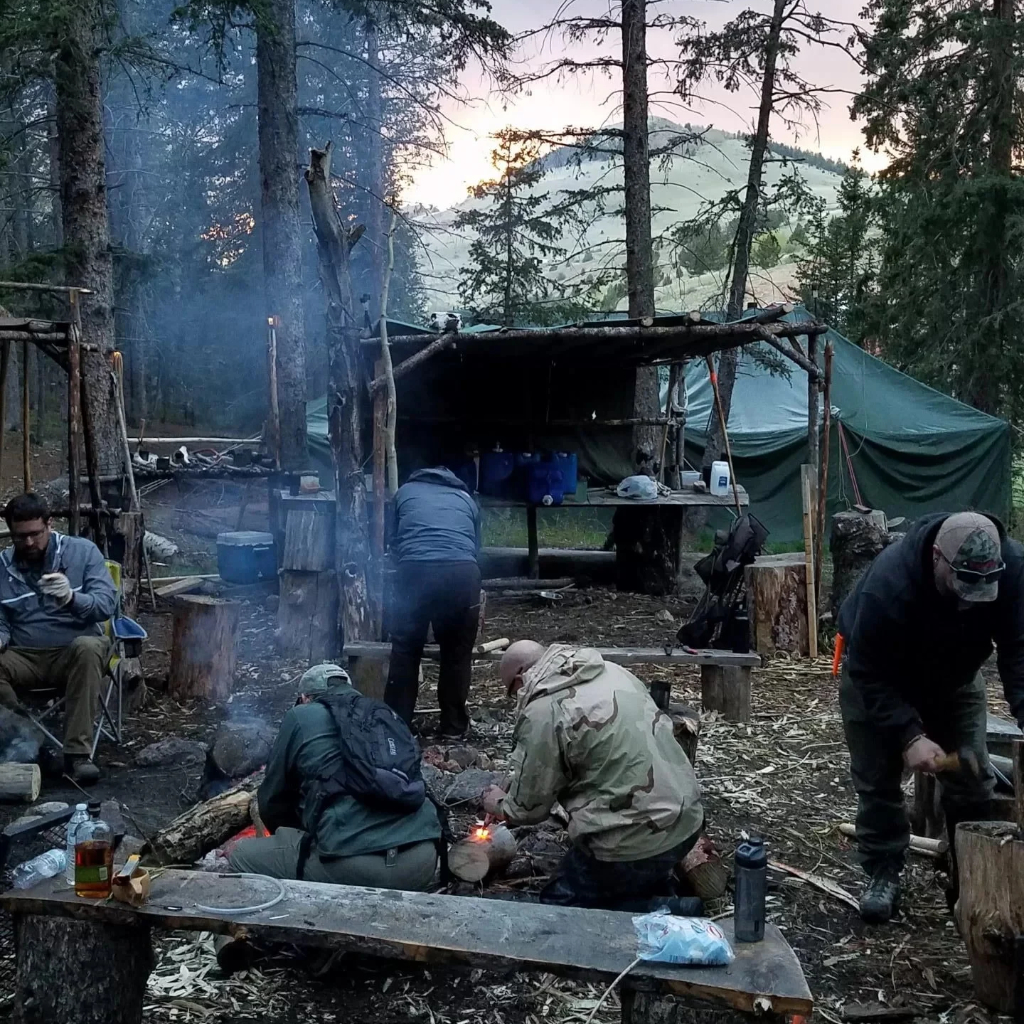
This course is about taking those basic skills out of the beginner stage and learning how to use them with more confidence, more efficiency, and better judgment in the field. Students will review and sharpen the core skills from Basics 101, then move into more advanced fire, shelter, water, tool use, campcraft, and problem-solving skills in a more challenging outdoor environment.
If Basics 101 teaches you what to do, Survival Skills 201 teaches you how to do it better, cleaner, longer, and with more confidence when conditions are not perfect.
Click ‘Book Now’ to view available dates.
Once a student finishes Outdoor Survival Basics 101, they have a strong foundation in the skills needed to handle most short-term wilderness survival situations. Survival Skills 201 is the next step.
This course is designed for students who have already taken our 5-Day Outdoor Survival Basics 101 class, or who already have solid experience with basic fire, shelter, water, knife safety, knots, and campcraft skills. In Basics 101, students learn what to do. In Survival Skills 201, students begin learning how to do those things better, cleaner, longer, and with more confidence when conditions are not ideal.
This class moves beyond basic survival priorities and begins looking at longer-term situations, harder environments, and real-world problem solving. Students will review and sharpen the core skills from Basics 101, then move into more advanced work with fire, shelter, water, natural materials, camp comfort, primitive and improvised tools, cooking methods, and field living skills.
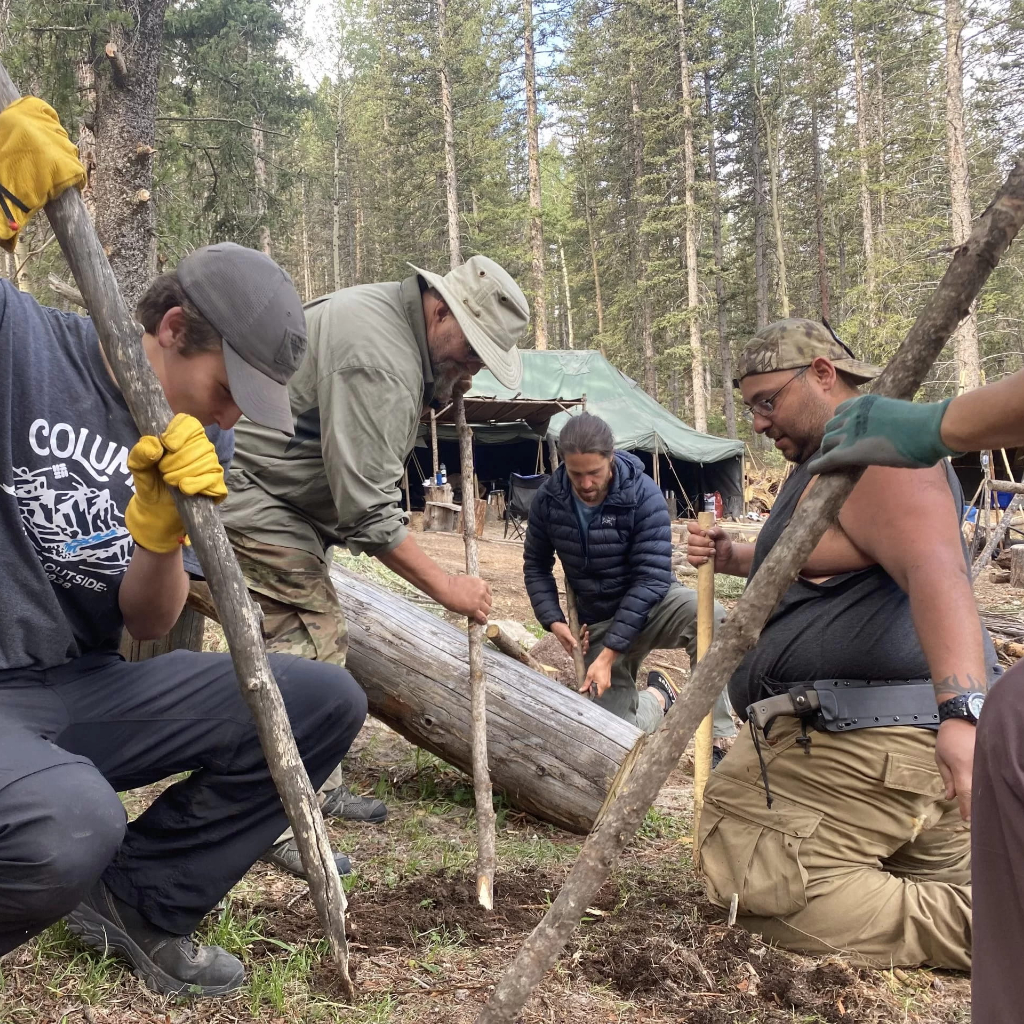
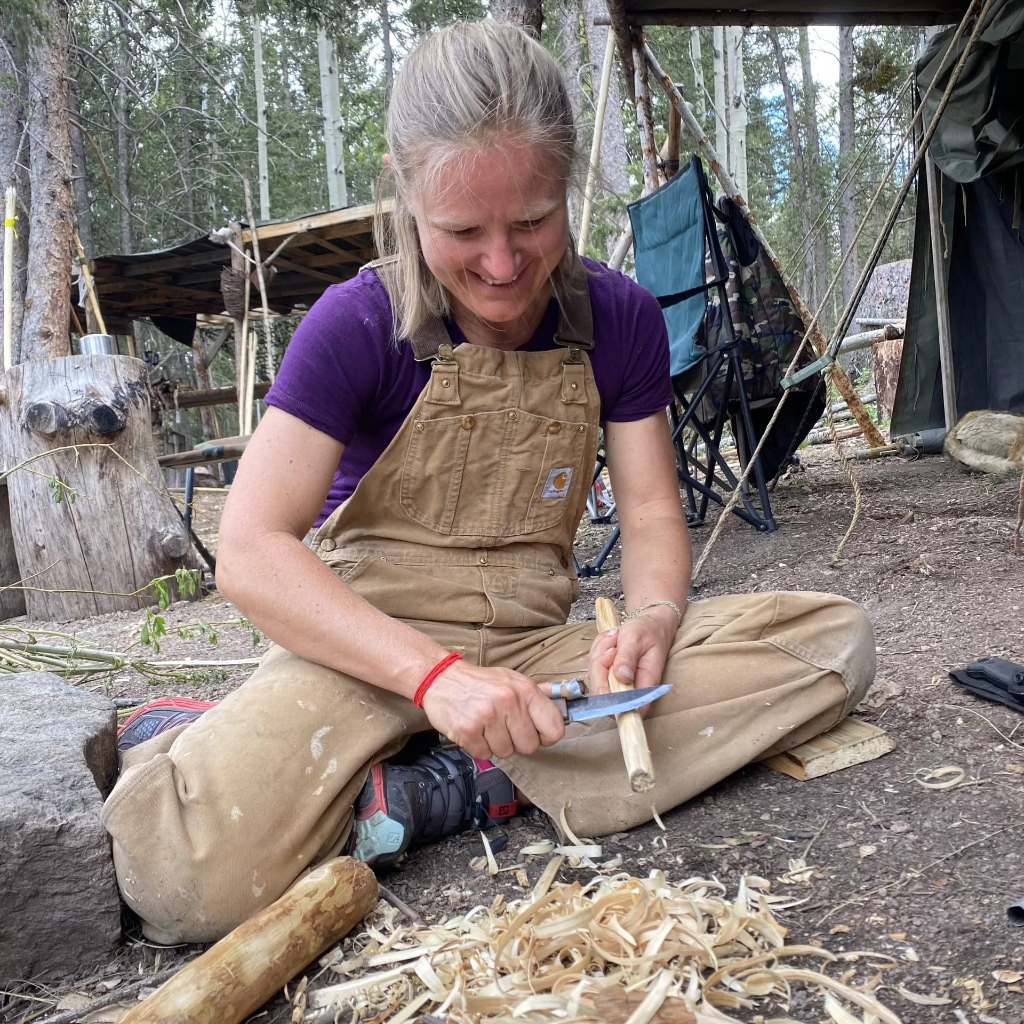
Students can expect to work on skills such as advanced knife use, camp projects, self-mapping, natural navigation methods, improved fire-making in difficult conditions, fire lays, carrying fire, shelter location, primitive bedding, emergency shelter systems, knots, field cooking, survival breads, ash cooking, small cook kits, water collection, water treatment, seasonal water concerns, and improvised water solutions.
This course is also where students begin to see how the individual skills connect. A fire is not just a fire. It can become warmth, a cooking system, a tool-making method, a signal, a morale boost, and part of your shelter system. A shelter is not just something you crawl into. It is a combination of location, materials, bedding, weather protection, body heat, fire placement, and good decisions. Water is not just something you filter. It is something you find, collect, protect, treat, and plan around.
As with all of our field-based classes, the exact flow of the course may change based on weather, conditions, available materials, student ability, and what the land gives us. That is part of the value of training outdoors. Every class is a little different because nature does not follow a classroom schedule.
Students should leave this course with a deeper understanding of how to take basic wilderness skills and turn them into practical field systems. This is not just about knowing a few techniques. It is about becoming more capable, more adaptable, and more comfortable solving problems outdoors with the tools, materials, and conditions available.
5 Days / 4 nights
Start Time: 9:00AM (Check-in begins at 8:00am)
End Time: 5:00pm
If students do not wish to camp with us, the town of Cripple Creek is a short 15 minute drive from our location and Woodland Park is 30 minutes away. Students will be responsible for making their own reservations with nearby hotels. We do have a central community campfire location with a few designated campsites but mostly offer dispersed camping. Students will be able to drive their car within 100 feet of the main camp and will not have to hike gear for long distances.
Water will be provided but students will need to bring their own food. We recommend quick field expedient meals such as freeze dried hiking meals or MRE’s. They can quickly be made at our primitive camps and won’t slow down the learning process. However, students may bring any food that they wish to cook over the campfire or on their own personal camp stove.
Food can be purchased locally at nearby facilities. Walmart and several local eateries are within a reasonable driving distance.
We do not provide students with gear unless they have purchased it from us ahead of time. Not much gear is needed for our courses, though good equipment does speed the learning process up greatly! Gear does not have to be purchased from our store to attend the course, but we recommend survival gear of equivalent quality.
CLOTHING REQUIRED
Warm outdoor clothing, warm gloves and hat, outdoor boots and wool socks. Cotton clothing is highly discouraged in the mountains! Wool will keep you warm even when wet and synthetics will dry faster. Layers are important in Colorado. You will want a water wicking base layer, an insulating mid layer, and a waterproof breathable outer shell. Check out our Clothes Layering Basics if you are unsure of what to wear.
Check Recommended Items List for more details!
If it is still not clear what gear is needed for our survival courses, then we have assembled a complete kit that is still high quality but for a budget friendly price. All the items in this kit were hand selected by our instructors to be the best bushcraft tools on a budget. This survival kit is a useful starter kit that can be used in all of our courses. These tools are a must-have at a good price. It’s a great survival kit, bug out kit, go bag, or use it as a solid foundation to build a kit that perfectly fits your needs. With this kit and our training anybody can survive like a king in almost any environment!
Due to the different levels of prior experience and knowledge among students in each class, individual outcomes may vary. Weather conditions can also be a factor in changing class content slightly. Nonetheless, our instructors will always endeavor to be as accommodating and consistent as circumstances will allow to ensure students get the best training experience and value for money.

-
Select options This product has multiple variants. The options may be chosen on the product page
-
Select options This product has multiple variants. The options may be chosen on the product page
-
Select options This product has multiple variants. The options may be chosen on the product page
-
Select options This product has multiple variants. The options may be chosen on the product page