Cart
Sub-Total: $0.00
16 min read

February 28, 2026
Everyday Carry, or EDC, has become one of those phrases that gets overcomplicated fast. Scroll social media for five minutes and you would think you need a titanium pry bar, three blades made from exotic steel, a pen designed to survive a small war, and a belt setup that looks like you are headed into a hostage rescue instead of the grocery store. That is not what everyday carry is supposed to be.
At its core, EDC is simply the collection of items you keep on you every day that help you solve ordinary problems. Not cinematic problems. Not worst case end of the world scenarios. Just normal life.
If your tire goes flat. If the power goes out. If someone cuts their hand. If you are stuck somewhere longer than planned. If your phone dies at the worst possible moment. Everyday carry is about smoothing friction when life does what life always does, which is surprise you at inconvenient times.
The goal is not to carry everything. The goal is to carry enough.
So instead of structuring this like some tiered tactical system, let’s start with what most people already have in their pockets and build forward from there.
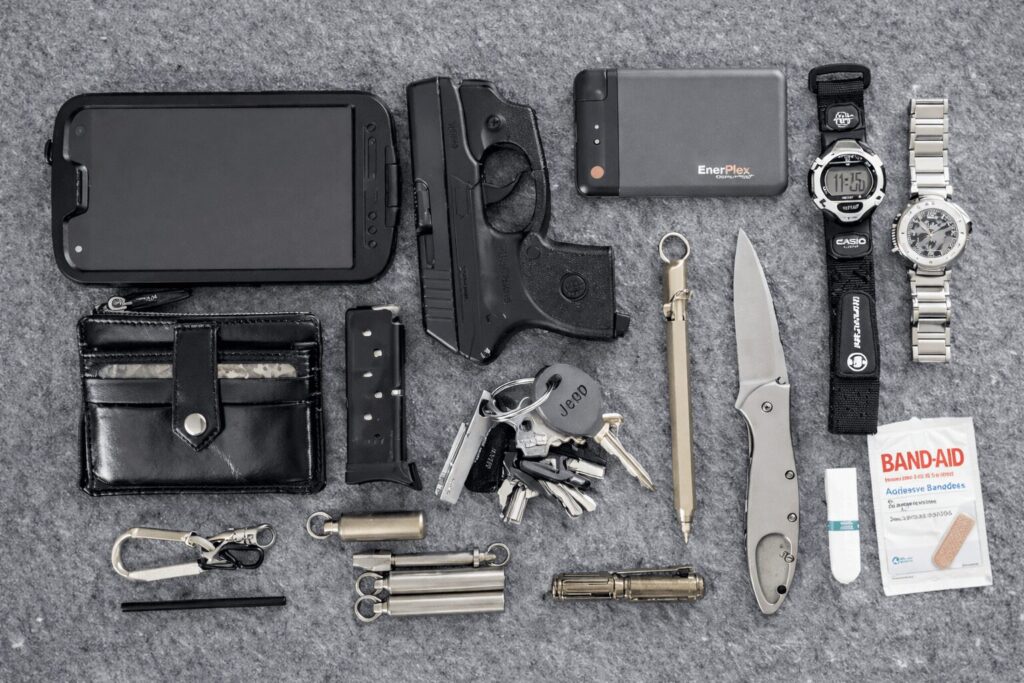
At the most basic level, your EDC is probably already on you. You walk out the door with your phone, keys, and wallet. That is the starting point. The only real question is whether those items are working for you or just riding along out of habit.
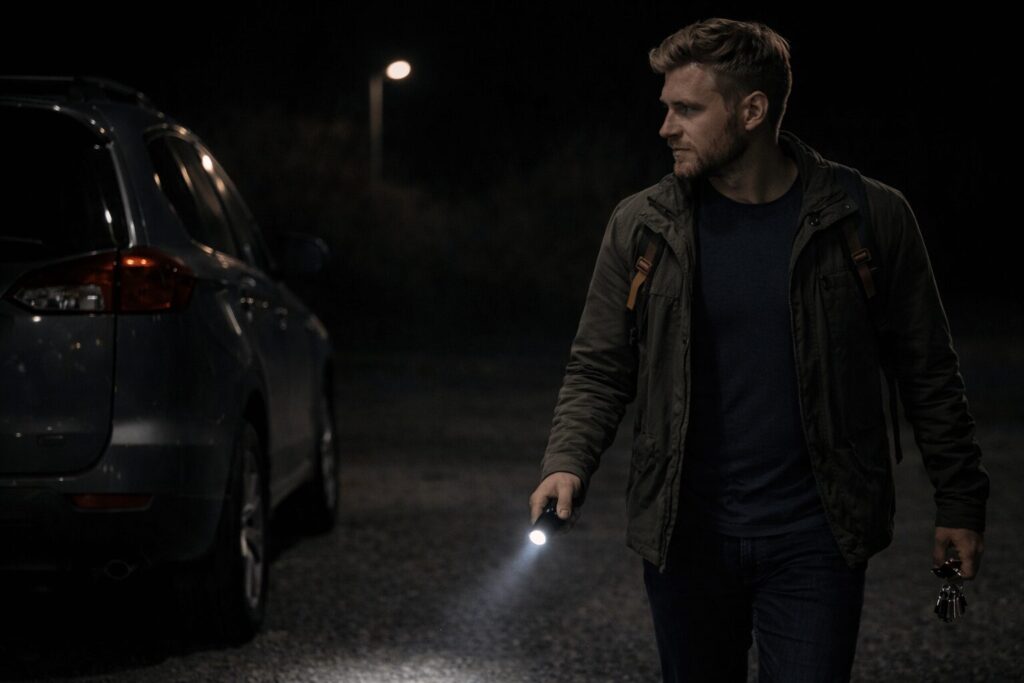
Keys are more than metal that starts your truck. They are access. Access to vehicles, buildings, equipment, and movement. Adding a small, reliable flashlight to that key ring weighs almost nothing and solves more real world problems than most people realize. Parking garages. Dropped items at night. Power outages. Checking under the hood. Navigating a dark trail back to camp. A light feels almost boring until the exact moment you need one and do not have it.
A small folding knife belongs here as well. Not a massive blade designed to intimidate strangers, but a simple 3 inch folder that cuts what needs cutting. Packages. Rope. Zip ties. Food. Clothing tags. Small repairs. A knife is one of those tools that quietly earns its place over and over again without ever asking for attention.
Cash deserves a mention too. We live in a digital world, but digital systems fail. Networks go down. Card readers glitch. Batteries die. Having $20 to $100 tucked into your wallet or hidden behind a phone case is not paranoia. It is insurance against inconvenience.
This baseline is not about looking prepared. It is about quietly being functional.
If you stop here and intentionally choose quality tools instead of random clutter, you are already ahead of most people.
A clean, practical foundation might look like this:
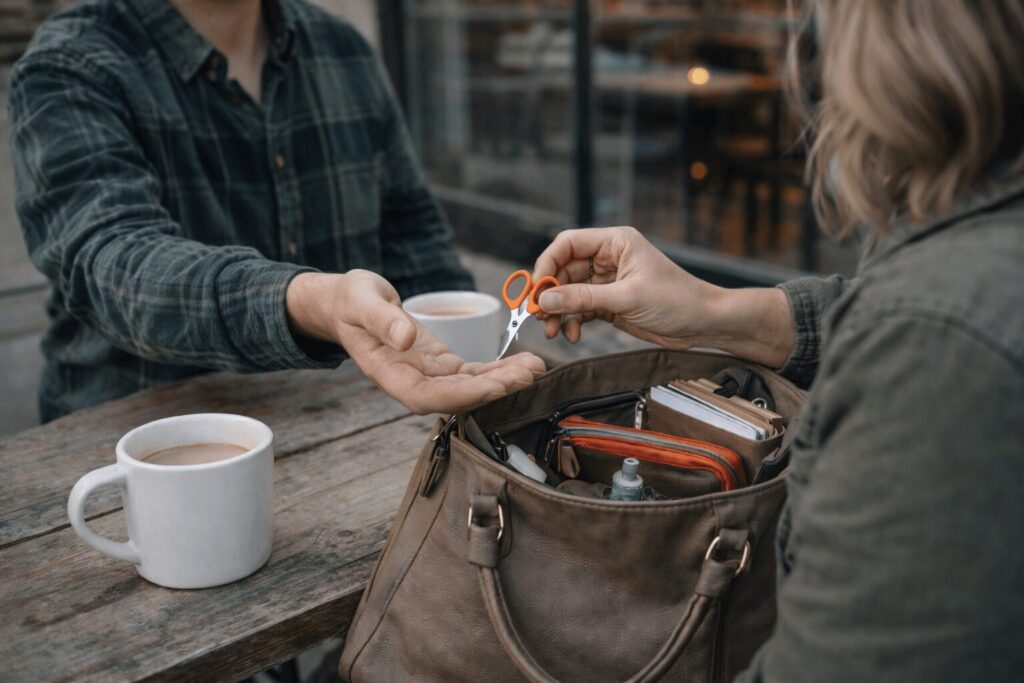
There is a funny reality about everyday carry that most men ignore. Women have been doing it for decades. It was never called EDC. It was called a purse.
While men argue about blade geometry and flashlight lumens, women have been walking around with fully functional support systems on their shoulders. Snacks. Medication. Chargers. Band aids. Hand sanitizer. Lip balm. Small tools. Hair ties. Extra cash. And yes, random candy and enough lint to insulate a small cabin.
It is almost predictable. Someone says, “Does anyone have…?” and before the sentence is finished, a woman is already reaching into her bag. The answer is usually yes.
The purse is arguably the original urban survival kit.
In recent years, men have quietly figured this out. Carrying useful things turns out to be useful. So now we have sling bags, crossbody packs, messenger bags, and compact waist packs that absolutely are not fanny packs. They are described with much more serious language like low profile carry systems or tactical waist belts. Some of the toughest guys you know are essentially carrying a small purse, just in darker colors with more Velcro.
And the truth is, they work.
A typical “non EDC” purse often contains:
Call it whatever you want. The concept is solid. Carry what makes life easier. Leave the ego out of it.
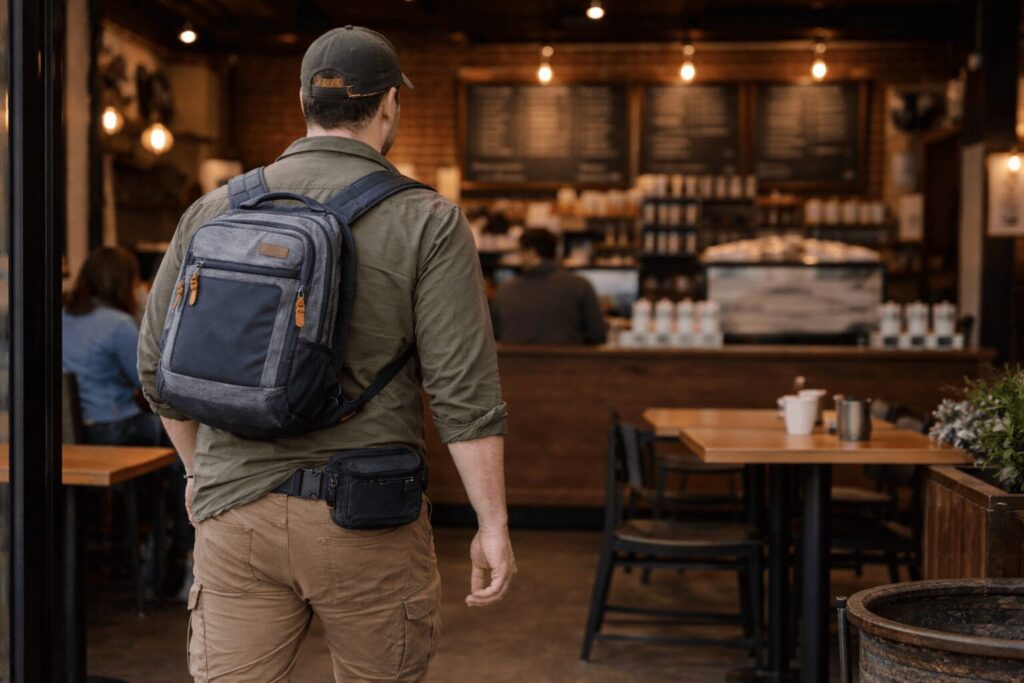
At some point, pockets are not enough. This is where a small sling bag, crossbody bag, or compact waist pack earns its place. The goal is still restraint. You are not packing for a week in the wilderness. You are building a small, functional kit for real life.
A more capable flashlight makes sense here. Something with actual output and runtime, not just a keychain glow. A compact first aid kit belongs in the mix, with gloves and basic trauma supplies if you know how to use them. A power bank and charging cable solve one of the most common modern problems, which is a dead phone at the exact wrong time. A multitool adds versatility without much weight. A small notebook and pen may sound old fashioned, but writing something down during stress is often faster and more reliable than fumbling through an app.
This is not escalation into fantasy. It is simple acknowledgment that you may be away from home longer than expected. Traffic jams. Delays. Weather shifts. Long work days. Travel. Teaching. Life stretches out, and you have a few more tools to stay steady when it does.
A balanced civilian carry might include:
None of this is dramatic. It is simply practical. The bag is not there to make a statement. It is there to buy you options.
If you want to go deeper into how this mindset applies to city life, traffic, power outages, civil unrest, and everyday urban friction, we teach a hands-on Urban Preparedness and Self Reliance class that walks through these systems in real time. It is not fear based and it is not theatrical. It is practical training for normal people who want to move through the modern world with more awareness and fewer surprises.
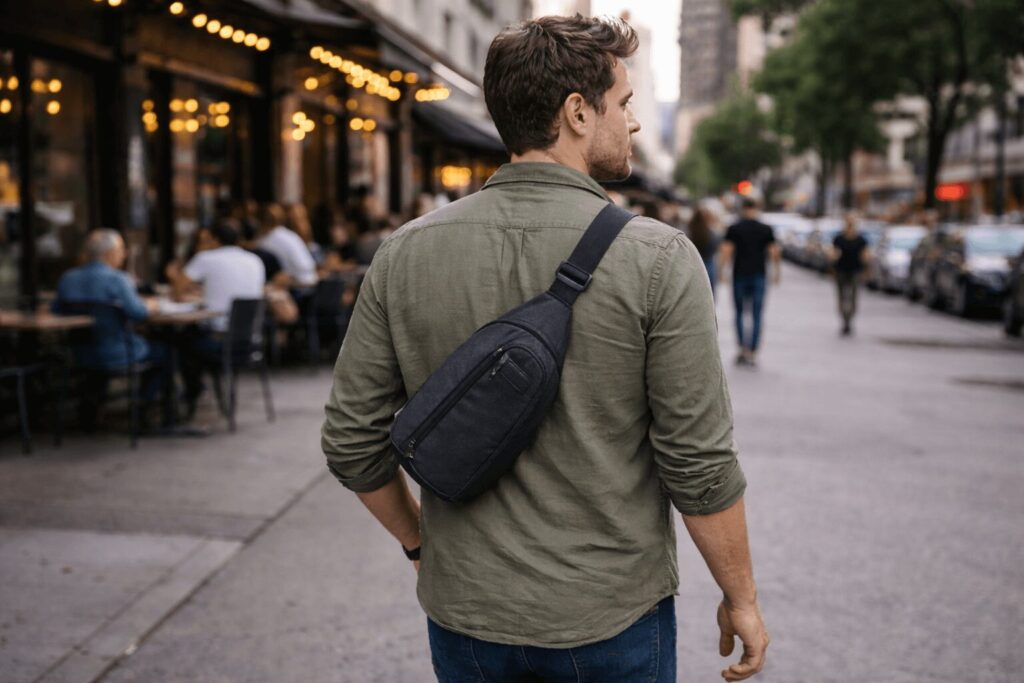
When my tactical instructor talks about a “basic” everyday carry, he is not talking about minimalist trends or social media pocket dumps. He is talking about function. Tools you actually use. Tools that solve real problems without turning you into a walking gear display.
His version of basic builds on the honest baseline and adds intention. It is still compact. Still realistic. Just more complete.
For those who choose to carry concealed, the philosophy does not change. The firearm is not the identity. It is one tool among many. If the pistol is the only thing that changes in your daily setup, the system is incomplete.
A disciplined foundational EDC, armed or unarmed, might include:
For those who carry concealed, the system expands slightly:
That is what he considers basic.
It is not excessive. It is not dramatic. It covers time, identification, money, access, light, cutting, fire, communication, documentation, basic medical, and personal protection.
Communication is one of the most overlooked pieces of everyday carry. Most people assume their phone will always work. When networks get congested, batteries fail, or coverage disappears, that assumption falls apart quickly. That is exactly why we teach a dedicated Off Grid Communications class that focuses on understanding how systems actually function instead of just relying on bars on a screen.
The pencil deserves mention. It is analog. It writes in the rain. It writes upside down. It writes on almost anything. The reinforced pen adds durability and a secondary use without turning into a gimmick.
A pistol addresses a very specific kind of threat. Light, medical gear, and communication tools address far more common realities. Vehicle crashes. Workplace injuries. Power outages. Delays. Confrontations that never escalate. If you are going to carry a serious tool, it makes sense to round out the system so it works in more than one direction.
Carrying armed should feel quiet and uneventful. It should not make you more aggressive or theatrical. If anything, it should make you more deliberate. Stay aware. Avoid what you can. Handle what you must. Go home steady.
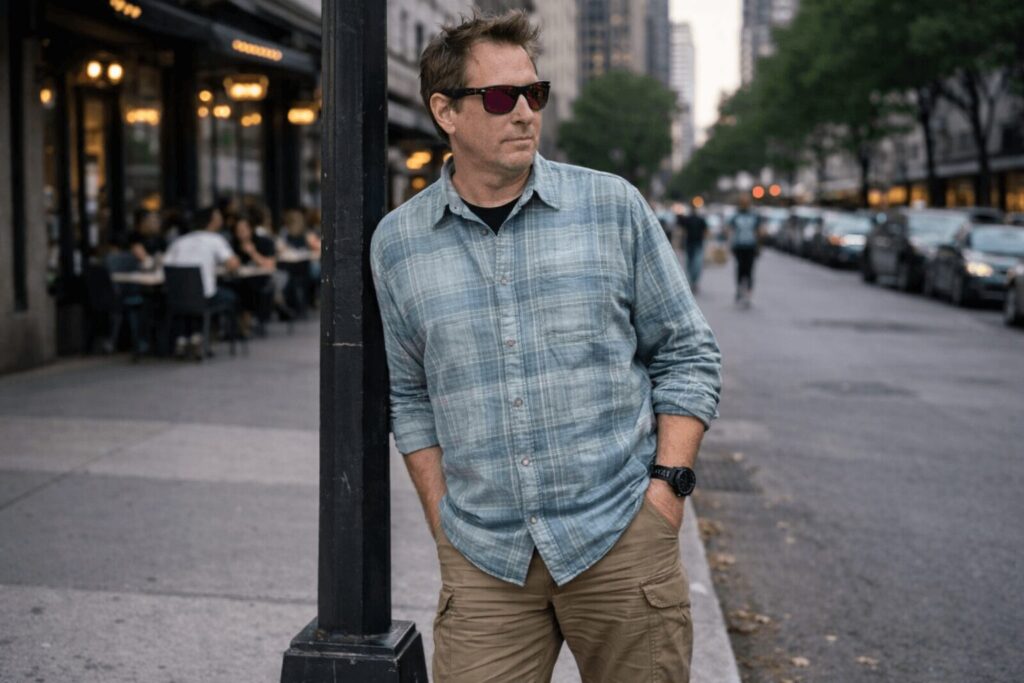
Then there is the person who wants to be more prepared than average without turning into a walking gear display. This is the individual who assumes delays happen, equipment fails, and plans shift. Not because the world is ending, but because life is messy. This setup adds redundancy while staying grounded in reality.
A well thought out daily kit at this level might include:
This edges toward the cool guy kit without drifting into fantasy. There is still discipline here. No grappling hook. No throwing stars. No six knives. No oversized pry bar. Just tools that solve predictable problems.
It is heavier. It will almost certainly require a sling bag or waist pack. And it only makes sense if the person carrying it knows how to use what they are carrying. Gear without skill is just weight.
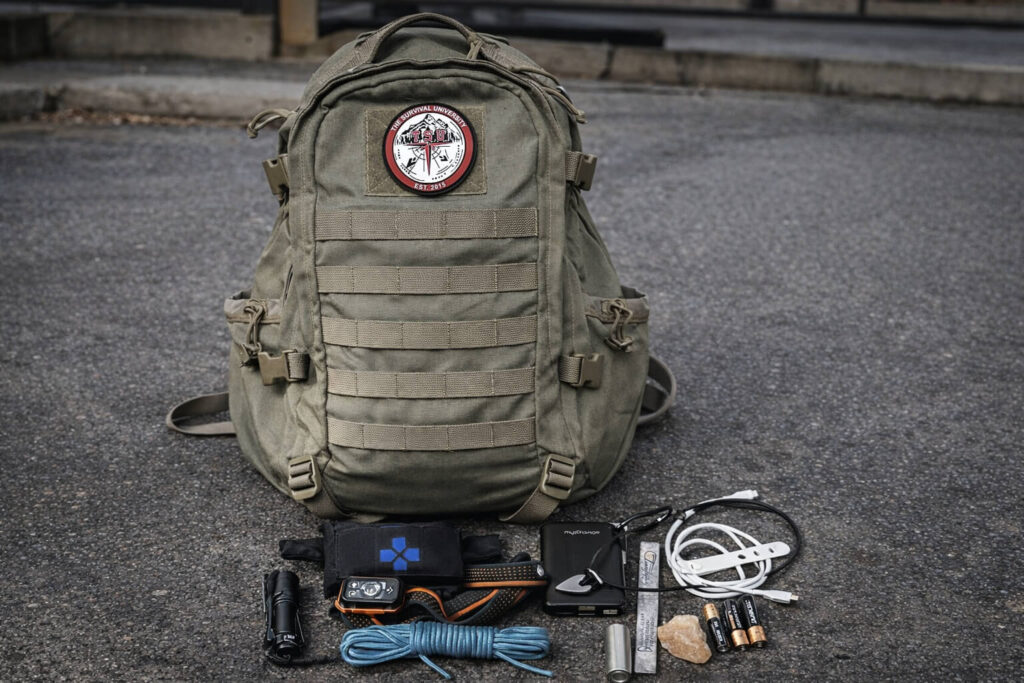
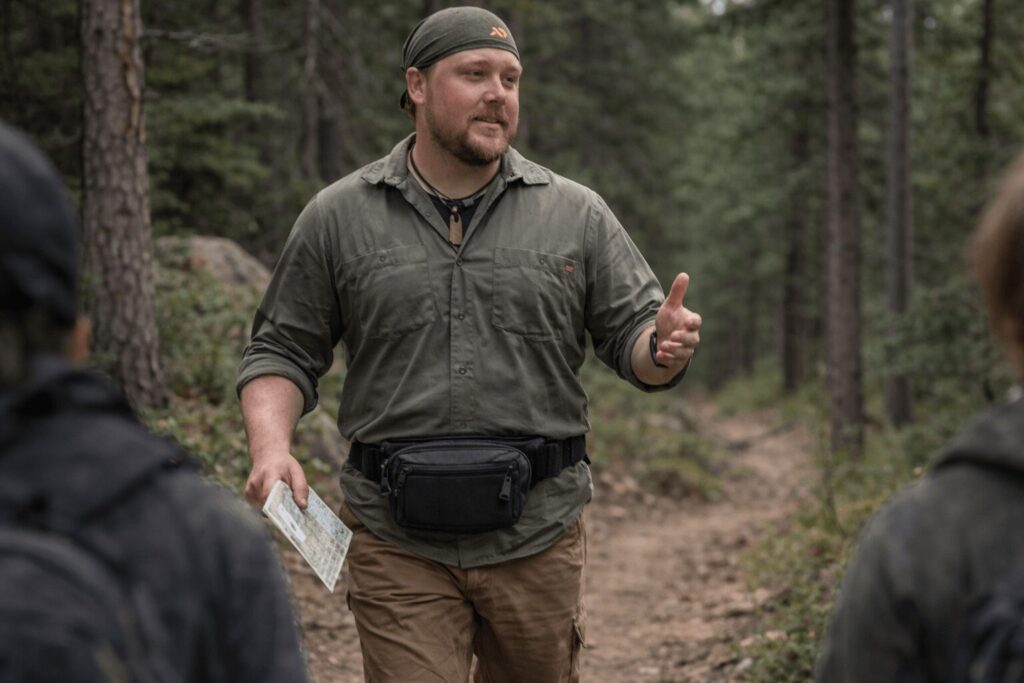
One of my instructors carries a small waist pack anytime he is moving in the backcountry. It weighs about 2 lbs and rides low and tight against his body. He jokingly calls it his “nut ruck,” which tells you exactly how compact it is and where it sits. The nickname is rough. The concept is not.
This is not a fashion statement and it is not a giant survival vest. It is a disciplined, minimalist kit built to bridge the gap between inconvenience and real trouble.
Inside that small pack are only the essentials:
That is it.
If he twists an ankle, gets delayed by weather, or simply moves slower than expected, he is not relying on optimism. He has enough to create shelter, build fire, treat an injury, and stabilize himself until morning.
The real strength of the kit is not what is in it. It is that he actually wears it. A 40 lb bag sitting in the truck does nothing when you are 3 miles down the trail. A 2 lb kit on your body gives you options.
Call it a waist pack. Call it a sling. Call it a nut ruck if you are being honest. The label does not matter. The discipline behind carrying it does.
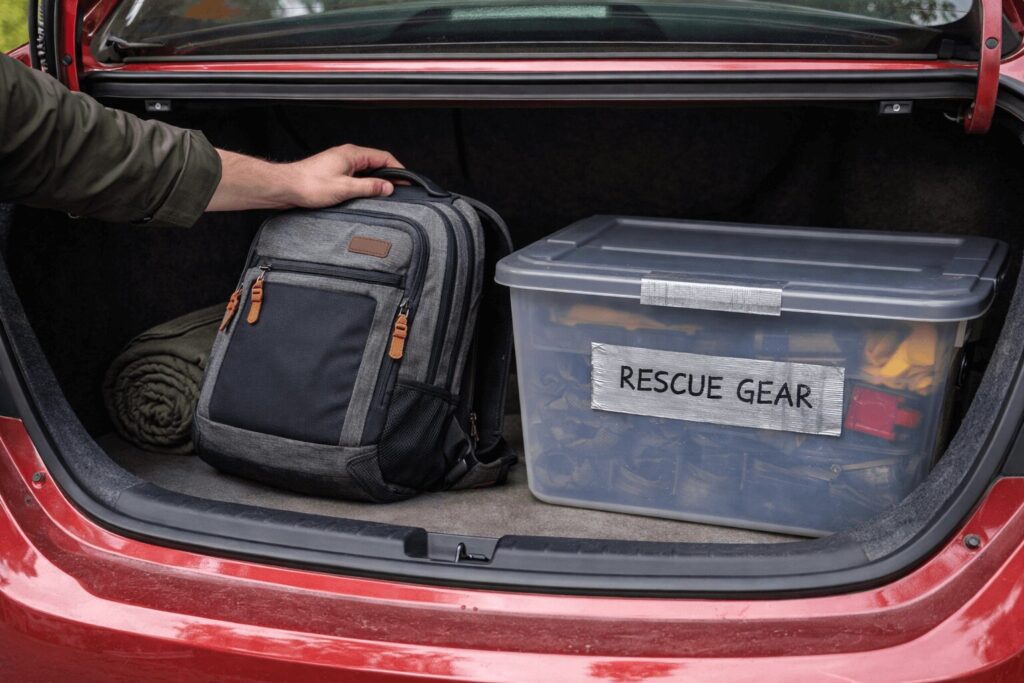
Your vehicle is an extension of your everyday carry. It is your mobile base of operations, and unlike your pockets or sling bag, it gives you space. The gear in your vehicle should reflect where you live, how far you travel, and the environments you regularly move through.
At a minimum, water, a blanket, and a capable flashlight belong in every vehicle. A jump pack or jumper cables can save you or someone else from being stranded. A basic tool kit, gloves, and a small first aid kit solve common roadside problems without much cost or space. In colder climates, extra layers, traction aids, and a shovel are practical additions, especially if you spend time in mountain terrain.
This is not about turning your trunk into a rolling warehouse of apocalypse gear. It is about flat tires, dead batteries, winter storms, stalled traffic, and long waits on the shoulder. Most emergencies begin as inconvenience. Your vehicle kit exists to keep inconvenience from becoming something worse.
A well thought out vehicle setup might include:
You do not need everything on that list. You need what makes sense for your life. Someone driving urban highways daily will carry differently than someone driving forest service roads at 9,000 feet.
The vehicle expands your capability far beyond what you can physically carry on your body. Used wisely, it is not dramatic. It is just another layer of quiet competence.
EDC is not about looking tactical. It is not about posting curated pocket dumps on social media or debating steel types in comment sections. It is not about building an identity around gear. At its core, everyday carry is about building quiet competence into your daily life. It is about reducing hesitation when something small goes wrong. It is about shortening the gap between problem and solution.
Most real world problems are not dramatic. They are inconvenient. A dead battery. A dark parking lot. A minor injury. A stalled vehicle. A long unexpected wait. Everyday carry exists to smooth those edges. It gives you light when it is dark, options when plans shift, and stability when things feel slightly off balance.
The best EDC setup is the one you will actually carry without resentment. That matters more than anything. If it is too heavy, too bulky, too uncomfortable, or too complicated, it will get left behind on the dresser. The perfect loadout sitting at home does nothing for you. A simple, well thought out kit that you consistently carry beats an overbuilt fantasy system every time.
There is also a psychological benefit that rarely gets discussed. Carrying a few purposeful tools changes how you move through the world. You stop feeling reactive. You stop feeling dependent. You begin to recognize that most problems are manageable. That quiet shift in posture and awareness is far more powerful than the gear itself.
The smart approach is iterative. Start small. Carry the basics for a few weeks. Pay attention to the moments where you think, “I wish I had…” That sentence is your teacher. Add tools that solve real frustrations you actually experience. If you never once reach for the extra gadget you thought you needed, remove it. EDC should evolve based on reality, not imagination.
There is also wisdom in restraint. Carrying five knives does not make you five times more prepared. Redundancy has a place, but excess creates clutter. The goal is balance. Enough capability to handle the unexpected, not so much weight that you dread putting your pants on in the morning.
And if, after all that refinement, you find yourself carrying a small sling bag with a flashlight, medical kit, charger, multitool, a snack, and yes, probably a little candy and lint, you are doing it right. You have built a system that reflects your life instead of someone else’s fantasy.
In the end, everyday carry is not about being ready for everything. It is about being ready for what is most likely. It is about steady competence, not performance. Carry what you need. Adjust as you learn. Leave the drama at home.
If you strip every section above down to its core categories, the needs are simple:
Every item in this article fits into one of those lanes.
You do not need every tool listed. You need tools that cover the lanes that match your life.
Start with the honest baseline. Add capability where friction shows up. Carry what you will actually carry. Remove what you never use.
EDC is not a checklist. It is a filter.
It forces you to ask a simple question: What problems am I likely to face in my real life, and what small tools reduce friction when they show up? That answer will look different for a dad in the suburbs, a teacher in the city, a cop on patrol, or someone moving through the backcountry. The system should reflect your life, not someone else’s highlight reel.
This blog uses a combination of real photographs and AI generated images. AI images are used to illustrate concepts, not to document actual events.
Jason Marsteiner is the founder and lead instructor at The Survival University, where he’s turned his obsession with staying alive into a mission to teach real-world survival skills. Forget fancy gear, Jason’s all about the know-how that gets you through the wild or a city crisis. A published author of Wilderness Survival Guide: Practical Skills for the Outdoor Adventurer, he’s distilled years of hard-earned wisdom into lessons anyone can use.
Raised in Colorado’s rugged mountains, Jason’s survival chops were forged in the wild—from Missouri forests to Arizona deserts to Costa Rican jungles. He’s navigated it all with next to nothing, earning creds like Wilderness First Responder (WFR) and SAR tracking along the way. He’s trained thousands to keep cool when 911’s out of reach, proving survival’s not just for grizzled adventurers, it’s for hikers, parents, and city slickers alike.
Jason’s mantra? Everyone should make it home safe. When he’s not running courses, he’s designing knives, mentoring newbies, or chilling in the city like the rest of us, always sharpening the skills that turn panic into power.
Everyday carry is not about looking tactical or building a fantasy loadout. It is about carrying practical tools that solve ordinary problems when life throws...
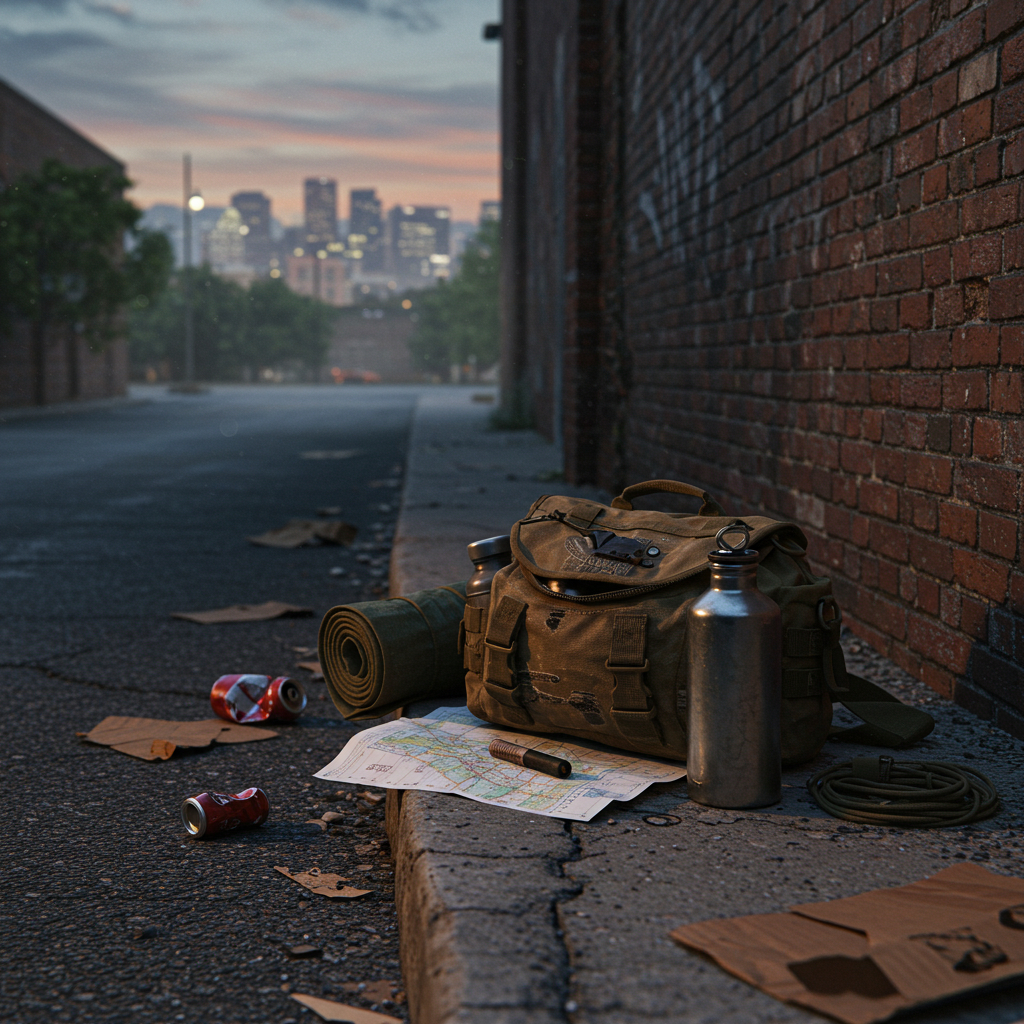
Urban Survival in 2025: Adapting Wilderness Skills to City Environments What happens when the grid goes down in Denver? Here’s how wilderness survival skills, straight...
We have the most in-depth bug out bag list to help you know exactly what essentials to put in your bug out bag for your...

In an ever more urbanized world, it's crucial to empower people with the know-how to thrive in cities. By following these suggestions, you can boost...
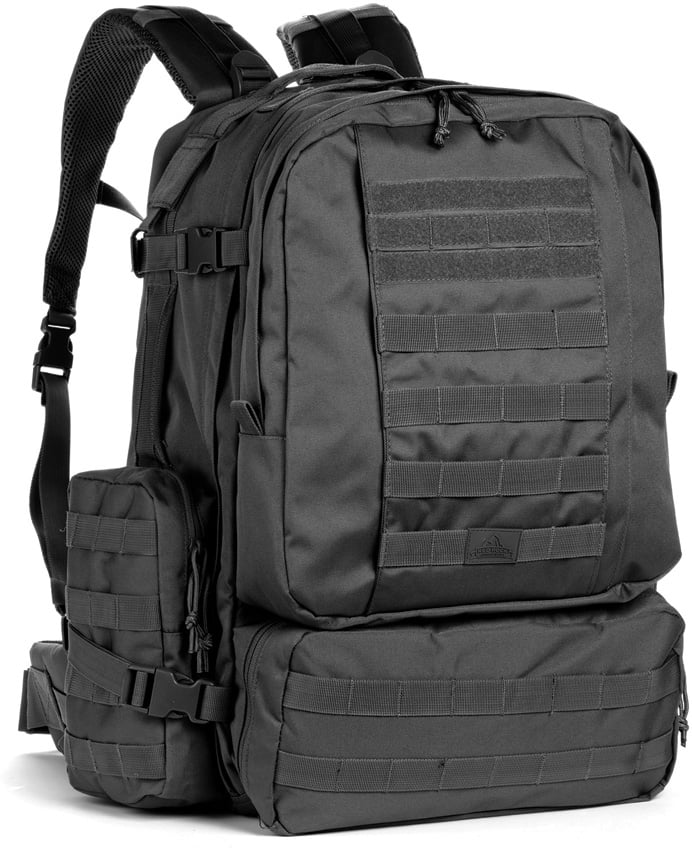
I was asked by Peter Betts of The Survival Hacks, to contribute my opinion of the top 3 items to put in a bug out...