Cart
Sub-Total: $0.00
17 min read
March 29, 2026
Wildfire season gets people’s attention fast. One day everything feels normal, and the next day there is smoke in the air, alerts going out, and officials telling people to be ready to leave. That is when the questions start. What do I pack? Where do I go? How long will I be gone? People start scrambling, and it turns into chaos almost immediately.
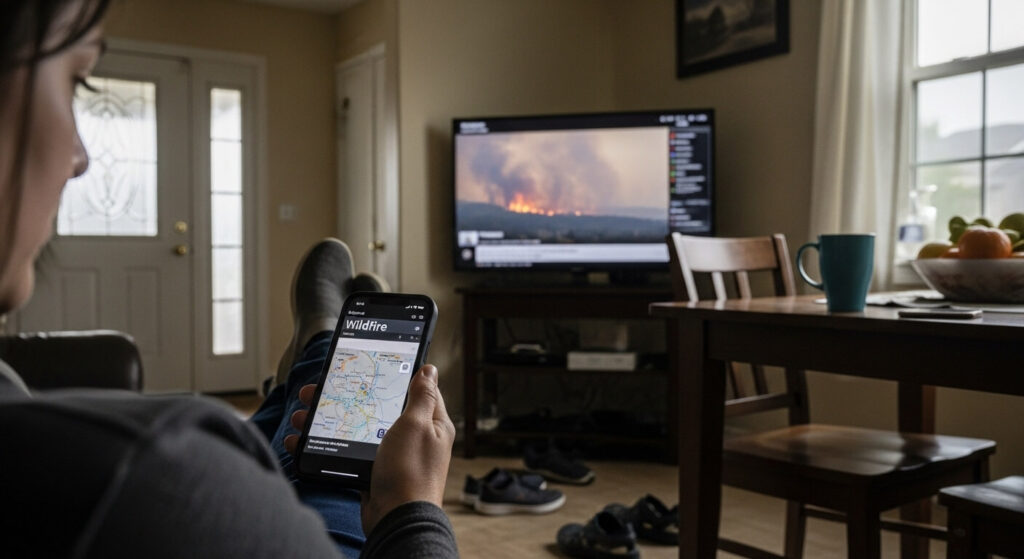
A lot of times, people see reports on the news that a fire is in their area and they just sit and watch it. They assume it does not apply to them because they are not in the immediate evacuation zone or they have not been specifically told to leave. So they wait. They keep an eye on it, but they do not act.
Then conditions change. The wind shifts or something unexpected happens, and suddenly the situation is on top of them. Now it is no longer something they are watching. Now they are reacting, and they are doing it late.
What is interesting is that this is not new information. This is not something that suddenly became important overnight. I have been talking about this for years. We teach this in classes. We walk people through scenarios where they have to think through leaving quickly, figuring out what is important, and making decisions under pressure. Most of the time, it gets brushed off. Public agencies and other organizations put this information out constantly. It is not hidden. It is not hard to find. But most people scroll past it, ignore it, or tell themselves they will look into it later. Sitting down and thinking it through takes time and effort, and that is usually enough for people to push it aside. Life feels normal, schedules are full, and it is easy to convince yourself that nothing is going to happen to you anyway. Until it does. When it comes to urban preparedness, people assume they already have it handled. They think it is simple. They think they will just grab a few things and be fine but they do very little to prepare ahead of time.
Then someone in an official position makes a social media post or goes on the news and tells people to have a go bag ready, and suddenly nobody knows what to do. People panic, start Googling lists, overpack the wrong things, and realize they do not have a plan. They start asking on social media what to do and are often told things that are not completely accurate by other people who are guessing too. It turns into a mess. It also raises a fair question. Why does it take an emergency playing out in real time before people start paying attention? Why does it take someone in an official role to say something before people take it seriously, especially when those same officials are often just repeating general guidance and not living this stuff day to day?
This is not just about wildfires. The same pattern shows up with floods, storms, and other situations where people need to leave quickly because things are getting unstable. The setting changes, but the problem stays the same. Pressure goes up, time goes down, and people realize they were not as prepared as they thought.
So instead of another generic checklist, this is a breakdown of what you are really going to need when you have to leave your home and you do not know when you are coming back.
Because a lot of people are not building a go bag. They are building a camping or an overnight bag. And those are very different things.
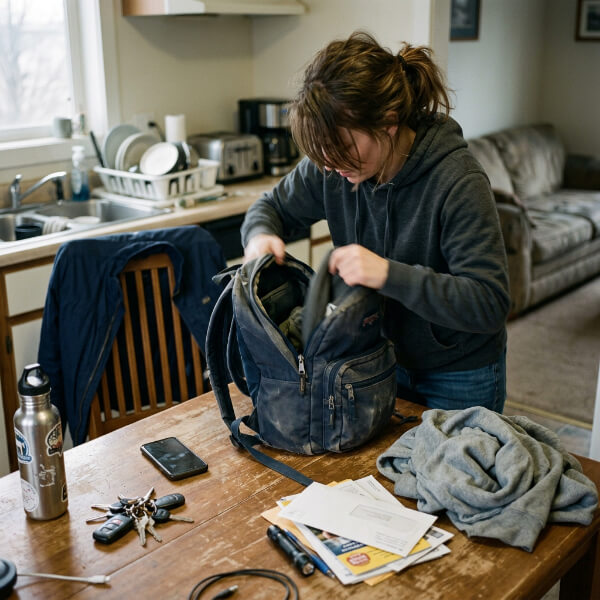
A lot of the advice out there focuses heavily on gear. Lists of tools, survival kits, and all kinds of items that make sense if you are heading into the wilderness or for long-term survival. That is not what most evacuations look like. In reality, you are usually leaving your home, getting into a vehicle, going to a shelter or a friend’s home, and entering a situation where things are uncertain, access may be restricted, and timelines are unclear.
People tend to overpack things they will not use and completely overlook the things that cause problems once they are displaced. They think in terms of comfort or fantasy scenarios instead of thinking through what happens during an evacuation. The result is a bag that looks impressive but does not solve real problems.
A big part of the problem is that people confuse go bags, bug out bags, and 72 hour kits. They are not the same thing. A go bag is built for leaving quickly and dealing with real-world disruption. A bug out bag is built for long-term self-reliance, which most people are not doing. A 72 hour kit is about getting through the first few days. Most people end up mixing all three and missing some items they really need.
The goal of a go bag is not to cover every possible scenario. It is to buy yourself time, reduce friction, keep your options open, and make sure you can move, access what you need, and prove what you need to prove when things are already stressful and moving fast. That requires a different way of thinking.
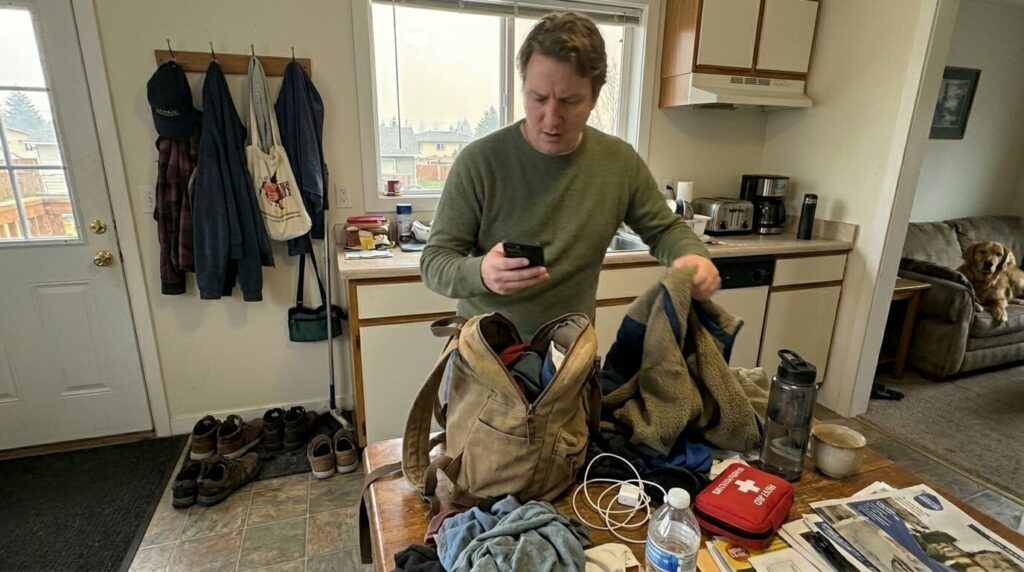
The basics like water, food, and clothing are still important, but those are not the things people forget. The following items are the ones that tend to get overlooked, and they are the ones that solve real problems once you are already in motion.
Proof of Residency, Not Just a Driver’s License
Most people assume their ID is enough, but that is not always the case. During evacuations, areas can be restricted and access points can be controlled. If you try to return, you may be asked to prove that you live there. A utility bill, lease agreement, or property document with your name and address can be the difference between getting back in or being turned away. This is less about identity and more about access. It sounds minor until you are standing at a roadblock trying to explain why you belong there.
A Waterproof Packet of Critical Documents, Including a Digital Backup
Closely tied to that is having a waterproof packet of critical documents, not a loose stack of papers thrown into a bag, but something organized, protected, and easy to access. This should include identification, insurance information, medical information, and basic financial documents. If you lose access to your home, these become your starting point for dealing with everything that follows. Water, weather, and movement can destroy paper quickly, so protection is important.
Alongside the physical copies, it is worth including a small USB drive with digital backups of those same documents. Scanned copies of IDs, insurance policies, photos of your home and valuables, medical records, and anything difficult to replace should be stored on it. This gives you a second layer of access if the paper copies are damaged or if you need to pull something up on a computer without relying on internet access or logging into accounts. Most people either rely entirely on paper or entirely on the cloud. Having both closes that gap and gives you options when things are not working the way you expected.
Printed Contact List
A printed contact list is another simple but important addition. People rely heavily on their phones, and most of the time that works. Until it does not. Batteries die, phones break, accounts lock, and service can be unreliable. Having key phone numbers written down removes a layer of stress when you need to reach someone and your device is no longer reliable.
Spare Set of House and Vehicle Keys
This is one of those simple things people overlook because it feels obvious. Most people rely on a single keychain, and that works fine until things get rushed. During an evacuation, keys get left behind, dropped, locked inside vehicles, or end up with the wrong person.
Having a spare set in your go bag gives you a basic layer of backup without adding complexity. It gives you options when things do not go as planned, which is usually the case when people are moving fast and not thinking clearly.
Cash in Small Bills
Cash in small bills is another item that gets underestimated. In situations where systems are strained, card payments can fail, machines go offline, and access to cash becomes limited. Small bills make transactions easier and faster when things are already backed up and chaotic.
Written Medication and Medical Information
Medical information is often partially addressed by packing medication, but the information that goes with it is just as important. A written list of prescriptions, dosages, medical conditions, allergies, and contact information for doctors or pharmacies can help you replace what you lose or explain your situation to someone new. Without that information, you are relying on memory under stress.
Spare Eyeglasses or Vision Backup
Spare eyeglasses or some form of vision backup is another commonly ignored item. If you rely on corrective lenses, losing them immediately affects your ability to function. Driving, reading signs, navigating unfamiliar areas, and handling basic tasks all become more difficult.
Pet Records, Identification and Food
If you have pets, their records and identification matter, along with having some of their food packed and ready to go. Vaccination records, ownership information, and even a photo of you with your animal can help if you need to use shelters or temporary boarding or if you get separated. This is one of those details that is easy to overlook until it becomes a problem.
Digital Home Inventory
A digital home inventory is something most people do not think about until after the fact. Photos of your home, valuables, serial numbers, and insurance information stored securely can make dealing with insurance and recovery much easier. The go bag is not just about leaving. It is also about what happens after you leave.
A Short Written Plan
Most people focus entirely on what goes in the bag and completely ignore what they are going to do. A short, written plan fixes that. This is not some big emergency binder. It is a simple piece of paper that outlines a few key things like where you are going if you have to leave, a backup location if that first option does not work, a couple of possible routes, a meeting point if people get separated, and the name and number of an out of area contact.
Under normal conditions, it seems like something you could just figure out on the fly. The problem is that evacuations do not happen under normal conditions. Stress changes how people think, and things that felt obvious at home disappear once you are dealing with traffic, noise, smoke, and uncertainty. Having it written down gives you something solid to fall back on when your head is not clear, and it keeps everyone on the same page if multiple people are involved.
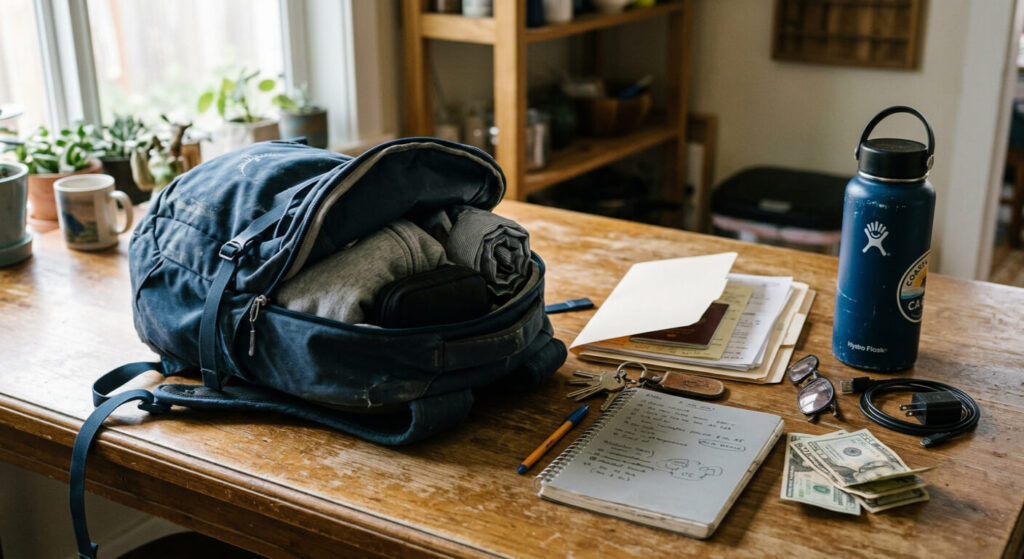
Even after you cover the bigger overlooked items, there are still a handful of practical things that rarely make the list. These are not dramatic. They are not sexy. They are just the kind of items that solve annoying problems once real life starts piling on.
At the end of the day, the fundamentals still matter. These are the baseline items that support everything else and should already be in your bag.
There is one item that gets overlooked more than it should, and that is something that helps keep you grounded.
Putting a bag together is not the hard part. Thinking through how situations unfold in real life is where most people fall short. People assume they will have time, that they will stay calm, and that they will be able to figure things out as they go. In reality, decisions get rushed, information is incomplete, and stress changes how people think and act.
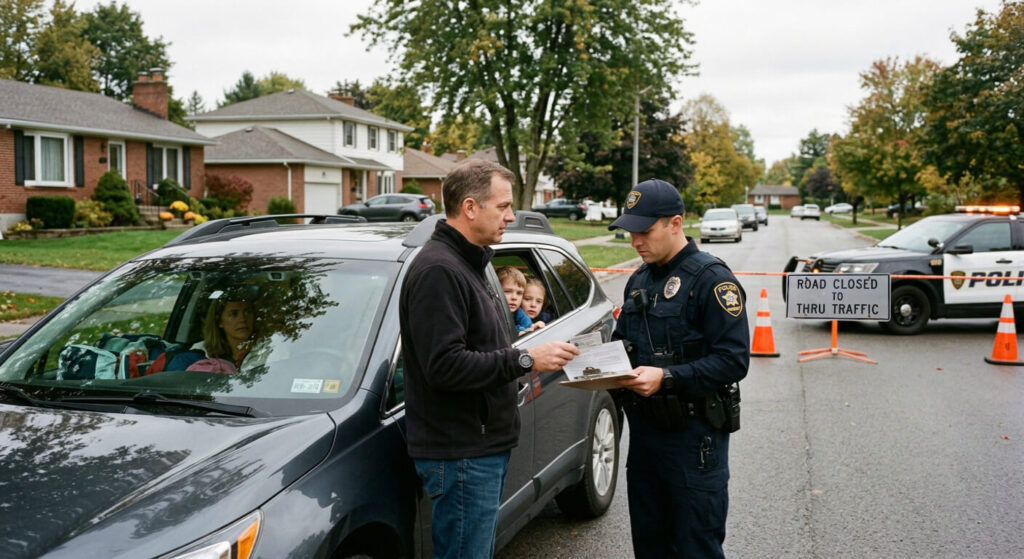
Most people picture this as a clean process. You grab your bag, get in your vehicle, and go where you planned. In reality, you are dealing with traffic, changing information, limited access, and decisions that have to be made quickly with incomplete details. You may be told to leave one way and then rerouted. You may get turned around at a checkpoint. You may realize halfway through that you are missing something you thought you had. Eventually you will have to come home and there might be roadblocks keeping anybody out that isn't supposed to be there.
A go bag does not need to be perfect. It needs to work when things are not going the way you expected. It needs to remove problems, not create new ones. It needs to reflect how people move through these situations, not how they imagine it will go.
That difference is what separates something that looks prepared from something that is.
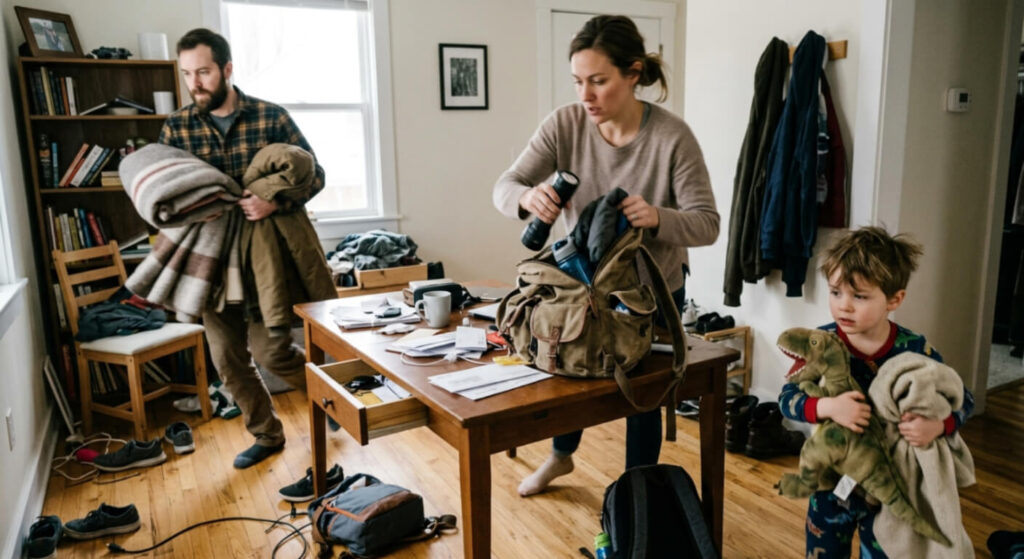
If you want to see how prepared you really are, run a quick drill with your family.
Set a timer for 15 minutes and treat it like a real evacuation. You are leaving your house for a week, you don’t know what condition it will be in when you return, and you may have to prove you live there when you get back. The only thing you are allowed to take is what fits in your backpack. The goal is to be in your vehicle and ready to leave before the timer runs out.
Start moving. Don’t overthink it. Don’t make a list. Just react. Add a little pressure to it. Do not talk it through while you are moving. Do not help each other. Treat it like you would if this was happening for real and everyone had to move at the same time.
When the timer goes off, stop and sit down together. Go through what everyone grabbed and talk it through. Why did you choose it? What did you forget? What did you recognize you needed but didn’t have time to get? What did you bring that doesn’t actually help? What slowed you down?
This is where the gaps show up. People forget documents, grab things that don’t matter, or realize they don’t even know where important items are in their own house.
That’s the point. You are not trying to get it right the first time. You are exposing how you think and move under pressure so you can fix it now instead of figuring it out when it counts.
Run it once, then do it again after you’ve talked it through. The second round is where better decisions start to show up.
Jason Marsteiner is the founder and lead instructor at The Survival University, where he’s turned his obsession with staying alive into a mission to teach real-world survival skills. Forget fancy gear, Jason’s all about the know-how that gets you through the wild or a city crisis. A published author of Wilderness Survival Guide: Practical Skills for the Outdoor Adventurer, he’s distilled years of hard-earned wisdom into lessons anyone can use.
Raised in Colorado’s rugged mountains, Jason’s survival chops were forged in the wild—from Missouri forests to Arizona deserts to Costa Rican jungles. He’s navigated it all with next to nothing, earning creds like Wilderness First Responder (WFR) and SAR tracking along the way. He’s trained thousands to keep cool when 911’s out of reach, proving survival’s not just for grizzled adventurers, it’s for hikers, parents, and city slickers alike.
Jason’s mantra? Everyone should make it home safe. When he’s not running courses, he’s designing knives, mentoring newbies, or chilling in the city like the rest of us, always sharpening the skills that turn panic into power.
Wildfire season gets people thinking about leaving fast, but most wait until it is already unfolding to figure out what to do. When that happens,...

Urban Survival in 2025: Adapting Wilderness Skills to City Environments What happens when the grid goes down in Denver? Here’s how wilderness survival skills, straight...
Learn to pack a reliable survival fire kit with the right tools for warmth, cooking, and signaling. Keep it simple, effective, and ready for any...
Learn how to prepare for emergencies with a bug out bag and evacuation plan. Discover key survival tips from the 2025 LA fires to stay...