
Cart
Sub-Total: $0.00
5 min read

When it comes to primitive survival trapping, sometimes a simple stick can do quite a bit of work for you. Of course, there’s a little more to it than grabbing a branch off the ground and hoping something happens.
A spring pole is essentially a flexible sapling or branch that stores energy when bent under tension. When a trigger releases that tension, the pole attempts to return to its original position. That movement can be used to operate various primitive trapping mechanisms, including spring pole snares.
It’s a simple concept, but understanding how to select and use a spring pole properly can make a tremendous difference in how the mechanism functions.
And just because something looks simple doesn’t mean you can’t screw it up. Trust me, I’ve watched some pretty creative attempts at making sticks do things they were never meant to do.
The first thing to understand is that not every tree or branch makes a suitable spring pole. You need something flexible enough to bend without breaking, but with enough stored energy to produce the movement you’re trying to achieve.
A branch that’s too stiff may crack or break under tension. One that’s too weak may barely move when released. There’s a balance between flexibility, strength, and the amount of energy the pole can store.
You also need to think about unnecessary branches and other vegetation that may interfere with its movement. Extra material can create resistance or snag on surrounding vegetation. A relatively clear path allows the spring pole to move without obstruction.
The important lesson here is understanding the properties of the materials you’re working with rather than assuming every piece of wood will perform the same way.
Here’s where a little resourcefulness comes into play. Sometimes the area you’re working in doesn’t have a conveniently located sapling. Maybe the nearby trees are too large to bend, or perhaps you’re in an open area without suitable trees at all.
Does that mean you can’t demonstrate a spring pole mechanism? Not necessarily.
A flexible pole can sometimes be supported by a separate, sturdy anchor rather than relying on a naturally growing sapling in exactly the right location. The challenge is making sure the support is stable and capable of handling the tension involved.
In the video, I discuss several different situations, including working around larger trees and demonstrating the concept in areas without a convenient natural spring pole.
It’s a good reminder that understanding how something works is often more useful than memorizing one particular setup.
In this older Survival University video, I demonstrate several considerations when working with spring poles for primitive snare systems. We look at flexibility, spring movement, and the challenges of working with different types of trees and terrain.
The video may be a little rough around the edges, but the principles haven’t changed. Besides, we were filming survival skills long before everyone decided they needed a professional camera crew and dramatic background music to explain how a stick works.
Before experimenting with spring pole mechanisms, remember that a bent pole stores energy. When that energy is released unexpectedly, the moving wood, cordage, or other components can cause injuries. Keep your face, hands, and other body parts clear of the path of movement, and never assume a tensioned system is harmless.
There are also important legal and wildlife considerations. Trapping laws vary considerably by location, species, and equipment. In Colorado, using snares to take wildlife is generally prohibited except under specific legal exceptions. An emergency survival situation does not automatically exempt someone from trapping regulations.
Improperly placed snares can injure or kill unintended wildlife, domestic animals, and other animals that were never the intended target. Educational demonstrations should be conducted under controlled conditions without exposing animals or people to an active trap.
At The Survival University, demonstration traps are dismantled or rendered harmless when training is complete.
A spring pole is another example of how ordinary natural materials can be used to accomplish a task when you understand the principles involved. It’s not complicated machinery. It’s stored energy, tension, movement, and a basic understanding of how those forces interact.
And while knowing about spring poles is useful, trapping is only one small part of wilderness survival. Learning how to manage your priorities, conserve energy, find water, build shelter, and make good decisions will generally serve you long before you’re worrying about where your next meal is coming from.
If you’d like to develop a broader range of practical outdoor skills, take a look at our upcoming wilderness survival classes. We teach traditional and modern survival techniques through hands-on training in the Colorado mountains.
A carved stake and a broken stick can hold up the same tarp. Jason Marsteiner explains how survival and bushcraft share a toolbox, why urgency...

Internet survival hacks are everywhere online, promising clever tricks that supposedly make wilderness living easier. The problem is that many of these ideas are designed...
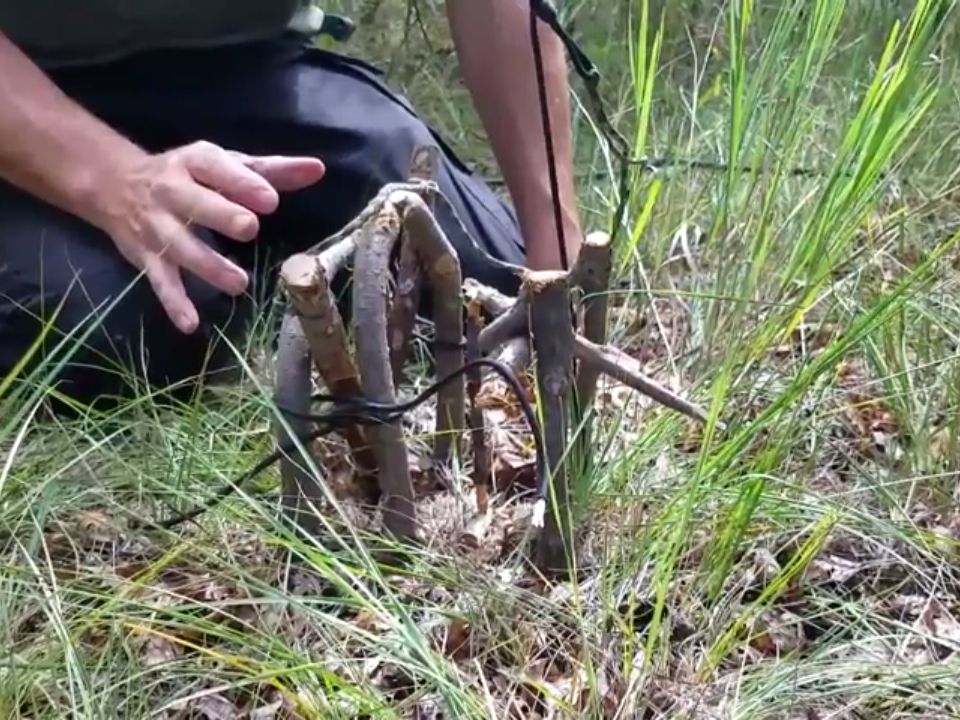
Learn how to set up a powerful Mojave scissor trap for wilderness survival, delivering force to dispatch prey instantly.
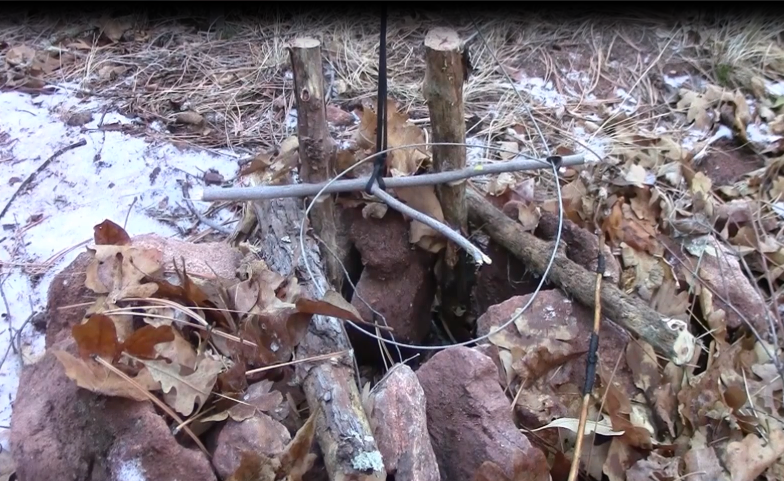
Learn how to set up the effective T Bar snare trap for survival situations. Discover tips on notching uprights and using the Penny Snare.
How does a spring pole snare work? Learn the basic mechanics of spring pole trapping, what makes a good spring pole, and common mistakes to...
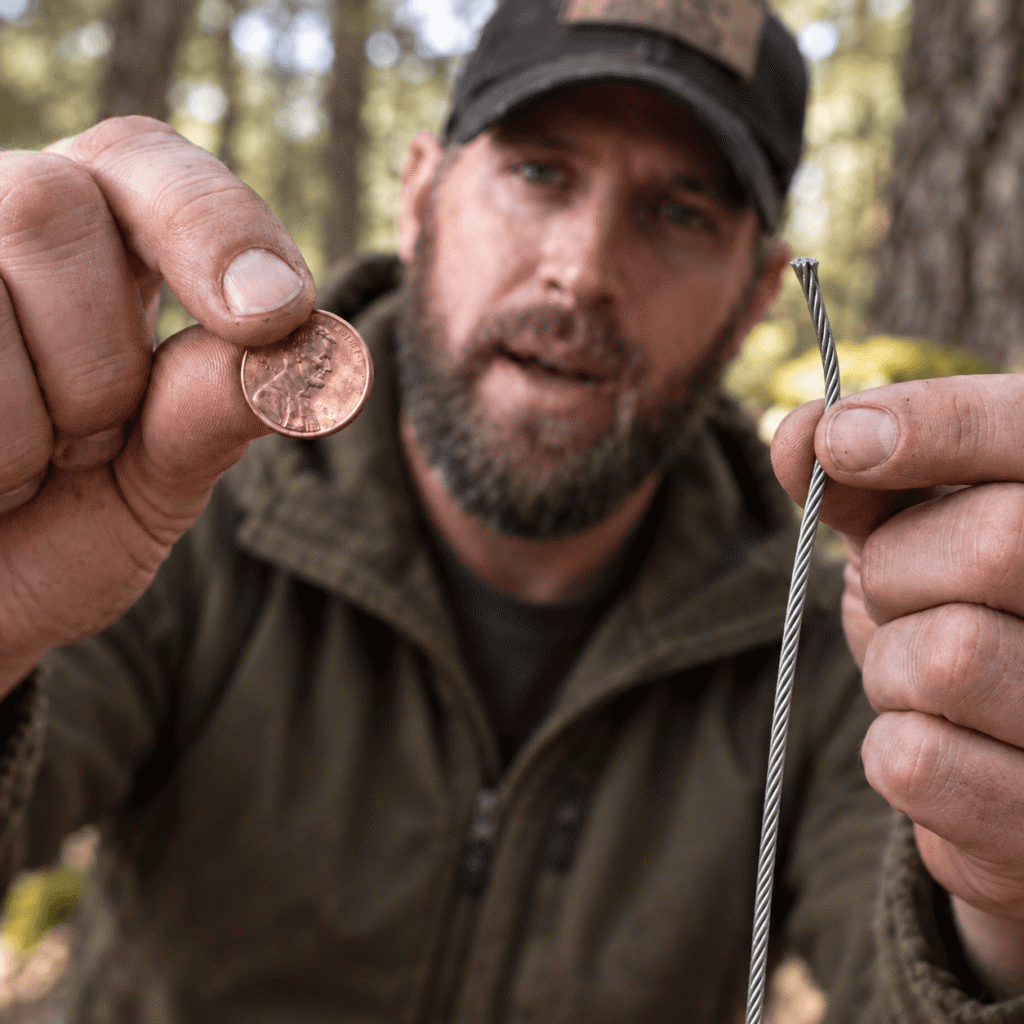
Can an ordinary penny become a useful survival tool? Learn how a penny snare lock works in this classic TSU fieldcraft demonstration.
