Cart
Sub-Total: $0.00
Reading a bearing at a map table is one part of navigation. Following a route through steep ground, thick vegetation, and changing visibility asks you to keep checking your position while choosing where to travel next. This Advanced Land Navigation course in Colorado takes the foundation from our standard class into a more demanding field environment, with longer distances, rugged terrain, and remote overnight camping under the instruction of Matt Boger.
Study the map before setting out, identify terrain features that will guide your travel, and choose checkpoints that help you recognize progress. Work with ridges, drainages, elevation changes, and natural obstacles while considering how a route will unfold on the ground. As conditions and terrain change, practice deciding when to hold your course, adjust the route, or stop and reassess your position.
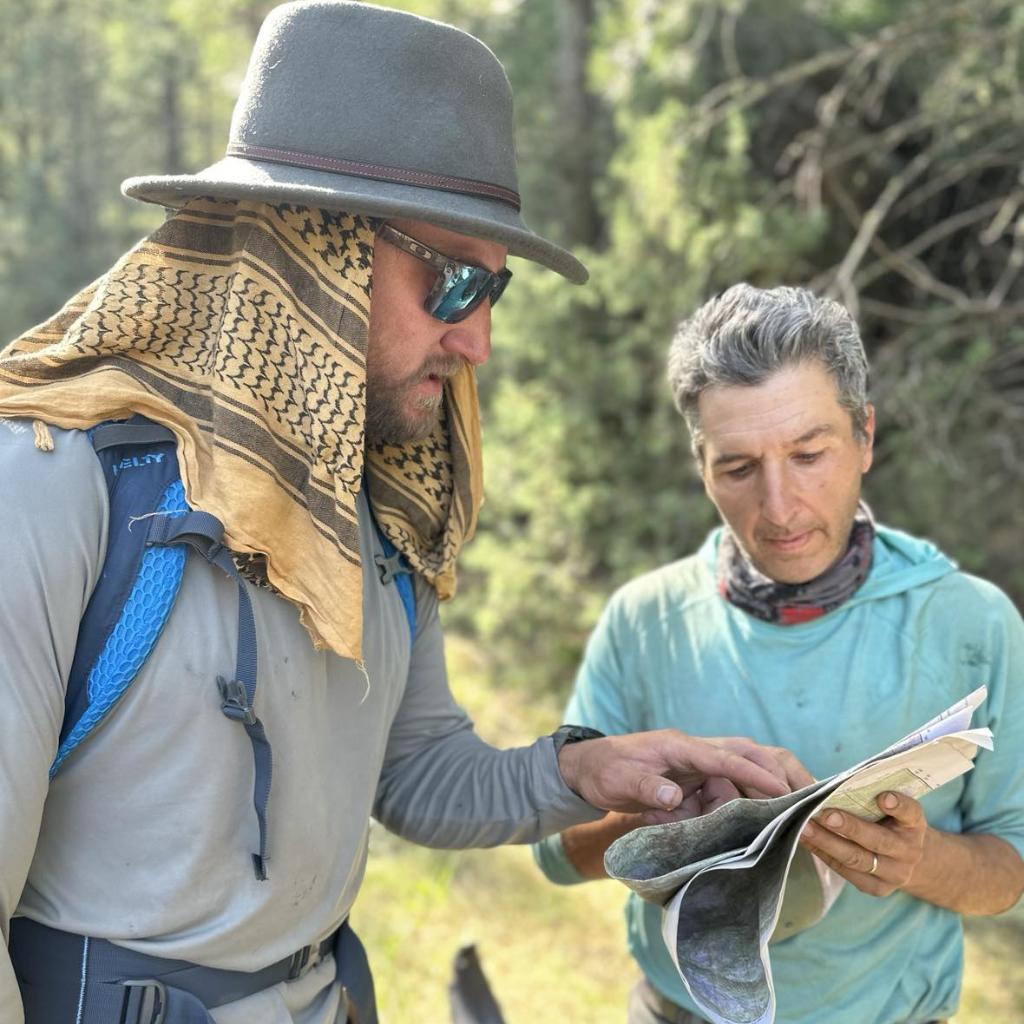
Use your compass, topographic map, and terrain observations together as you move across the backcountry. Apply azimuths, back azimuths, triangulation, dead reckoning, and pace counting in practical field problems. Develop the habit of checking one source of information against another, using visible landforms and planned route features to support your position estimate throughout the journey.
Practice working with handrails, backstops, checkpoints, and safety bearings across terrain where a small error can carry you away from your intended route. Day and night navigation exercises challenge you to manage limited visibility and recognize when your observations no longer agree with the map. Work through reorientation decisions deliberately, using the tools and information available before committing to your next movement.
The course begins at basecamp with refresher work, wilderness survival instruction, and emergency signaling before relocating to a remote training area. The following field days combine navigation over longer distances with overnight camping away from main camp. Carry the personal equipment, food, shelter, and sleeping system you need for the program, and prepare to keep working through the demands of travel and camp life in the mountains.
Advanced Navigation is for graduates of our standard Land Navigation course who are ready to put those skills to work in a more demanding environment. Hikers, hunters, backpackers, outdoor leaders, military personnel, and search and rescue volunteers can use the course to deepen their field experience. Arrive prepared to read maps, use a compass, plot points and azimuths, and relate the terrain around you to the features shown on your map.
Completion of The Survival University’s standard Land Navigation course is a strict prerequisite, regardless of your previous experience. Expect significant hiking over rugged terrain and longer distances while carrying your own equipment, followed by remote overnight camping. We also strongly recommend Wilderness First Aid and our 3 Day Outdoor Survival Basics course as preparation, although those additional courses are not required.
Our standard Land Navigation course in Colorado runs July 9–11, 2027 at $495 per person, immediately before the advanced session. Complete that course before attending Advanced Navigation on July 12–14. The two sessions are booked separately, so students planning to attend both should reserve each course and prepare for six consecutive days of navigation training.
Advanced students relocate from basecamp to a remote training area and camp away from main camp as part of the program. Bring your own shelter, sleeping bag, sleeping pad, food, cooking equipment, and the clothing needed for changing mountain weather. Plan to carry your equipment, manage your water supply, and take part in day and night navigation exercises throughout the course. Review the full gear list and contact us before booking if you have questions about the physical demands or required equipment.
For people who want real skills, not just talk about them.
You must complete The Survival University’s standard Land Navigation course before attending Advanced Navigation, regardless of previous experience. Arrive confident with topographic maps, compass use, plotting points and azimuths, and terrain association. Wilderness First Aid and our 3 Day Outdoor Survival Basics course are strongly recommended as additional preparation, but they are not required prerequisites.
Matt Boger leads the July 12–14, 2027 session. Instruction builds on the foundation taught in our standard course and moves into longer routes across rugged backcountry terrain. The program includes practical map and compass work, route planning, field decision making, emergency signaling, and day and night navigation exercises.
Plan for significant hiking over rough terrain and longer distances while carrying your own gear. Elevation changes, vegetation, and natural obstacles make route choices and physical preparation important parts of the experience. Wear broken-in hiking footwear, prepare for changing weather, and contact us before registering if you need to discuss the demands of the course.
Yes. After the basecamp introduction and refresher work, the course relocates to a remote training area with overnight camping as part of the program. Bring your shelter, sleeping bag, sleeping pad, personal hygiene supplies, food, and cooking equipment. Prepare to carry the equipment you need for both field training and overnight conditions.
Bring an orienteering or lensatic compass, protractor, ultra-fine permanent map markers, and a notebook and pencil, along with a headlamp and spare batteries for night exercises. A hydration pack is strongly recommended for the longer hikes. The remote area has a nearby stream, so bring a suitable water treatment system and adequate carrying capacity. Review the complete advanced course gear list before packing.
The advanced session runs July 12–14, 2027, beginning at basecamp before relocating to the remote training area. The current course schedule lists 7:00 AM check-in for an 8:00 AM start, with daytime instruction ending at 5:00 PM and night navigation included in the program. Review your registration instructions for the confirmed meeting location, access details, and field schedule before traveling.
The advanced course costs $495 per person. Use Book Now with WeTravel for normal registration, or choose Finance with Affirm, select July 12–14, and continue to checkout to apply for payment over time. Affirm financing is subject to eligibility and approval, and your terms are shown before you commit. The standard and advanced sessions require separate registrations.
The Survival University wants you to experience wild places with confidence and being prepared and having the right gear is a priority. Our Adventure Checklist has foundational guidelines and a recommended gear list that you can build on for any adventure. Fill out the form to get yours today!
By downloading our Adventure Checklist, you'll not only prepare for your next journey, but you'll also join our community and receive course offerings, promotions, and pro-survival tips via email!