
Cart
Sub-Total: $0.00
You know that moment when somebody says, “Wait, show me how you did that,” and an hour later you’re both still at the picnic table? That’s the kind of class we’d love to have at mountain camp near Cripple Creek, Colorado.
Propose a class
Ask these three what they’d bring to a workshop and you might end up with a bow drill, a training tourniquet, and a pot of herbal tea on the same table. That gives you an idea of the range of people we like teaching alongside.



What do people come to you to learn? Think of a skill you’ve practiced enough to spot where a beginner is getting stuck and show them what to try next. We’d love to hear what a day learning that skill with you would look like.
Give each student a lump of clay and show them how to pinch a cup or coil a cooking pot. If the piece needs drying and a second day for firing, tell us how you’d bring everyone back for the reveal.
Could you teach hide tanning, then show the group what that hide can become? A pair of buckskin mittens would make a workshop of its own. For a shorter class, start with prepared leather and stitch a pocket pouch.
A smooth stone someone has carried for years could become their favorite pendant. Teach them to build a wire setting around its odd shape, or hammer a scrap of copper into a cuff that fits their wrist.
Pass around a finished birch-bark box, then let students figure out where the seam is hiding. Show them how a flat sheet wraps into a container and how to fit a lid that stays put in a pack.
Start with loose wool and finish with a pair of felted boot liners. Or bring a dye pot and let everyone compare what happens when the same yarn goes into onion skins, bark, or a second dye bath.
Maybe your specialty takes several days and a few extra hands. Pitch us a skin-on-frame canoe build, from bending the ribs to stretching the skin, and tell us which parts each student gets to tackle.
If you make pine resin salve, bring a piece of hardened resin and a tin of the finished salve. Show students how you work with resin, oil, and beeswax, then let them fill a tin of their own.
If you keep bees, bring an empty hive and let students take it apart. Show them how the frames fit, where you’d place a hive, and what tending a colony looks like in July and again when a Colorado winter rolls in.
If you’re an experienced chainsaw carver, bring a rough log and a finished carving. Let students see how you spot an owl in the shape of the wood, then give a carving demonstration so they can watch it take shape.
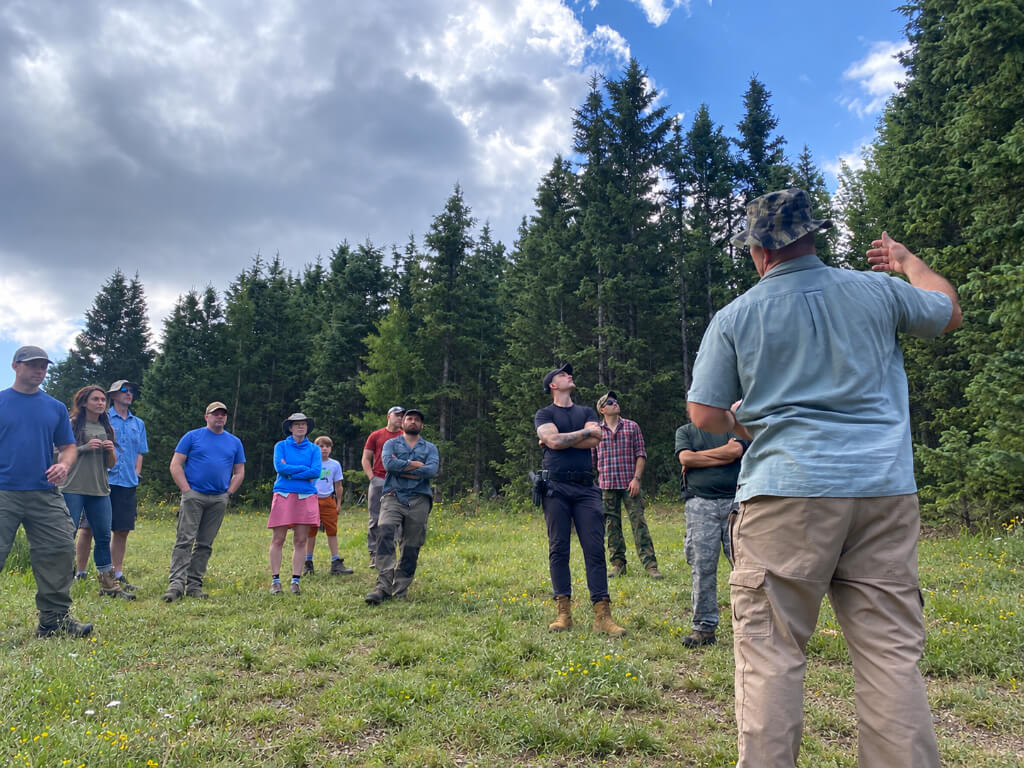
Are you looking for a place to teach a workshop in Colorado? At our mountain camp near Cripple Creek, west of Colorado Springs, we welcome proposals from guest instructors who teach outdoor skills and traditional crafts. Maybe you teach bushcraft and want to spend a Saturday working leather with a small group. Maybe you make pottery or weave baskets and have been teaching out of your garage for years. Tell us what you’d like to teach. If the class is a fit, we can provide a place to teach and help you reach students through The Survival University’s course calendar, even if you’ve never had a website or an audience of your own.
Picture a student picking up the basket they just finished and saying, “I made this.” If you’d get as much of a kick out of that as they would, tell us about your workshop. Maybe you already teach. Maybe the only people you’ve shown are friends in your garage. Either way, you can bring us an idea without a website, a business, or a single student lined up.


Tell us what students will practice, how many people you can work with, and what you’d bring. If your class belongs in summer, tell us why. If it works across several seasons, let us know. We’ll look at the timing, the site, and our calendar together.
We look for ideas that complement our current instructors. Guest instructors earn an agreed percentage of the tuition collected for their class. What you earn depends on the class price and how many students enroll. Before anyone registers, we’ll agree on the split, how materials and fees are handled, and the minimum enrollment needed to run the class. Once we agree on a date and terms, TSU can list the workshop on its website and calendar. Enrollment depends on student interest.
A working title and a rough outline are enough to start. If you haven’t settled on a price, tell us what supplies each student needs and what you’d need to earn for the day.
This site is protected by reCAPTCHA.