SURVIVAL STORE

Introduction to Small Game Hunting

$395.00

2027 class dates: May 14–16 and July 16–18.

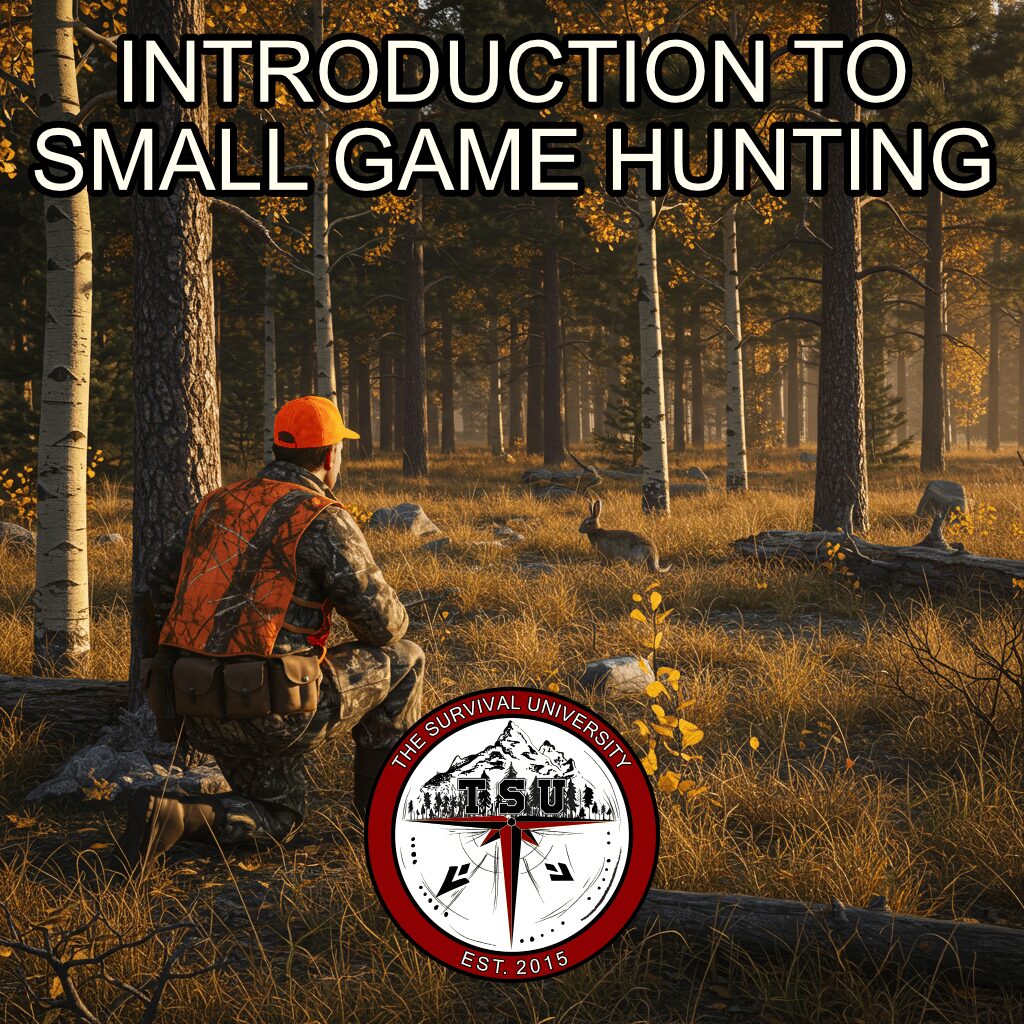
Learn the fundamentals of small game hunting in this hands-on, field-based course designed for new hunters. You’ll cover everything from laws and ethics to scouting, tracking, weapon handling, and field dressing. Students gain confidence through practical instruction that blends modern techniques with primitive skills, finishing with processing and cooking domestic rabbits raised on a local homestead. No live hunting takes place during class. This class provides the knowledge and experience needed to plan your own hunt and put wild food on the table with respect and self-reliance.

Tap each tab below: Description, Additional Information, and Class Details. You’ll find the course overview, class times, driving directions, what to bring, and overnight arrangements.

×

Description

Intro to Small Game Hunting

Ready to step into the world of small game hunting? This immersive course is designed for first-time hunters who want more than just theory. It’s a hands-on experience that takes you from planning and scouting all the way through field processing and cooking.

You’ll learn the laws and ethics of hunting, how to scout and track animals, and the skills needed to safely and successfully harvest wild game. Along the way, we’ll mix in practical wilderness skills so you gain confidence in both the hunt and the backcountry.

Students will practice processing domestic rabbits raised on a local homestead, applying skills they can use with wild game. The course teaches hunting knowledge and techniques, but no live hunting takes place during class.

By the end of the course, you won’t just understand the hunt, you’ll know how to prepare, pursue, process, and put food on the table with respect for the land and the animal.


Preparing for the Hunt

This course establishes a solid foundation of knowledge and skills needed to get started on your first small game hunt. We focus on both modern techniques and primitive skills to create confidence for new hunters.

Instruction covers:
• The role of hunters, ethics, and history of conservation
• Rules, regulations, and applicable laws
• Navigating Department of Fish and Wildlife websites, brochures, and public resources
• Public vs. private land, guided vs. DIY hunting
• Applying for a license and obtaining hunter education
• E-scouting, maps, and identifying access points
• Planning your hunt, logistics, and expenses
• Physical fitness and preparation
• Essential gear for small game hunting
• Glassing and scouting techniques for locating game


Hunter Skill Set

• Understanding specific animal behavior and habitat
• Reading and interpreting animal signs and tracks
• Moving through animal habitat using noise and scent control.
• Applying different hunting approaches and strategies for small game


Method of Harvest (Weapons)

• Weapon safety and responsible handling for firearms and archery
• Proper care and maintenance of firearms
• Choosing the right firearm and ammunition for small game
• Archery basics, equipment styles, and shooting essentials
• Shooting scenarios and practicing in ideal and non-ideal positions


Successful Harvest of Game

• Tracking blood and reading animal sign to locate downed game
• Small game anatomy (rabbit, squirrel, and similar species)
• Field dressing and processing of small game in the field
• Caring for meat and packing out properly
• Butchering and preparing game for storage
• Cooking and preparing meals using wild game


Wilderness Living and Survival

• Choosing a campsite and shelter building, including emergency shelters
• Water sourcing, filtering, and storage
• Fire making with and without tools and proper safety
• Kit mentality and self-sufficiency in the field
• Situational awareness, including lightning, flash floods, and other hazards
• First aid basics and field response
• Emergency action planning and communication
• Basic navigation and orienting skills


Course Topics

• Navigating Game and Wildlife websites and brochures
• Planning your hunt
• Method of legal take
• Weapon safety
• Knowing your weapon
• E-scouting and physical scouting
• Setting camp
• Basic orienting
• Tracking and reading animal sign
• Learning animal behavior
• Hunting strategies and techniques
• Field processing small game
• Packing out and meat care
• Butchering and preparation for storage
• Cooking wild game
• Basic survival skills
• Communication and creating an emergency action plan


Course Outcome and Demonstrated Skills

• Understand legalities, ethics, and the importance of hunting
• Confidently navigate Parks and Wildlife resources
• Plan a hunt, meet requirements, and apply for a license
• Identify essential gear and physical readiness
• Use e-scouting and in-field scouting methods
• Track and read small game sign accurately
• Learn species-specific habitat and behavior
• Apply effective hunting strategies
• Handle weapons safely and confidently
• Track, recover, and field dress small game
• Care for, butcher, and preserve meat properly
• Cook wild game safely and efficiently
• Set up camp, make fire, and filter water
• Demonstrate basic primitive and survival skills
• Develop an emergency action and communication plan

Course Overview

  • Course: Introduction to Small Game Hunting
  • Dates: May 14–16, 2027 and July 16–18, 2027
  • Duration: 3 days
  • Location: Mountain Camp, Colorado – 9,500 ft elevation, pine and aspen forest, private land
  • Class starts: 10:00 AM.
  • Class ends: 5:00 PM.
  • Required arrival for check-in: 9:00 AM, one hour before class starts.
  • Training approach: Hands-on training, beginner-focused, modern and primitive hunting skills, wilderness integration

Instructor

TSU Resident Instructor

Before You Arrive

Arrival and Directions

Arrive by 9:00 AM for check-in. Class begins at 10:00 AM. Plan your drive so you are at the meeting location one hour before instruction begins.

Address: 71 Monarch Dr, Cripple Creek, CO 80813

Driving Directions: [Click here for directions]

(Important: Our camp is remote and GPS is often unreliable. Please read these directions carefully and have them saved or printed before you leave. Cell service is limited once you head into the mountains.)

Course Arrangements

Students enrolled in this course may remain on the training property overnight during the scheduled program. Students staying on the property provide their own shelter and sleeping equipment, using tents, tarps, hammocks, or primitive field shelters. Use of the training property overnight is limited to enrolled students and authorized program participants. Campsites are not independently rented or offered to the general public.

Students who prefer to stay off site can choose from multiple hotels and Airbnb rentals in the surrounding area. Cripple Creek is approximately a 15-minute drive from our location, and Woodland Park is approximately 30 minutes away. Students are responsible for arranging their own lodging and making reservations directly with their chosen provider. Please call or email us before the course if you have questions about overnight arrangements.

Gear List
Core Hunting Tools

  • Fixed-blade knife (full tang, 4–5” blade, plain edge)
  • Ferrocerium rod and striker
  • Folding hand saw
  • Overnight camping gear (tent, sleeping bag, pad, etc.)
  • Small backpack or daypack

Clothing & Protection

  • Outdoor boots and wool socks
  • Rain gear or poncho
  • Outdoor clothing (layered, season-appropriate)
  • Sunglasses or hat for sun
  • Insect repellent

Cooking & Water

  • Metal pot and eating utensils
  • Single-walled metal canteen or water bottle
  • Meals and snacks

Lighting & Miscellaneous

  • Headlamp with spare batteries
  • Personal first aid kit
  • Notebook and pencil (optional)

Optional Comfort Items

  • Camp chair or stool
  • Pillow or cushion
  • Extra snacks or comfort food
  • Camera or phone for photos

Facilities

Facilities: Porta potty restroom and potable water provided.

Food and Water

Food and Water
Potable water is available at camp. Students bring their own food. Quick meals like freeze-dried pouches or MREs are recommended, though you may bring any food suitable for campfire cooking or personal stoves. Local groceries and restaurants are nearby.