
Cart
Sub-Total: $0.00
19 min read

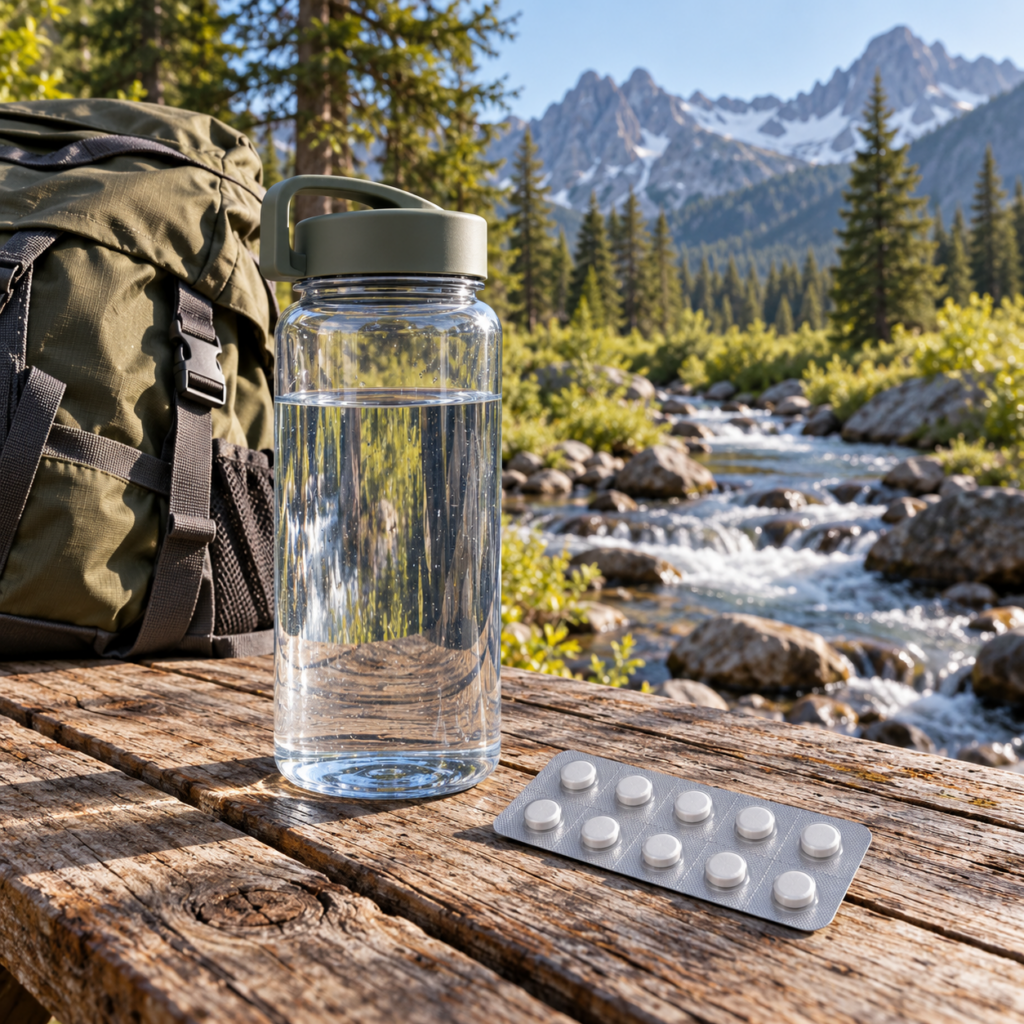
Water purification tablets make sense in a survival kit. They weigh almost nothing, fit in a pack pocket, and give you a backup when your filter quits or you cannot get a stove going. But that word “purification” can give people the wrong idea. Drop a tablet into muddy water and you still have muddy water. Put one in water contaminated by mining waste and the metals are still there. Before you trust a tablet with your next drink, know what it can actually handle.
This is the first article in a series about treating water outdoors. We are starting with tablets, then looking at how they compare with filters, purifier bottles, boiling, and solar methods. You do not need a chemistry degree to make a good choice. You need to understand your equipment, pay attention to where you are getting water, and have a plan before your bottle is empty.
Tablets release chemicals that kill certain germs in the water. Which germs they handle depends on the tablet, how much water you are treating, and how long you let it work. They do not remove dirt, bits of leaves, or the occasional mystery floater. That is why a filter and a tablet can make a useful combination: the filter catches what it is designed to catch, and the chemical treatment can handle germs the filter misses. You still need to know what each one does.
The three common types are iodine, chlorine-based tablets, and chlorine dioxide. Pay attention to those names. Chlorine and chlorine dioxide do not do exactly the same job, and two products from the same brand can have different instructions. Some handle bacteria and viruses but fall short against certain parasites. Others cover more, but make you wait longer. The CDC’s guide to water treatment explains the differences. One worth remembering in the woods: ordinary chlorine and iodine are not reliable protection against Cryptosporidium at the doses used for drinking water.
Iodine is an old standby, with a taste some hikers remember long after they forget the trail. Potable Aqua’s iodine tablets treat bacteria and Giardia when used as directed. The sequence matters: add the tablets, wait five minutes with the cap loose, shake to wet the cap threads, tighten the cap, then wait another 30 minutes. “About half an hour” skips part of the job.
Iodine also has a few limits that have nothing to do with the creek. If you are pregnant, have thyroid problems, or have an iodine allergy, choose another treatment method. CDC also advises against drinking iodine-treated water for more than a few weeks at a time. It is a backup option, not something to turn into your everyday water supply.
Aquatabs use a compound called sodium dichloroisocyanurate to release chlorine into the water. The useful part to remember is that the tablets come in different strengths. One made for a large container does not belong in your small water bottle at the same dose. Aquatabs’ directions call for a 30-minute wait and the right number of tablets for the amount of water. Check your particular package for those details, including what it says about cold or cloudy water. Extra tablets are not a shortcut, and they will not turn ordinary chlorine into reliable protection against Cryptosporidium.
Chlorine dioxide products can treat bacteria, viruses, Giardia, and Cryptosporidium when they are made for that job and given the full treatment time. The catch is patience. Katadyn’s Micropur MP1 directions call for one tablet per liter and a full four-hour wait. Keep the water in a container that blocks light, or keep it in the dark while it treats.
Four hours is a long time when you have already emptied your drinking water. Plan your refills while you still have something to drink. Otherwise, your next drink may be scheduled for sometime after dinner.
Tablets do not need batteries, a pump, or stove fuel. They take up little space, and you can split a supply among group members so one lost pack does not take away everybody’s backup. Those are real advantages. But you can run out, the water may taste different, and you have to wait. Count how many liters your supply will treat before heading out. Twenty tablets do not necessarily mean twenty liters.
Cold water can slow chemical treatment, and dirt floating in the water can interfere with it. Let sediment settle or strain out the debris first. A bandanna can catch the chunks; it does not reliably remove the germs. Follow the product’s directions for the conditions you have. If they do not cover that cold, muddy water in front of you, use a method that does. Tossing in another tablet and guessing at a longer wait is still guessing.
If these chemicals kill germs in water, what do they do to the good bacteria in your gut? Fair question. But saying that properly used tablets wipe out your gut bacteria goes further than the research supports. Studies of chlorinated drinking water do not give us a reason to make that claim about backpacking tablets.
The field advice is straightforward: use the correct dose, give it the full time, and drink the treated water. Never swallow the tablets themselves. Adding more chemical does not automatically make you safer. And the iodine restrictions above still apply. A product meant for occasional emergency use should stay in that role.
A tablet will not remove dissolved lead, arsenic, or other heavy metals. Do not count on tablets or boiling to make water with fuel, industrial chemicals, or toxins from harmful algae safe to drink, either. CDC’s advice is to find another source if you know or suspect harmful chemical contamination. Around old mining areas, think about what may be upstream before you fill the bottle. Clear water can still contain things you do not want to drink. Looking clean and tasting fine prove very little.
The word “purifier” on a box does not settle this question. A filter that removes bacteria may let dissolved metals pass right through. Adding carbon does not mean it handles every chemical, either. Check what your actual model removes and where its limits are. If you suspect a spill or industrial runoff, find a better source instead of asking camping gear to solve a problem you cannot identify.
A Sawyer Squeeze pushes water through tiny hollow fibers that catch bacteria and parasites such as Giardia and Cryptosporidium, along with larger particles. You can drink the filtered water without waiting hours for tablets. But the standard Squeeze does not reliably remove viruses, and it is not designed to remove dissolved metals or chemical pollution. Where viruses are a concern, pair it with a treatment that handles them. Keep it clean and protect it from freezing after it has been used. Sawyer recommends replacing it if you suspect it has frozen after getting wet.
A GRAYL GeoPress catches particles and uses a cartridge rated to remove viruses, bacteria, and parasites, including Giardia and Cryptosporidium. GRAYL also lists reductions in certain chemicals and heavy metals. That still does not make it a tool for drinking from an industrial spill. The company warns against severe contamination, including industrial disasters and very high metal levels. It works differently from a Sawyer Squeeze, takes up a different amount of pack space, and needs replacement cartridges. Choose based on the water you expect to encounter and the upkeep you are willing to do.
Boiling is a dependable way to kill germs if you have a suitable container and enough fuel. CDC recommends a rolling boil for one minute, or three minutes above 6,500 feet. Let it cool before drinking. At our Colorado mountain elevations, use the longer time. Boiling will not remove dirt or dissolved chemical pollution, but it can be a solid backup for water without those chemical problems. Think through the whole setup: a metal pot will not heat itself, and you need a heat source you are allowed to use where you are camping.
A solar still collects water as moisture evaporates and then condenses back into droplets. How much you get depends on the setup, available moisture, sunlight, and weather. Solar disinfection, often called SODIS, uses sunlight to treat germs in clear water inside suitable transparent bottles. The bottle, water clarity, sunlight, and treatment time all matter. Leaving a random bottle in the sun for a while is not the same as following a tested SODIS method.
We will give both methods their own discussion. For now, do not build your water plan around a technique you have only heard about. Learn the actual process and try it before you need to depend on it.
At home, put your bottle next to your treatment supplies. Know how much it holds, how many tablets that takes, and when the water will be ready. Check expiration dates and any warnings that affect someone in your group. Keep the directions with the product. This takes a few minutes at the kitchen table and saves a lot of confusion beside a creek.
Plan where you will refill and carry enough ready-to-drink water to cover the next batch’s waiting time. Set a timer or write down when it will be ready. “I think I treated that one before lunch” is a lousy system, especially with several people filling bottles. Keep untreated water separate from water that is ready to drink.
Watch the caps, threads, and drinking spouts, too. Anything that touched untreated water can contaminate your finished water again. If you use tablets to remove iodine taste, get the order right: Potable Aqua warns that adding PA Plus too early can stop the iodine treatment from working properly. That second tablet removes the taste; it does not add more germ-killing power. Keep supplies in their original protective packaging, store them as directed, and replace damaged or expired packets. Loose tablets rattling around the bottom of a kit are not much of a plan.
Water purification tablets are useful equipment when you understand what you are carrying. Match them to the source, allow enough time, and practice the routine before you are tired and thirsty. Our 2 Day Survival for Beginners course includes finding and treating water with modern methods alongside the other basics. The goal is to know what to do when you reach the water, rather than stand there holding a packet and hoping for the best.
Published: October 18, 2026
Water purification tablets make sense in a survival kit. They weigh almost nothing, fit in a pack pocket, and give you a backup when your filter quits or you cannot get a stove going. But that word “purification” can give people the wrong idea. Drop a tablet into muddy water and you still have muddy water. Put one in water contaminated by mining waste and the metals are still there. Before you trust a tablet with your next drink, know what it can actually handle.
This is the first article in a series about treating water outdoors. We are starting with tablets, then looking at how they compare with filters, purifier bottles, boiling, and solar methods. You do not need a chemistry degree to make a good choice. You need to understand your equipment, pay attention to where you are getting water, and have a plan before your bottle is empty.
Tablets release chemicals that kill certain germs in the water. Which germs they handle depends on the tablet, how much water you are treating, and how long you let it work. They do not remove dirt, bits of leaves, or the occasional mystery floater. That is why a filter and a tablet can make a useful combination: the filter catches what it is designed to catch, and the chemical treatment can handle germs the filter misses. You still need to know what each one does.
The three common types are iodine, chlorine-based tablets, and chlorine dioxide. Pay attention to those names. Chlorine and chlorine dioxide do not do exactly the same job, and two products from the same brand can have different instructions. Some handle bacteria and viruses but fall short against certain parasites. Others cover more, but make you wait longer. The CDC’s guide to water treatment explains the differences. One worth remembering in the woods: ordinary chlorine and iodine are not reliable protection against Cryptosporidium at the doses used for drinking water.
Iodine is an old standby, with a taste some hikers remember long after they forget the trail. Potable Aqua’s iodine tablets treat bacteria and Giardia when used as directed. The sequence matters: add the tablets, wait five minutes with the cap loose, shake to wet the cap threads, tighten the cap, then wait another 30 minutes. “About half an hour” skips part of the job.
Iodine also has a few limits that have nothing to do with the creek. If you are pregnant, have thyroid problems, or have an iodine allergy, choose another treatment method. CDC also advises against drinking iodine-treated water for more than a few weeks at a time. It is a backup option, not something to turn into your everyday water supply.
Aquatabs use a compound called sodium dichloroisocyanurate to release chlorine into the water. The useful part to remember is that the tablets come in different strengths. One made for a large container does not belong in your small water bottle at the same dose. Aquatabs’ directions call for a 30-minute wait and the right number of tablets for the amount of water. Check your particular package for those details, including what it says about cold or cloudy water. Extra tablets are not a shortcut, and they will not turn ordinary chlorine into reliable protection against Cryptosporidium.
Chlorine dioxide products can treat bacteria, viruses, Giardia, and Cryptosporidium when they are made for that job and given the full treatment time. The catch is patience. Katadyn’s Micropur MP1 directions call for one tablet per liter and a full four-hour wait. Keep the water in a container that blocks light, or keep it in the dark while it treats.
Four hours is a long time when you have already emptied your drinking water. Plan your refills while you still have something to drink. Otherwise, your next drink may be scheduled for sometime after dinner.
Tablets do not need batteries, a pump, or stove fuel. They take up little space, and you can split a supply among group members so one lost pack does not take away everybody’s backup. Those are real advantages. But you can run out, the water may taste different, and you have to wait. Count how many liters your supply will treat before heading out. Twenty tablets do not necessarily mean twenty liters.
Cold water can slow chemical treatment, and dirt floating in the water can interfere with it. Let sediment settle or strain out the debris first. A bandanna can catch the chunks; it does not reliably remove the germs. Follow the product’s directions for the conditions you have. If they do not cover that cold, muddy water in front of you, use a method that does. Tossing in another tablet and guessing at a longer wait is still guessing.
If these chemicals kill germs in water, what do they do to the good bacteria in your gut? Fair question. But saying that properly used tablets wipe out your gut bacteria goes further than the research supports. Studies of chlorinated drinking water do not give us a reason to make that claim about backpacking tablets.
The field advice is straightforward: use the correct dose, give it the full time, and drink the treated water. Never swallow the tablets themselves. Adding more chemical does not automatically make you safer. And the iodine restrictions above still apply. A product meant for occasional emergency use should stay in that role.
A tablet will not remove dissolved lead, arsenic, or other heavy metals. Do not count on tablets or boiling to make water with fuel, industrial chemicals, or toxins from harmful algae safe to drink, either. CDC’s advice is to find another source if you know or suspect harmful chemical contamination. Around old mining areas, think about what may be upstream before you fill the bottle. Clear water can still contain things you do not want to drink. Looking clean and tasting fine prove very little.
The word “purifier” on a box does not settle this question. A filter that removes bacteria may let dissolved metals pass right through. Adding carbon does not mean it handles every chemical, either. Check what your actual model removes and where its limits are. If you suspect a spill or industrial runoff, find a better source instead of asking camping gear to solve a problem you cannot identify.
A Sawyer Squeeze pushes water through tiny hollow fibers that catch bacteria and parasites such as Giardia and Cryptosporidium, along with larger particles. You can drink the filtered water without waiting hours for tablets. But the standard Squeeze does not reliably remove viruses, and it is not designed to remove dissolved metals or chemical pollution. Where viruses are a concern, pair it with a treatment that handles them. Keep it clean and protect it from freezing after it has been used. Sawyer recommends replacing it if you suspect it has frozen after getting wet.
A GRAYL GeoPress catches particles and uses a cartridge rated to remove viruses, bacteria, and parasites, including Giardia and Cryptosporidium. GRAYL also lists reductions in certain chemicals and heavy metals. That still does not make it a tool for drinking from an industrial spill. The company warns against severe contamination, including industrial disasters and very high metal levels. It works differently from a Sawyer Squeeze, takes up a different amount of pack space, and needs replacement cartridges. Choose based on the water you expect to encounter and the upkeep you are willing to do.
Boiling is a dependable way to kill germs if you have a suitable container and enough fuel. CDC recommends a rolling boil for one minute, or three minutes above 6,500 feet. Let it cool before drinking. At our Colorado mountain elevations, use the longer time. Boiling will not remove dirt or dissolved chemical pollution, but it can be a solid backup for water without those chemical problems. Think through the whole setup: a metal pot will not heat itself, and you need a heat source you are allowed to use where you are camping.
A solar still collects water as moisture evaporates and then condenses back into droplets. How much you get depends on the setup, available moisture, sunlight, and weather. Solar disinfection, often called SODIS, uses sunlight to treat germs in clear water inside suitable transparent bottles. The bottle, water clarity, sunlight, and treatment time all matter. Leaving a random bottle in the sun for a while is not the same as following a tested SODIS method.
We will give both methods their own discussion. For now, do not build your water plan around a technique you have only heard about. Learn the actual process and try it before you need to depend on it.
At home, put your bottle next to your treatment supplies. Know how much it holds, how many tablets that takes, and when the water will be ready. Check expiration dates and any warnings that affect someone in your group. Keep the directions with the product. This takes a few minutes at the kitchen table and saves a lot of confusion beside a creek.
Plan where you will refill and carry enough ready-to-drink water to cover the next batch’s waiting time. Set a timer or write down when it will be ready. “I think I treated that one before lunch” is a lousy system, especially with several people filling bottles. Keep untreated water separate from water that is ready to drink.
Watch the caps, threads, and drinking spouts, too. Anything that touched untreated water can contaminate your finished water again. If you use tablets to remove iodine taste, get the order right: Potable Aqua warns that adding PA Plus too early can stop the iodine treatment from working properly. That second tablet removes the taste; it does not add more germ-killing power. Keep supplies in their original protective packaging, store them as directed, and replace damaged or expired packets. Loose tablets rattling around the bottom of a kit are not much of a plan.
Water purification tablets are useful equipment when you understand what you are carrying. Match them to the source, allow enough time, and practice the routine before you are tired and thirsty. Our 2 Day Survival for Beginners course includes finding and treating water with modern methods alongside the other basics. The goal is to know what to do when you reach the water, rather than stand there holding a packet and hoping for the best.
Water purification tablets are small enough to forget in your pack, but using them takes more than dropping one into a bottle. Learn how iodine,...

A carved stake and a broken stick can hold up the same tarp. Jason Marsteiner explains how survival and bushcraft share a toolbox, why urgency...

CDC Backcountry Water: A Guide to Drinking Water Treatment and Sanitation for Backcountry Travel Use Content source: Centers for Disease Control and Prevent
Learn the importance of water survival techniques to survive cold water immursion, sinking vehicle accidents, and floods.
This site is protected by reCAPTCHA.