
Cart
Sub-Total: $0.00
44 min read

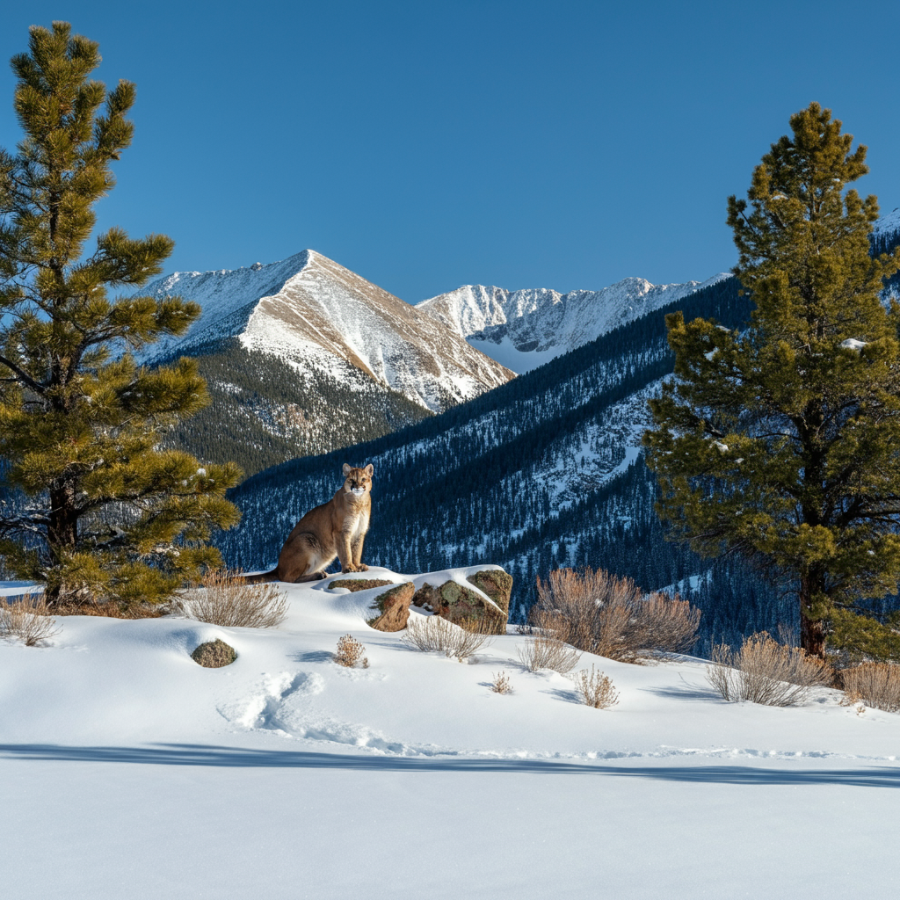
Winter Wildlife Awareness and Safety in the Colorado Rockies: Tips for Avoiding Predators and Safe Encounters
The winter months in the Colorado Rockies bring breathtaking snow-covered landscapes, but they also create challenges when it comes to wildlife encounters. Understanding the behaviors of animals in winter, how to avoid run-ins with predators, and how to safely handle situations when they arise are important parts of surviving in the Rockies. This guide will help you navigate the wilderness safely, ensuring that your winter adventures are enjoyable and risk-aware. It also covers potential encounters with herd animals, which can be just as unpredictable and dangerous as predators.
The Colorado Rockies are home to a wide variety of wildlife species, many of which are active during the winter months. From large predators like mountain lions and newly reintroduced wolves to smaller creatures such as bobcats and foxes, these animals have adapted in remarkable ways to survive one of the harshest environments on Earth.
Winter in the Rockies brings extreme cold, limited food sources, and deep snow. These conditions significantly impact the behavior of local wildlife. Some animals hibernate, some migrate, and others adapt in unique ways to thrive through the season. Understanding these behaviors is key to not only staying safe but also appreciating the resilience of the animals that share this challenging environment.
The winter months in the Colorado Rockies present unique challenges to adventurers hiking in animal territory. Understanding how animals behave during this season is important not only for safety but also for appreciating the resilience of these creatures. As you navigate the Rockies, knowing whether an animal is hibernating, migrating, or actively seeking food can help you avoid dangerous encounters and make your adventure safer and more enjoyable.
Not all animals remain active in the winter, and many species have developed specific strategies to endure the harsh cold.
Hibernators: Bears are the most notable hibernators. Their metabolic rate decreases significantly, allowing them to sleep through the cold months without needing to eat. However, not all bears hibernate fully; some enter a state of torpor, where they remain intermittently awake. This means they can still pose a risk if disturbed, especially if they are woken during warmer spells or are forced from their dens. For adventurers, understanding that some bears may not be fully dormant during winter is important to understand to avoiding potential encounters.
Migrators: Species such as elk, deer, and many birds migrate to lower elevations to find food and shelter during winter. While these animals may still be found at higher elevations during milder weather or when snow conditions allow them to reach available food, they generally move to safer, warmer areas. However, adventurers should be aware that these migratory paths can cross popular hiking areas, so it’s important to know where you are hiking and the likelihood of encountering these animals, particularly in the early winter months.
Wildlife in the Colorado Rockies has developed several adaptations to help them survive the winter:
Insulating Fur: Thick, dense fur coats provide insulation against the cold, helping animals maintain body heat during the frigid months.
Specialized Feet: Many animals, such as snowshoe hares and elk, have wide feet that allow them to walk across deep snow without sinking, enabling them to cover large areas in search of food.
Behavioral Adjustments: Some animals hunker down in dens, caves, or hollow trees to conserve energy and stay warm. Others, like deer, form herds to increase safety against predators. These herd behaviors, however, can be dangerous for hikers if the animals feel threatened or cornered.
Additionally, reduced food availability during the winter months often forces animals to be more resourceful in finding food and shelter, and understanding these behaviors can help you avoid unnecessary wildlife encounters.
When hiking in animal territory, being aware of these winter survival tactics is critical to avoiding an encounter. Wildlife might be more desperate for food, more defensive of their space, or more easily triggered to act aggressively due to the challenges of winter survival. Keeping a respectful distance and understanding these patterns will help ensure your safety in the wilderness.
In the Colorado Rockies, the winter months bring a dramatic shift in the delicate balance between predators and prey. The changing environment impacts the behaviors and strategies of both groups. For predators, the colder months may make hunting more challenging, while prey animals must navigate a season where food is scarce, and predators are desperate. In this complex web of survival, understanding the shift in these relationships is key to grasping how wildlife survives in the harsh winter climate.
Winter is a time when apex predators like mountain lions, wolves, and coyotes become more active, often with heightened urgency. As food becomes less plentiful, these predators are forced to adapt and refine their hunting strategies.
Mountain Lions rely on stealth and patience, stalking prey like elk and deer. During winter, when food is harder to come by, they may become more aggressive and active. They typically hunt alone, using their ability to blend into the terrain and remain unseen, but when food is scarce, mountain lions may increase their hunting range and even venture closer to human-populated areas.
Coyotes, known for their adaptability, tend to become more social in winter as they form packs to increase their chances of survival. They shift from scavenging to more active hunting, targeting smaller animals like rodents, birds, or even fawns from larger herds. Coyotes may also venture into urban areas in search of food, further complicating their interactions with humans.
Wolves, are highly social animals that rely on pack dynamics to hunt effectively. Traditionally, they work in large packs to bring down larger prey like elk and moose, using teamwork to chase, exhaust, and ultimately take down their prey. However, in Colorado, wolves are still in the process of reintroduction, and the packs here are not as large as those found in other regions. As a result, their hunting tactics may not follow the typical patterns seen in larger, established wolf populations. Smaller pack sizes or even lone wolves may be more common, and these wolves might rely on different strategies to hunt. They may target smaller prey or scavenge from other predators instead of hunting in large, coordinated groups. While wolves typically avoid humans, they can become more aggressive if they feel cornered or threatened, especially if they are alone or with a small pack. The reintroduction of wolves adds a new layer to predator-prey dynamics in the Rockies, and their behavior is still evolving as they adapt to their new environment.
Bears in Colorado hibernate through the winter, some become active due to warmer weather or disturbances in their dens. Black bears in particular may enter a state of torpor, where their metabolism slows, but they are not fully asleep. If disturbed, whether by environmental changes or human activity, these bears can become agitated and may leave their dens in search of food. Though their activity is reduced in the winter, they still pose a threat, especially if they are woken unexpectedly. Bears are attracted to food, so storing food properly and keeping an eye out for bear tracks or signs in the snow can help you avoid an encounter.
Together, these apex predators shape the balance of the winter wilderness, each using their own unique survival strategies to thrive during a time when food is scarce and conditions are harsh. Whether they are actively hunting for prey or conserving energy, these predators play an integral role in maintaining the natural order of the ecosystem. For adventurers, understanding their behavior and presence is key to staying safe and respecting the delicate predator-prey relationships in the Rockies.
For prey animals, winter is a brutal season. With limited food sources and harsher weather conditions, they must adapt their behaviors to stay alive. The cold months are particularly tough for species like elk, moose, and deer, who are constantly at risk of being hunted by predators.
Elk are large and social animals that rely on herds for safety. In the winter, these herds become even more important as elk stick together to defend against predators like mountain lions and wolves. The herd moves together to increase the chance of spotting predators and defending one another, especially in deep snow or when food is hard to come by. A lone elk is far more vulnerable to attack than one surrounded by others.
Deer also adjust their behavior during winter. They often seek out lower elevations or areas with more cover, such as dense forests or thickets, where predators are less likely to spot them. However, in areas where food is scarce, deer will also be forced to travel in search of nutrition, putting them at risk of being hunted by predators like wolves and mountain lions.
Moose, being larger and less agile than elk or deer, tend to be more solitary during the winter. They often move to areas where food is accessible, such as wetlands or forested areas, where they can feed on shrubs and twigs. However, moose are highly territorial, and if a predator approaches their space or a mother moose is protecting her calf, she will aggressively defend her territory, becoming a potential threat to humans or predators alike.
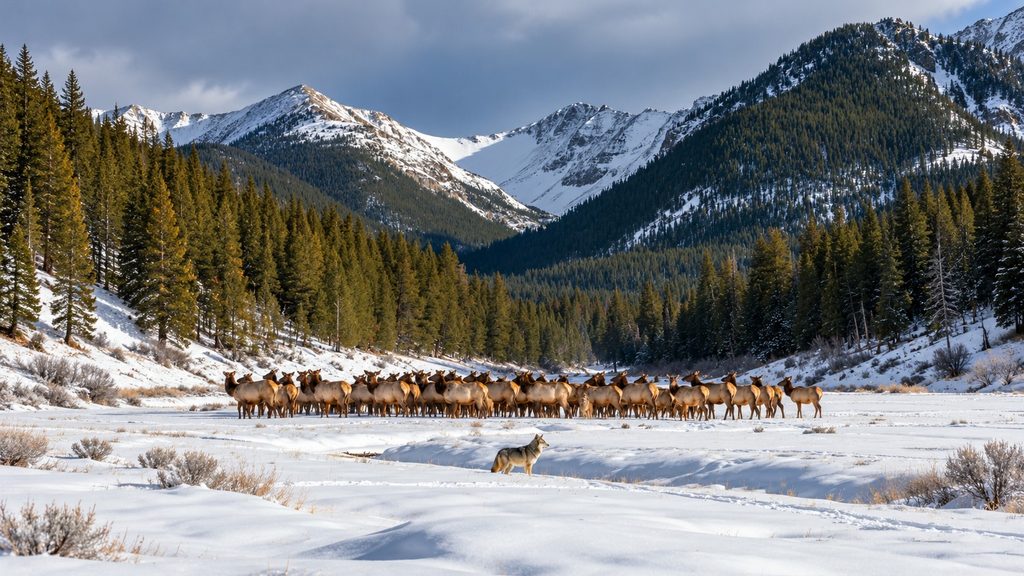
In the winter months, predators take advantage of the changing behavior of prey. As elk, deer, congregate in herds to protect themselves from the cold and from predators, this creates a prime hunting opportunity for wolves and mountain lions. A wolf pack, for example, will use the herd’s movement and collective energy to corner a lone or weak individual, especially in deep snow where prey may struggle to escape.
Additionally, the struggle for food leads to intense competition among predators. Wolves and coyotes, while normally avoiding each other, might clash when they come across the same prey. Wolves, being larger and more powerful in packs, will dominate, but coyotes are clever scavengers, often feeding on the scraps left behind by wolves or mountain lions.
As winter deepens, the predator-prey balance shifts. While predators like mountain lions and wolves hunt more frequently to survive, they also must be strategic. They depend on the scarcity of prey and the movement patterns of animals like elk, moose, and deer. These prey animals, in turn, rely on their instincts to move in herds, hide, or become more evasive, but even they can only do so much when resources are scarce and predators are relentless.
In essence, winter heightens the tension between these two groups. While predators are forced to push harder to find food, prey animals are becoming more alert and resourceful. The survival of both depends on how well they can outwit each other in the harsh, snowy terrain of the Rockies.
Understanding these predator-prey relationships can help adventurers respect the animals’ space and the wild dynamics at play. As predators stalk their prey and prey animals work to survive, it’s important to remember that the Rockies in winter become a battleground where survival strategies are put to the test every day.
Understanding animal tracks and other signs in the wild can help you gauge the presence of wildlife and assess the potential risks they pose. While animal tracking is a deep and fascinating field of study, it’s important to know the basics, especially if you’re heading out into the Colorado Rockies for a winter adventure. This section will touch on why paying attention to tracks and signs is so important and offer a general overview. For a more thorough understanding, we highly recommend joining one of our animal tracking courses, where you can get hands-on experience and learn the ins and outs of reading tracks in the wild.
Recognizing fresh tracks versus older ones can be a great first step in understanding animal activity. Fresh tracks are often clear, well-defined, and show more intricate details, like claw marks or foot contours, whereas older tracks may be more weathered, blurred, or partially filled in with snow. Knowing the difference helps you assess how recently an animal passed through the area and can give you insight into its current location or behavior.
Here are some common animal tracks you might encounter and their general characteristics:
Mountain Lion Tracks: Mountain lion tracks are typically round and much larger than a domestic cat’s. These predators retract their claws when they walk, so their tracks do not show claw marks. Recognizing their size and shape is key to identifying the presence of these stealthy hunters.
Wolf and Coyote Tracks: Wolves leave larger, rounder tracks compared to coyotes, which have more narrow and elongated prints. The differences in track shape reflect their size and gait. Wolf tracks often show a noticeable depth and spacing between the footprints due to their heavy, pack-based movements, while coyote tracks are more subtle, indicating their solitary hunting style. Wolves are typically found in remote areas or wilderness regions, while coyotes are more adaptable and can be found in both rural and urban environments.
Bear Tracks: Bears leave large, wide paw prints that are more noticeable around denning sites, especially during winter. Knowing how to identify bear tracks can help you avoid close encounters with these powerful animals.
Deer, Elk, and Moose Tracks: These large herbivores leave clear, distinctive hoof prints, which are much more pronounced than the softer paw prints of predators like foxes or coyotes. Unlike the round pads of carnivores, the hoof prints show the clear outline of two distinct toes, often leaving deep impressions in the snow or mud. Understanding their tracks can give you insight into their movement patterns, such as where they feed, rest, and seek shelter.
In addition to tracks, other signs of activity, like scat, scent markings on trees or rocks, and feeding signs, can give you valuable clues about the wildlife in the area. Broken branches, chewed plants, and tree rubs are signs that animals have been foraging, especially in winter when food is scarce.
Being aware of these signs is an important skill for any adventurer. It allows you to understand how close an animal may be and adjust your actions accordingly. For a deeper dive into animal tracking, consider attending one of our animal tracking courses, where you can gain practical experience and build your skills in identifying and interpreting animal signs in the wild.
One of the best ways to stay safe in the wilderness is to avoid attracting predators in the first place. By being mindful of your behavior, you can minimize the chances of dangerous encounters and ensure that animals have the space they need to avoid you. Here are several strategies to help keep you and your group safe:
Predators rely heavily on their sense of smell, so it’s important to reduce your scent trail to avoid attracting wildlife, especially larger predators like bears and mountain lions.
Food Storage: Food is one of the biggest attractants for wildlife. Always store food according to local requirements, using approved bear resistant containers, lockers, or an appropriate food hang where permitted. A bag alone does not make food protected from bears. Never keep food in your tent or near your sleeping area, as even small amounts of food can draw predators. In fact don’t keep anything with a smell inside your tent. That includes toothpaste, deodorant, chap stick and other common packable toiletries.
Personal Hygiene: While you may want to stay fresh, strong-scented products such as lotions, soaps, deodorants, and even toothpaste can easily attract animals. Avoid these items or opt for scent-free alternatives while in the wilderness. Bears and other wildlife can investigate odors from personal hygiene products as well as food. Choosing unscented products does not remove the need to store toiletries properly. The goal is to manage attractants rather than assume you can eliminate every human scent.
Many animals are naturally cautious and will avoid humans if they know you’re around. Keeping noise levels up while you’re hiking can alert animals to your presence, giving them a chance to retreat before you get too close. However, some people (like me) prefer to see wildlife and may not want to make noise. If that’s your goal, be prepared to act appropriately should an animal encounter occur, and know how to respond.
How to Alert Animals to Your Presence: It’s a simple and effective strategy, make your presence known! Talking, calling out, or singing can warn animals that you are approaching. Bear bells may not be loud enough to provide an effective warning, so do not depend on them. While you don’t need to shout continuously or be obnoxiously loud, use your voice where visibility is low or other sounds may mask your approach. This is especially important in dense forests, at blind corners, or near running water. The more proactive you are about avoiding a surprise encounter, the better the chance that an animal can move away before you get close.
Predators are generally less likely to target groups of people compared to individuals. There’s safety in numbers, and many larger predators, such as mountain lions, prefer to avoid conflict with groups.
Travel with Others: Whenever possible, hike in groups. If you’re in a remote area or venturing out for a longer hike, having a group of people with you can significantly reduce the chances of a predator encounter. Even predators that are typically shy, like mountain lions or wolves, are more likely to steer clear of a group. If you must hike alone, make sure to follow the strategies listed above to reduce the chances of encountering a predator, and always stay hyper-aware of your surroundings.
Important Note for Families: If you’re traveling with a child and are in two distinct groups, do not allow the child to run back and forth between the groups. Predators perceive the child as a weak animal that’s separating from the herd and view them as an easy target. They may pick the child off as they move between groups without anyone even noticing. Instead, have the child stay with one group and stick together to maintain the safety of the whole party.
By following these simple, proactive steps, you not only reduce the chances of attracting predators, but you also ensure that your time in the wilderness remains enjoyable and safe.
In Colorado, we have Black Bears, which can appear in various colors, including black, cinnamon, brown, or even blonde. It’s important to note that the color of a bear does not determine its species, it’s other physical features that do. Black Bears typically have a straighter face profile and taller, more pointed ears than Brown Bears (i.e. Grizzly Bears). Grizzlies have a prominent shoulder hump, a more dished face profile, and shorter, rounder ears. Use several features together rather than relying on color, size, or one feature alone. Brown Bears are thought to be extinct in Colorado. If you see one, it’s probably just here on vacation. When it comes to black bears, size and color can vary, and their behavior varies with the animal and situation, so it’s important to understand how to handle them appropriately.
While most bears in Colorado are in hibernation during winter, Black Bears can still pose a threat, particularly if they wake from their torpor (a lighter form of hibernation). This usually happens during warmer spells or if disturbed. Understanding the specific response to a Black Bear encounter is important for safety.
With Black Bears, if you are attacked, you do not play dead. Some Black Bear attacks are predatory, but not every attack has the same cause. The response to a Black Bear attack is still not to play dead. If you can immediately reach a secure vehicle or building, do so. Otherwise, resist the attack. Instead, you fight back aggressively, using anything at your disposal, rocks, sticks, or even your fists. Focus on the bear’s face, eyes, and nose, which are the most vulnerable areas. Black Bears, being smaller than Brown Bears, can be deterred if they feel threatened, but you need to stand your ground and show no signs of weakness.
On the other hand, Brown Bears (Grizzly Bears), if encountered, should be handled differently. If a Brown Bear makes physical contact during a defensive attack, play dead with your pack on, lying on your stomach with your hands protecting the back of your neck and your legs spread. However, if the attack persists, fight back. If any bear stalks you and then attacks, or attacks you in your tent, fight back rather than playing dead. Bears may attack defensively if they feel threatened or surprised, so the circumstances also affect the appropriate response. That’s why it’s important to know what type of bear you’re dealing with in order to respond appropriately.
In Colorado, Black Bears are what you are going to encounter, and when hiking in bear country, it’s important to always be prepared and know how to react in case of an encounter. Carrying bear spray, making noise, and properly storing food can all help you avoid a dangerous situation. But if you find yourself in a face-to-face encounter with a Black Bear, you now know the best response to stay safe.
You’re right to wonder about the risk of encountering bears in the winter, as most bears are indeed hibernating during this time. However, it’s still important to be aware of the potential for encounters, especially because not all bears hibernate in the same way or for the same length of time.
Not All Bears Fully Hibernate: Sometimes bears enter a lighter form of hibernation called “torpor,” during which their metabolic rate drops, but they remain intermittently awake. They may wake up during warmer spells or if disturbed, so while the risk is lower in winter, it’s not nonexistent.
Warmer Weather or Lack of Food: If the winter is unusually warm or if food is scarce, some bears may not enter full hibernation and could be active in search of food.
Human Disturbance: If a bear’s den is disturbed (for example, by humans or other animals), it may be forced to leave its den and could pose a risk.
A bear encounter can be a frightening experience, but it’s important to remember that how you react can make a significant difference in the outcome. Here’s what to do if you find yourself in a situation where you encounter a bear:
Don’t Run: It’s a natural instinct to run when you feel threatened, but running can trigger a bear’s chase response. Bears can run much faster than humans, and fleeing could escalate the situation. Instead, remain calm and stand your ground. By staying still and avoiding sudden movements, you can signal to the bear that you’re not a threat. If the bear begins to approach, try to appear larger by standing tall, raising your arms, or using any gear you have (like a jacket or hiking poles) to increase your size.
Make Yourself Heard: If you don’t have bear spray, or even if you do, and a bear is simply curious, making noise can often encourage it to move on. Start by calmly clapping your hands and saying something like, “Hey bear,” to let it know you’re human. Stay calm initially to avoid startling the bear, especially if a cub might be nearby. If there is a cub, remain composed and back away slowly to avoid provoking the mother.
If there’s no cub and the bear doesn’t leave after your calm efforts, escalate your response. Raise your voice, yell loudly, clap your hands, or bang objects together to make yourself appear more intimidating.
Use Bear Spray: Bear spray is one of the most effective tools for deterring a bear attack, but preparation is key. Always carry it in an easily accessible spot, like attached to your hip or in a front-facing pocket, so you can grab it quickly if needed. Practice drawing, removing the safety, aiming, and deploying with an inert training canister before your trip. Avoid unnecessarily discharging your active canister, and check its condition and expiration date so you are ready to use it without hesitation.
If a bear is behaving aggressively or charging, deploy the spray according to the manufacturer’s instructions and effective range to create a cloud between you and the bear. Do not assume you should wait until the animal is only 10 to 20 feet away. Read the instructions beforehand and pay attention to wind direction. Wind can blow spray back toward you or move the cloud away from the bear, so understand how to adjust your aim without delaying your response to an immediate threat.
Practicing the motion of removing the safety and aiming in a safe, controlled environment can help you feel confident in deploying it under stress. Remember, bear spray is a defensive tool and should only be used when necessary to protect yourself.
Pro tip??? People have actually done this, and while I try not to judge as a survival instructor, this one is tough to let slide, so I’m going to say it plainly for the small percentage of folks who might not know: bear spray is not like mosquito repellent. You don’t spray it on yourself ahead of time. Trust me, if you do, you’re not going to be happy. I guarantee it.
Also, fun fact (or horrifying fact): once bear spray has been deployed and has been sitting for a while, it can actually attract bears. It’s like that really hot secret spicy sauce at a restaurant, at first, it’s got a kick, but after a while, you start getting curious about what’s in it… and maybe even enjoying the flavor more. Don’t be the spicy entrée.
Back Away Slowly: If the bear doesn’t seem aggressive and is simply aware of your presence, slowly back away while facing the bear. Do not turn your back or run. Slowly retreat in the direction you came from, making sure not to make sudden movements. Giving the bear space will help ensure it doesn’t feel threatened or cornered. If the bear starts to follow you, stop, stand your ground, look big and use your bear spray if necessary. If you area wearing a backpack, leave it on as it protects your back if you are attacked.
Stay Calm: How you react matters. Panicking will only make things worse. Take slow, deep breaths to help calm yourself and focus on what you need to do.
Know When to Fight Back: In the rare event that a black bear attacks, your best chance is to fight back with all your strength. Focus on the bear’s face, eyes, and nose, areas where it’s most vulnerable. Use any available tools, such as sticks, rocks, or even your fists.
By staying aware of your surroundings, carrying bear spray, and understanding how to respond to a bear encounter, you can greatly reduce the risks of an unwanted bear encounter turning dangerous. Remember that bears generally prefer to avoid humans and will usually retreat.
Though generally more elusive than bears, coyotes and wolves can pose significant risks, particularly if they feel threatened, are in packs, or are in proximity to vulnerable prey like pets or small children. Understanding how to respond in encounters can help ensure safety for you and others.
Coyotes are highly intelligent and adaptable animals. While they typically avoid direct interactions with humans, they often live in close proximity to people, even in or near towns and large cities in Colorado. It’s not uncommon to find them thriving in urban environments, where they have adapted to scavenging and, in some cases, lost their fear of humans. Their boldness can increase in these settings, particularly when food sources are plentiful. They may also pose a risk to pets and young children, making awareness and preparation important no matter where you live.
Make Noise: Coyotes are usually intimidated by loud sounds. Raise your voice firmly and shout, clap your hands, stomp your feet, or bang objects like sticks or pots together to scare them off. Avoid screaming, as it might mimic prey sounds.
Don’t Turn Your Back: Always keep your eyes on the coyote. Slowly back away while facing it. Turning your back may trigger a chase instinct.
Beware of Lone Coyotes Acting Playfully: A lone coyote that seems curious or playful, especially around pets or children, still deserves caution. Do not assume it is inviting safe interaction or let a dog chase it. Coyotes may defend territory or den sites, and a pursuing dog can encounter additional coyotes. Keep your attention on the animal’s behavior rather than assuming you know what it is planning. Immediately call pets or children to you, discourage an approaching coyote with a firm voice and assertive actions, and withdraw together without running.
Keep Pets on a Leash: Coyotes are opportunistic hunters, and even a small dog or cat can appear as prey. Always supervise pets in areas where coyotes are known to roam.
Wolves, recently reintroduced to Colorado through wildlife conservation efforts, are now making their presence known in the state. These wolves were carefully translocated from other regions of the U.S. as part of a program to restore their population and ecological role. While they are typically elusive and less likely to approach humans than coyotes, wolves are larger, stronger, and more formidable in packs. Lone wolves may act differently than a pack, and your approach should adjust accordingly.
Remain Calm: If you encounter a lone wolf, avoid panicking or making sudden movements. Give it space and avoid approaching or cornering it. If it becomes aggressive or persistently approaches, become more assertive rather than continuing to act passive.
Back Away Slowly: Just as with coyotes, keep your eyes on the wolf at all times and back away slowly. Quick or erratic movements may provoke a response.
Do Not Run: Wolves are predators, and running could trigger their chase instinct. Move slowly and deliberately to maintain control.
Make Yourself Look Larger: If the wolf seems curious or hesitant, raise your arms, hold your backpack above your head, or stand on a rock to appear larger. This can discourage it from approaching further.
Pack Behavior: If you encounter a pack, keep your group together and maintain visual contact so you can monitor the animals. Speak firmly, remain upright, and back away slowly where possible. Do not run. If wolves become aggressive or continue to approach, stand your ground, look larger, yell, clap, or wave a walking stick. Have bear spray ready for an approaching threat. A pack sighting alone is not a reason to approach or provoke the animals.
If wolves attack, it’s a rare and extreme situation that requires immediate, decisive action. Here’s how to respond:
Wolves are most dangerous if they can bring you to the ground. Do everything you can to remain standing.
Use trees, rocks, or other natural barriers to shield yourself from multiple wolves if they are attacking as a pack.
Wolves are predators, and showing weakness can encourage them. Use any weapon or tool available:
Bear spray: If you have bear spray, use it as a first line of defense. Aim for the face of the attacking wolf(s).
Sticks, Rocks, or Other Objects: Swing or throw them with force at the wolves. Aim for the head or body to cause pain and deter further attack.
Knives or Sharp Objects: If you’re armed with a knife, use it to fend off the animal. Focus on vulnerable areas like the eyes, nose, or neck.
If a wolf brings you to the ground, protect your neck, head, and face with your arms, but don’t simply curl into a ball. Instead, stay active and continue to fight back from the ground.
Use your legs to kick at the wolves’ faces or bodies while keeping your vital areas shielded.
If you have a weapon or object, use it to strike at their head, snout, or eyes. Focus on causing enough pain or disruption to make them reconsider the attack.
Shout, scream, or blow a whistle to try to intimidate the wolves and alert others to your situation. Wolves may retreat if they perceive the threat to outweigh their risk.
If more than one wolf is involved, defend against the immediate threat and use available barriers to limit their access to you. Do not spend time trying to identify an alpha or assume that targeting one animal will make the others retreat. Keep resisting, protect your head and neck, and try to remain standing.
Wolves rely on overwhelming their prey, but they’re not invincible. Aggressive resistance can deter an attack. Fighting back increases your chances of survival.
The key here is that you protect while actively resisting. Wolves are less likely to persist if they encounter significant resistance, as they usually seek prey that is easy to subdue. This strategy increases your chances of survival in such an extreme scenario.
Seek medical attention immediately for any bites or injuries. Wolf bites can cause severe damage and carry risks of infection or rabies.
Report the incident to local wildlife authorities, as they may need to track or manage the wolves involved.
While wolf attacks on humans are exceptionally rare, being mentally prepared for such a scenario can help you respond effectively.
Avoid Feeding Wildlife: Feeding animals like coyotes and wolves habituates them to human presence, making them more likely to approach people and behave boldly.
Carry a Deterrent: Items like bear spray, air horns, or whistles can be effective at deterring both species in emergencies.
Be Mindful of Children and Pets: Keep them close to you and under control in areas where predators are present.
With wolves returning to Colorado’s ecosystems as part of their natural restoration and coyotes thriving in many environments, understanding these predators’ behaviors and preparing for encounters is more important than ever. Being informed can help reduce risks and ensure a safe coexistence in their habitat.
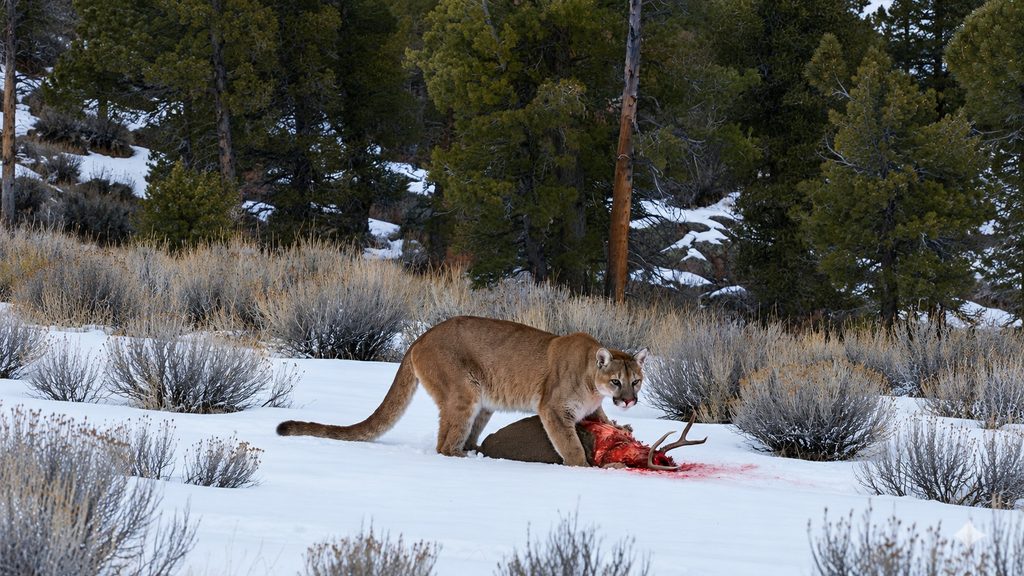
Mountain lions rely on stealth and ambush when hunting, often stalking their prey quietly from cover before launching a surprise attack. A sighting alone does not tell you whether the lion noticed you first, why it is visible, or whether it intends to approach. You may simply have crossed its path. Watch its behavior and give it an escape route while responding calmly and deliberately. Your behavior can determine whether the encounter ends peacefully or escalates into a dangerous situation. Remaining calm, assertive, and deliberate in your movements is essential to de-escalating the encounter.
This next bit is a joke, not wildlife safety advice. Do not attempt it. The actual encounter instructions follow below.
If you’re heading into mountain lion country, forget the bear spray and survival tools! The best defense is a ball of yarn and a laser pointer. If a mountain lion charges, throw the yarn at it. Odds are, it’ll stop mid-attack and start batting it around like your neighbor’s over-caffeinated cat. When it eventually gets bored (because let’s face it, cats have attention spans shorter than TikTok users), you’ll be ready for phase two.
That’s when you whip out the laser pointer. Position yourself on a nearby cliff and point the laser where the lion can see it. As it pounces after the dot, guide it to the cliff’s edge and… well, you get the picture. Problem solved! Just make sure you’re not downwind, or you might end up with a face full of fur and confusion as the mountain lion tries to figure out what just happened.
(Note: This is absolutely not how you handle mountain lions in real life, but hey, it’s a fun mental image!)
Fun’s over! Let’s get back to what you actually need to do.
Why: Turning your back or running may trigger the mountain lion’s predatory instinct to chase. Even if it is not hunting, sudden movements can provoke an attack.
What to Do: Face the mountain lion directly, standing tall and maintaining eye contact. Keep children or pets close. Pick up a small child if possible without bending over or turning away from the lion. Do not put yourself into a crouched position trying to lift a child or pet.
Why: Mountain lions prefer prey smaller than themselves. Making yourself appear larger can make you seem less like prey and more like a threat.
What to Do: Raise your arms above your head, open your jacket wide, or hold objects like a backpack high to increase your perceived size. Wave your arms slowly but deliberately. If the mountain lion does not retreat, pick up and throw rocks, sticks, or any available objects in its direction. Use objects you can reach without crouching or turning your back. The goal is to discourage an approach. If the lion attacks, fight back forcefully rather than holding back out of concern that resistance will escalate the attack.
Why: Loud noises can startle or intimidate a mountain lion, making it less likely to approach.
What to Do: Yell firmly and loudly while maintaining eye contact. Use deep, strong tones rather than high-pitched or panicked ones. You can also clap your hands, bang sticks together, or use a whistle.
Use a firm, loud voice while keeping your footing and facing the animal. You do not need to imitate another animal or try to communicate dominance through a particular pitch. Your aim is to make it clear that you have seen the lion and will resist an approach. Keep your group together while you respond.
Why: Retreating calmly allows you to create space without triggering a chase. Sudden or jerky movements can escalate the situation.
What to Do: Step backward slowly and deliberately while keeping your eyes on the mountain lion. Do not trip or fall; keep your footing steady.
Why: If a mountain lion attacks, it is likely viewing you as prey, and passive behavior won’t stop it.
What to Do:
Fight back aggressively using any available weapons or tools, such as sticks, rocks, or even your fists.
Do not kneel, crouch, or bend over to collect objects. Use what you already have or can reach while remaining upright and facing the mountain lion.
Focus on vulnerable areas like the face, eyes, and nose to inflict pain and deter the attack.
If you have bear spray, use it!
Protect your neck and head while continuing to fight off the animal.
Recognizing the signs of a mountain lion in the area is important for avoiding potentially dangerous encounters. These elusive predators often leave subtle clues behind, such as tracks, markings, or distinct sounds, that can signal their proximity. Staying alert and knowing what to look for can give you the opportunity to steer clear of their territory and reduce the chance of crossing paths. Here’s what to watch for:
Tracks: Fresh tracks in soft ground or snow.
Sounds: Mountain lions can produce a range of vocalizations, including their infamous scream, which is often described as a chilling, high-pitched wail resembling a woman’s scream. This sound is most common during mating season but can be heard in other contexts. Recognizing this unsettling call can alert you to their presence nearby.
Scat: Mountain lion scat is segmented, often containing fur, bones, or feathers. It is large and may be covered with dirt or debris.
Scratches or Markings: Mountain lions will often claw at trees or the ground to mark their territory. Look for claw marks on tree trunks or exposed soil.
Prey Cache: Mountain lions often drag their prey to a secluded area, covering it with leaves, dirt, or snow for later feeding. If you find a cache, leave the area immediately.
Travel in Groups: Mountain lions are far less likely to approach a group, as they prefer to target individuals.
Keep Pets Leashed: Unleashed pets can draw the attention of mountain lions and may be seen as prey, putting both you and your pet at risk.
Avoid Dawn and Dusk: These are peak hunting times for mountain lions, so plan your activities outside of these hours whenever possible.
Stay Alert: Pay close attention to your surroundings, especially in areas with dense vegetation, rocky outcroppings, or ledges where mountain lions might conceal themselves.
Pro Tip: Mountain lions are ambush predators, relying on stealth and surprise to hunt. They are less likely to approach or attack if they believe they’ve been spotted, as their hunting success depends on catching prey off-guard.
Some people in areas with a high mountain lion presence have taken to wearing masks with painted eyes on the back of their heads or hats with “eyes” on them. There is not enough evidence to recommend this as a reliable precaution against mountain lions. Do not count on painted eyes to prevent an ambush or allow them to replace awareness, group travel, and keeping children close.
Use established precautions such as staying alert, traveling in groups, and planning around dawn and dusk when mountain lions are most active. Painted eyes should not change how you assess or respond to an encounter.
By taking the time to understand mountain lion behavior and practicing these safety measures, you can significantly reduce the chances of an encounter while increasing your ability to handle one safely and effectively. Mountain lions are powerful predators, but they typically prefer to avoid human interaction. Knowing how to recognize the signs of their presence, respond appropriately in their territory, and act decisively during an encounter can make all the difference. Awareness and preparation not only help protect you but also promote safe coexistence with these incredible creatures in their natural habitat.
Smaller animals such as raccoons, foxes, and bobcats may not pose the same level of danger as larger predators, but they can still create challenges. Raccoons and foxes are opportunistic scavengers, often drawn to campsites in search of food. Bobcats, on the other hand, are primarily predators but are typically shy and avoid humans. Understanding their behaviors and taking precautions can help you avoid conflicts.
Preventing scavengers and predators from being attracted to your campsite is key to avoiding encounters:
Don’t Feed Wildlife: Feeding animals, no matter how small or harmless they seem, teaches them to associate humans with food, which can lead to aggressive behavior or repeat visits.
Store Food Properly: Raccoons, foxes, and even bobcats are resourceful and persistent when it comes to food. Follow the land manager’s food storage rules and use required bear resistant containers, lockers, or other approved methods. An ordinary sealed bag or cooler is not automatically bear resistant. Where hanging is permitted, learn the approved method and required clearances rather than relying on height alone.
Keep Your Camp Clean: Scraps, grease, and unwashed dishes can attract scavengers and predators alike. Pack out food scraps and garbage, manage dishwater according to local guidance, and keep your site tidy. Moving waste farther from your sleeping area does not make dumping it acceptable.
While these animals typically avoid humans, encountering them is possible:
Raccoons and Foxes: These scavengers may become bold if they expect food. Use noise, clapping, or throwing small objects to scare them off. Avoid cornering them, as this can provoke defensive aggression.
Bobcats: Though predators, bobcats are relatively small and typically shy. If you encounter one, make yourself appear larger, use loud noises, and act aggressively to scare it off. Maintain eye contact and avoid running, as this could trigger a chase response. If the bobcat doesn’t retreat immediately, back away slowly while continuing to assert dominance by shouting and throwing objects in its direction.
By taking these precautions, you can significantly reduce the chances of unwanted visits from both scavengers and predators, creating a safer environment for yourself and others. Maintaining a clean campsite, securing food properly, and staying vigilant not only protect you but also help preserve the natural behaviors of wildlife, preventing animals from becoming too accustomed to human presence. These steps ensure a more enjoyable and stress-free outdoor experience, allowing you to focus on the beauty of the wilderness while minimizing risks to both you and the animals that call it home.
Rabies is a viral disease that affects the nervous system of mammals, including humans. It is most commonly spread through the saliva of an infected animal, typically via bites. While many wild animals can carry rabies, raccoons, foxes, skunks, and bats are among the most common carriers in North America. Understanding how to recognize and respond to rabies can help protect you and others during wildlife encounters.
Possible exposure is not limited to an obvious bite. Infected saliva contacting broken skin or the eyes, nose, or mouth can also be an exposure. Ask a medical professional or public health department promptly about direct bat contact or another possible exposure, even if you cannot see a bite. You cannot reliably diagnose or rule out rabies from an animal’s appearance.
An animal infected with rabies may display unusual behaviors, often described as “acting strange” or “not normal.” Key signs include:
Aggression or Unprovoked Attacks: Rabid animals may act unusually aggressive, attacking without provocation.
Uncharacteristic Tameness: Some rabid animals may lose their fear of humans, approaching people or campsites unnaturally.
Excessive Drooling or Foaming at the Mouth: This can occur because the disease affects swallowing and nervous system function. Its presence or absence does not reliably establish whether an animal has rabies.
Staggering or Paralysis: Rabid animals may appear weak, disoriented, or unable to walk properly.
Daytime Activity in Context: Raccoons and foxes may be active during daylight for normal reasons. Daytime activity alone does not establish that an animal has rabies. Watch for unusual behavior, weakness, disorientation, or aggression, but do not try to diagnose rabies by observation. Keep your distance and contact authorities when concerned.
If you encounter an animal that you suspect has rabies, take the following precautions:
Keep Your Distance: Do not approach the animal under any circumstances. Keep pets and children away as well.
Report the Animal: Contact local wildlife or animal control authorities to report the sighting. Provide as much detail as possible about the animal’s location and behavior.
Do Not Attempt to Contain or Kill It Yourself: Handling a potentially rabid animal increases the risk of exposure to the virus. Let trained professionals manage the situation.
If you are bitten by a wild animal, it’s important to act quickly to reduce the risk of rabies infection:
Clean the Wound: First control severe bleeding with direct pressure. As soon as practical, wash the bite area thoroughly with soap and water for 15 minutes. This can help remove saliva and lower the chances of infection.
Apply First Aid: Cover the wound with a clean bandage and apply pressure if bleeding persists.
Seek Medical Attention Immediately: Rabies is nearly always fatal once symptoms begin, but timely treatment after exposure can prevent it. Do not wait for symptoms before seeking care. A doctor will assess your situation and determine whether you need post-exposure prophylaxis (PEP), a series of shots that can prevent the virus from taking hold.
Report the Incident: Notify local animal control or health departments so they can track and, if possible, test the animal for rabies. Give authorities the animal’s description and location from a safe distance, and follow their instructions about testing. Do not attempt to capture or transport a wild animal yourself and risk another exposure.
Vaccinate Pets: Ensure your pets are up to date on their rabies vaccinations.
Avoid Contact with Wildlife: Never handle wild animals, even if they appear friendly or injured.
Seal Entry Points: Secure trash and seal entry points around your home or campsite to discourage animals from approaching.
Educate Children: Teach children to avoid wild animals and to alert an adult if they see one acting strangely.
By understanding the risks and signs of rabies, you can take steps to protect yourself, your family, and your pets while enjoying the outdoors. Rabies is preventable if addressed promptly, so always err on the side of caution when dealing with potentially infected wildlife.
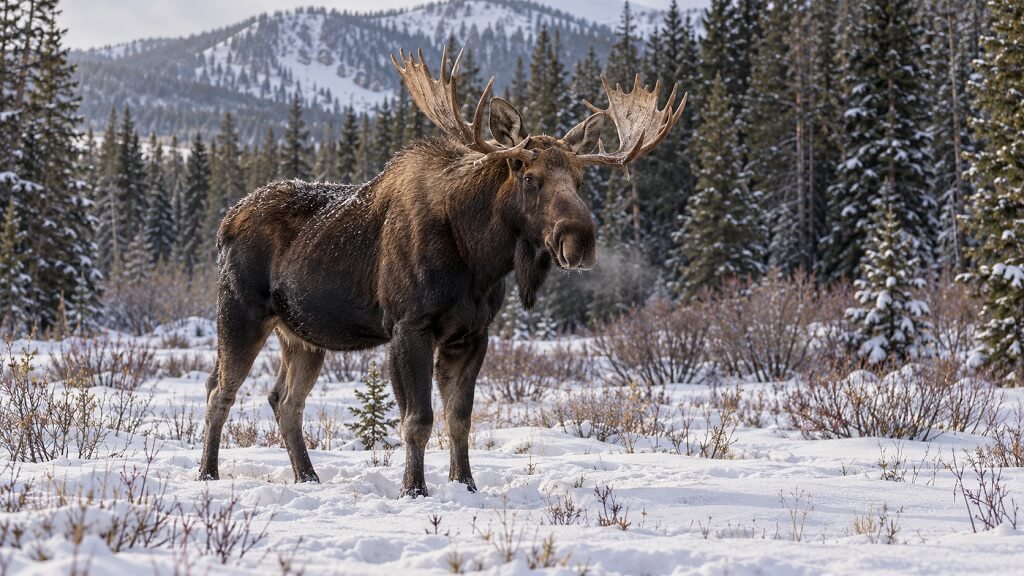
Moose may use packed trails during winter to avoid deep snow. If one is standing on your route, stop well back and wait or turn around. Do not try to squeeze past it or push it into deeper snow. Warning signs can include laid back ears, raised neck hair, a lowered head, and licking the snout. If a moose reacts to your presence, you are too close.
If a moose becomes aggressive or charges, run and put a substantial object between you and the animal, such as a tree, boulder, or vehicle. This response differs from the advice for bears, mountain lions, and wolves. Moose can react to dogs as predators, so keep dogs leashed and controlled where they are permitted, and consider leaving them home in moose country.
Give elk and deer enough room to feed, rest, and travel without being pushed ahead of you. Do not enter the middle of a herd or block its escape route. Deep snow makes unnecessary movement costly. Respect winter range closures and keep pets from chasing wildlife. Antlers, hooves, and body weight can cause serious injuries even when the animal is not a predator.
Respecting wildlife is essential for both your safety and the well-being of the animals.
Leave No Trace: Always pack out waste and food scraps to avoid attracting wildlife.
Respect Wildlife Space: Maintain a safe distance, especially when photographing animals.
If injured during a wildlife encounter, quick action is critical.
Clean the Wound: After controlling severe bleeding, wash animal bite wounds with soap and water for 15 minutes as soon as practical. Seek prompt medical advice about rabies exposure, infection, and tetanus.
Stop Bleeding: Apply pressure and cover with a sterile bandage.
Seek Medical Help: Animal bites can lead to infections, including rabies, so seek medical attention immediately.
Winter camping increases the risk of wildlife encounters, so take precautions to stay safe.
Camp Away from Trails: Avoid obvious wildlife travel corridors, carcasses, dens, and feeding or resting areas. Follow local camping setbacks, seasonal closures, and site rules rather than applying one distance to every location.
Use Barriers: Hang food and cooking supplies away from your tent and sleeping area.
Winter wildlife encounters are a part of the adventure in the Colorado Rockies. By understanding animal behavior, taking steps to prevent encounters, and knowing how to respond if one occurs, you can ensure that your wilderness experience remains both safe and enjoyable.
For related wildlife reading, explore our guide to bear behavior and encounters and What to Do When You Encounter a Wolf in the Wild.

Urban Survival in 2025: Adapting Wilderness Skills to City Environments What happens when the grid goes down in Denver? Here’s how wilderness survival skills, straight...
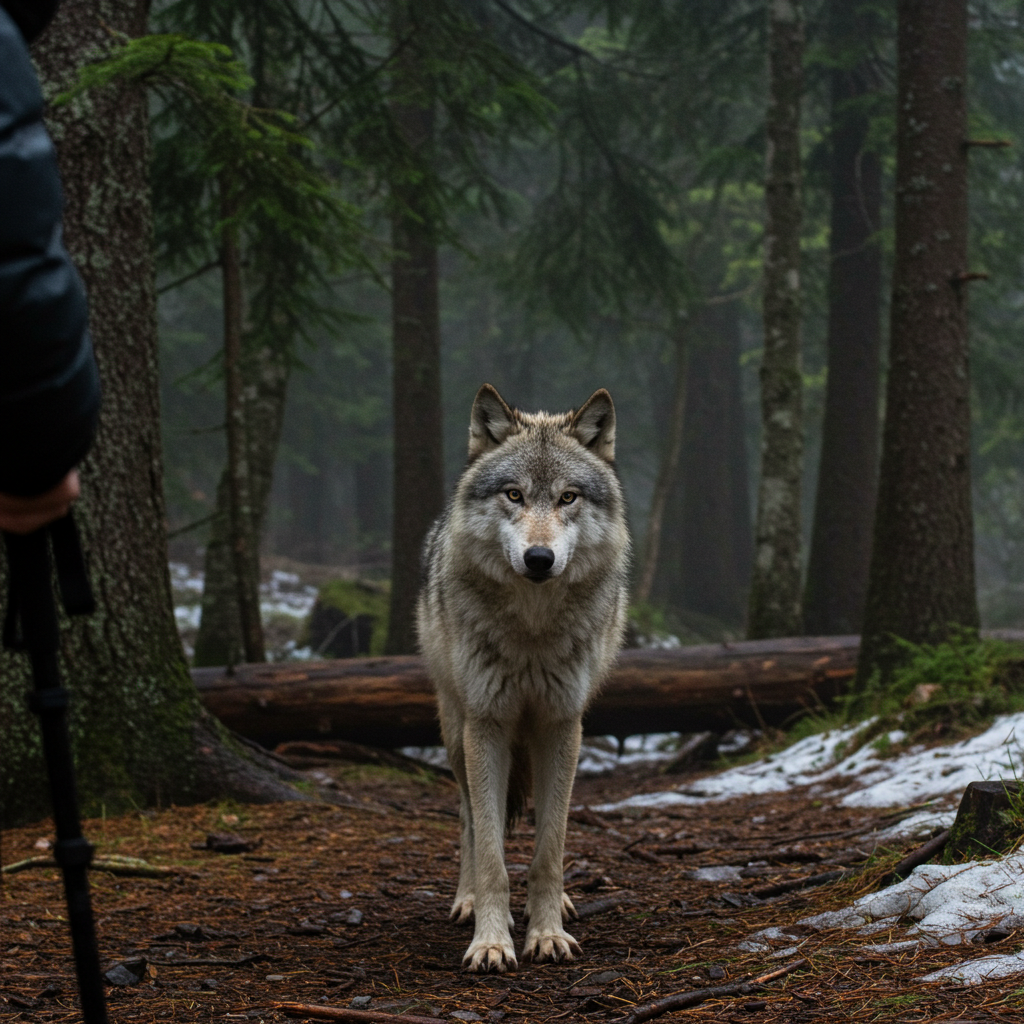
Wolves are neither villains nor heroes—they’re survivors. Explore their role in nature, the myths that surround them, and what we can learn from their resilience.
Learn how to avoid wildlife conflicts during winter in the Colorado Rockies, with practical guidance for bears, mountain lions, wolves, coyotes, moose, pets, and campsite...

Because of technology more Americans are heading out into the wilderness, unprepared. With Facebook, Instagram and many other social media platforms at your fingertips, people...

In an ever more urbanized world, it's crucial to empower people with the know-how to thrive in cities. By following these suggestions, you can boost...