Cart
Sub-Total: $0.00
$995.00
May 20–23 or August 26–29, 2027 | 4 days | Intermediate to advanced | Jason Marsteiner
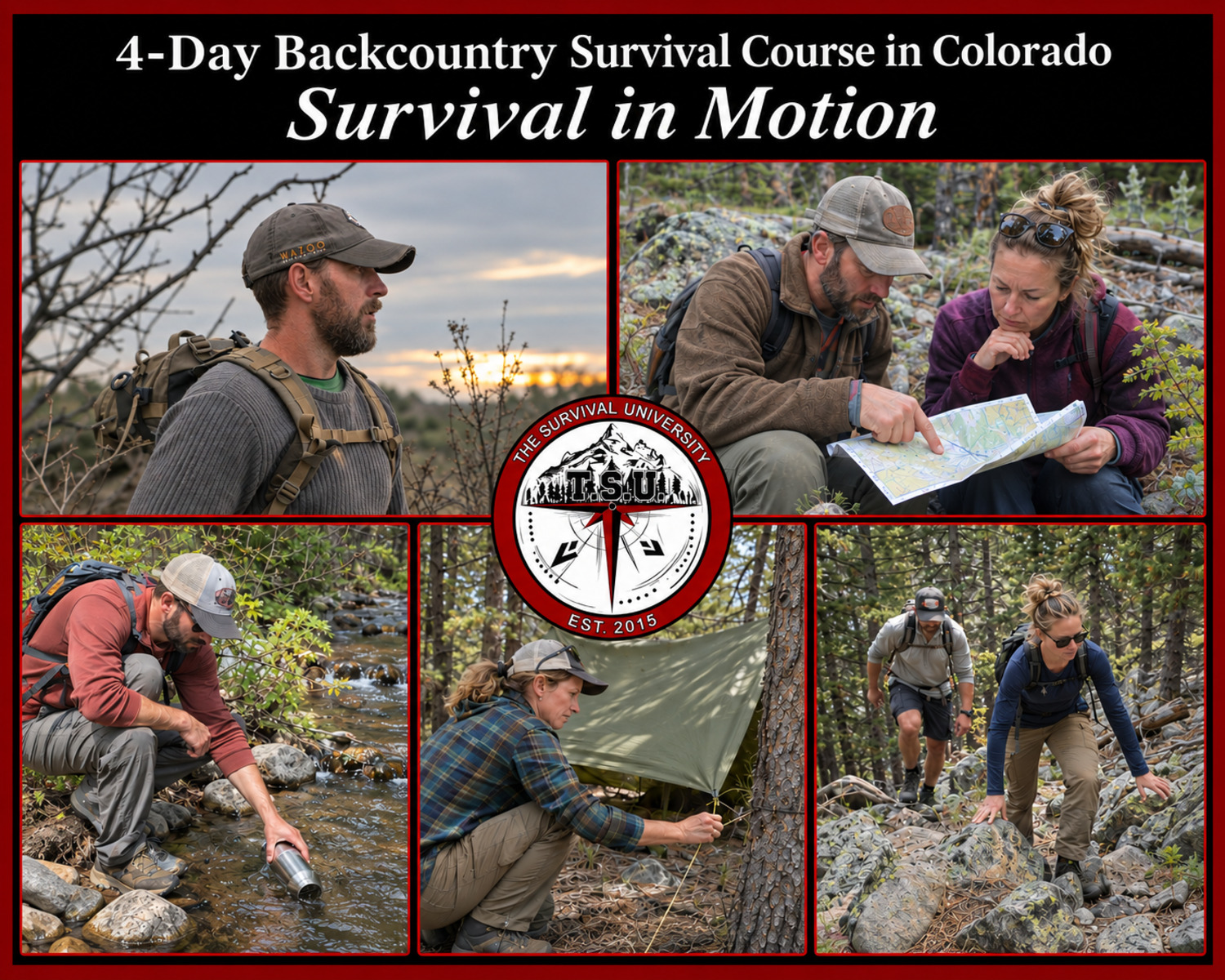
Start with a survival skills boot camp at main camp, then spend 3 days moving through the backcountry with a minimal kit of survival tools. Along the way, you’ll put those skills to work building shelters, making fire, treating water and preparing the meals you bring. We’ll also talk about what you might forage in the area and how that changes with the season. Finish with a short hike out, a debrief and a transfer back to main camp.
Click through the Description | Additional Information | Class Details tabs below for the course outline, daily schedule and preparation details.
Spend Day 1 at TSU Mountain Camp with Jason Marsteiner practicing shelter, fire and water skills and planning meals for the trail. On Days 2 through 4, take those skills into the Colorado backcountry with a minimal kit of survival tools. You’ll travel on foot, spend 2 nights in the field and work through challenges with your instructors along the route. Day 4 begins in the backcountry. After the final hike out and debrief, the group transfers back to Mountain Camp to finish the course.
You’ll carry your own gear and put it to work each time you stop. When you stop for the evening, you’ll set up shelter, treat water and prepare a meal from the food in your pack. After hiking, you still need to choose a place to sleep, set up protection from the weather and prepare for the night. In the morning, you pack up and do it again in a new location.
The field portion uses survival equipment in place of a conventional camping setup. You will carry your kit, hike through uneven terrain and spend the nights putting your shelter and other skills to use. A shelter that works at main camp needs to work where you stop for the night. A fire method you have practiced needs to work with the materials you find there. The course gives you repeated opportunities to find out where your skills hold up and where you need more practice.
Instruction continues throughout the field portion. Jason will work with you as you encounter problems, make decisions and adjust your approach. The hike out and final debrief bring those experiences together so you leave with a clear understanding of what worked, what did not and what to improve.
This course is intended for students ready to apply survival skills beyond introductory exercises. You should be comfortable carrying your equipment over uneven terrain, spending extended time outdoors and working through the discomfort that comes with a limited equipment field course. Expect active days and camp chores after the hiking is done.
2027 sessions
May 20–23 or August 26–29
Duration and level
4 days, intermediate to advanced. Jason Marsteiner leads the course with a second instructor for the backcountry portion.
Check in at 9:00 AM Mountain Time. Instruction starts at 10:00 AM. Practice shelter, fire and water skills, then review your trail meals and the kit you’ll carry into the backcountry.
Transfer from Mountain Camp to the hike location. Travel on foot, manage water along the route and choose a site where you can get shelter up before dark. Prepare your evening meal from the food you packed and spend the first field night there.
Pack your gear and continue on foot. Your instructors will give you challenges along the way. At the next overnight site, use what you learned the first night to adjust your shelter and evening routine.
Start the morning in the backcountry. Break down your shelter, pack your kit and complete the final hike out. Debrief with your instructors, then transfer back to Mountain Camp to finish the day.
Meet at The Survival University’s Mountain Camp, 71 Monarch Dr, Cripple Creek, CO 80813, at approximately 9,500 feet. Day 1 check-in is at 9:00 AM Mountain Time and instruction begins at 10:00 AM. The group travels together to the hike location on Day 2 and returns to Mountain Camp at the end of Day 4.
Save the Colorado campus driving directions before you leave. Cell service is limited and GPS can be unreliable on the approach to camp.
You’ll carry a minimal kit of survival tools over uneven ground. Keep your rain gear and water accessible as you travel. Plan for 2 nights in the backcountry, using the shelter skills you practiced on Day 1.
Be prepared for consecutive days of walking on uneven terrain with a loaded pack, followed by the work of establishing camp. Shelter preparation, water collection and other camp tasks are part of the training. You should be comfortable spending nights outdoors with limited comforts.
This is an intermediate to advanced course. The opening boot camp prepares you for the field exercises, and the following days focus on applying those skills while moving through the backcountry. If you are unsure whether your experience fits the course, contact The Survival University to discuss it before registering.
Pack your meals and snacks for the full course. Choose meals you can prepare with the equipment you’ll carry, including dinner after a day on the trail.
-
Select options This product has multiple variants. The options may be chosen on the product page
-
Select options This product has multiple variants. The options may be chosen on the product page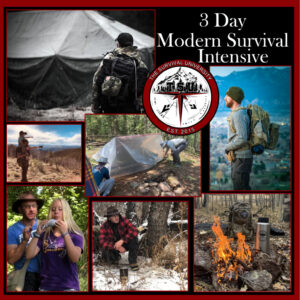
-
Select options This product has multiple variants. The options may be chosen on the product pageThis site is protected by reCAPTCHA.