Cart
Sub-Total: $0.00
26 min read
Published: October 19, 2026
On September 13, 2026, Sybil and Justin Claborn found themselves stranded in Washington's Cascade Mountains as a powerful storm swept through the Enchantments. They were miles from the nearest trailhead, their clothing was soaked, and snow was accumulating around them. Sybil could no longer walk, and Justin couldn't carry her out. He contacted emergency services, but the weather was making rescue nearly impossible.
Back home in Oklahoma City, the couple had three daughters. Sybil was 45 years old, loved hiking and skiing, and was known for her humor, outspoken personality, and devotion to her family. She and Justin had been married for fifteen years. What should have been another adventure together ended in tragedy, leaving their daughters without their mother and Justin facing the loss of his wife.
I spend a considerable amount of time looking into stories like this. Not because I enjoy reading about people dying in the wilderness, but because I want to understand what happened and whether there are lessons that might prevent another tragedy. Sometimes the mistakes are obvious. Other times, the more you investigate, the more questions you uncover. This is one of those stories. There is a lot we know about what happened that evening, but there is also quite a bit we don't know about how Sybil and Justin ended up in that situation. Some of those unanswered questions are important enough that I'm not comfortable simply declaring they went hiking without the equipment they needed.
I see people heading into the mountains with tiny packs, questionable clothing, and what appears to be little more than a bottle of water and a phone. Sometimes I wonder what their plan would be if something prevented them from getting back to their vehicle or camp. But appearances don't tell the whole story, and I can't determine someone's preparation by looking at a photograph. What I can do is take a tragedy like this, look at the circumstances we know, and ask some difficult questions about how we prepare for the unexpected. Whether you're an experienced hiker or someone heading out for your first adventure, there are things worth thinking about before you find yourself eight miles from your vehicle with no way to get back.
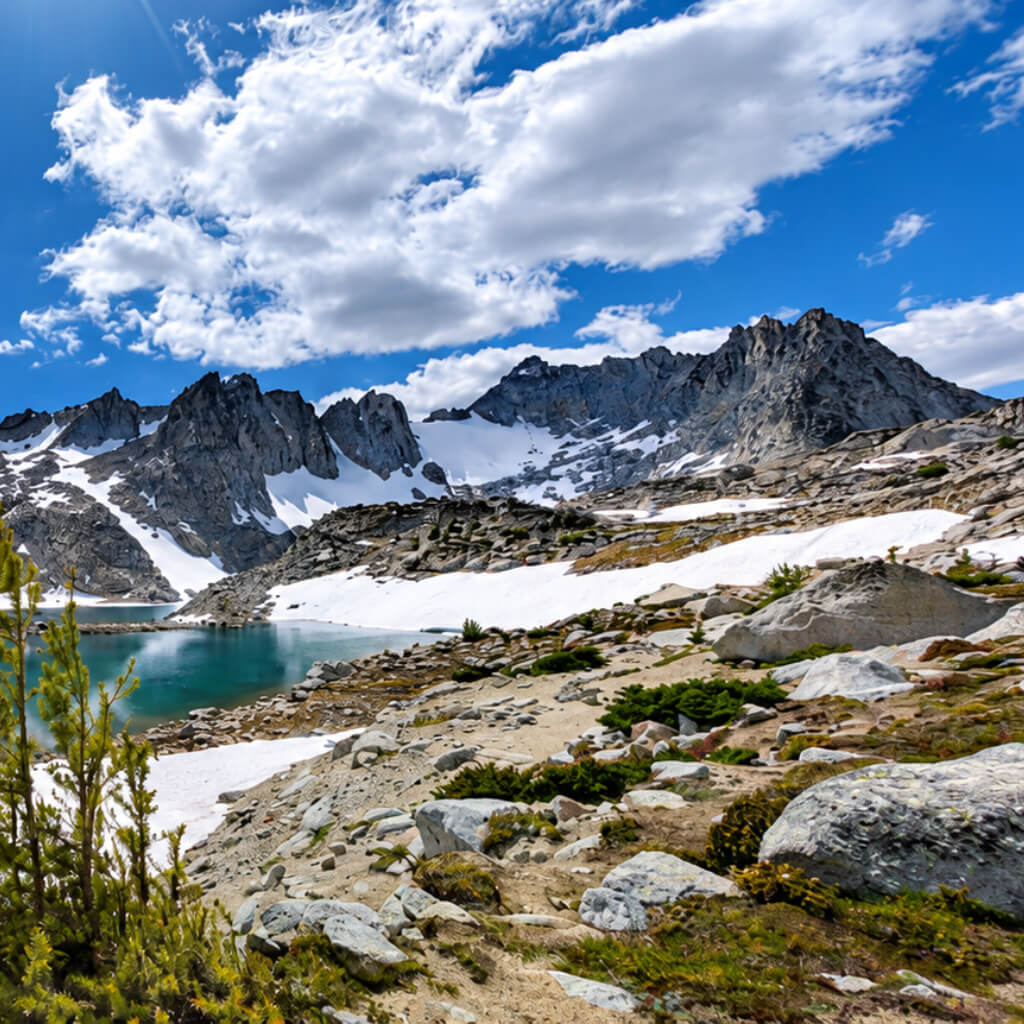
The Enchantments are located within Washington's Alpine Lakes Wilderness, near Leavenworth. It's a beautiful area of granite peaks, alpine lakes, and rugged mountain terrain. It's also a place where getting into trouble can leave you a very long way from help. The high basin, commonly referred to as the core Enchantments, sits roughly 7,000 to 8,000 feet above sea level. Depending on the route, reaching it can involve thousands of feet of climbing, exposed terrain, and miles of difficult travel.
At approximately 5:26 p.m. on September 13, Justin sent a text to 911 explaining that he and Sybil were stranded in the core Enchantments. He told dispatchers that his wife could no longer move and that he couldn't carry her out. They were estimated to be eight to ten miles from either trailhead. By 5:49 p.m., Justin had reported that Sybil was under an emergency blanket, their clothing was soaked, and they were surrounded by approximately one to two feet of snow. He also reported that they did not have overnight equipment.
Think about that situation for a moment. You're deep in the mountains, your partner can no longer walk, both of you are wet, and the temperature is dropping. You have managed to contact rescuers, but you're still facing miles of difficult terrain in a storm that is making travel dangerous even for trained rescue personnel. The sheriff's office recognized the seriousness of the situation and requested helicopter assistance. An Army helicopter launched from Yakima around 8:00 p.m., but the weather prevented it from reaching the couple. A second attempt later that evening was also unsuccessful.
Meanwhile, Justin continued communicating with dispatchers as Sybil's condition deteriorated. There is something particularly difficult about this part of the story. Help had been requested, rescuers knew approximately where they were, and people were actively trying to reach them. But none of that could make the storm disappear or shorten the miles between the couple and the ground rescue team. At approximately 3:30 a.m. on September 14, nearly ten hours after the initial emergency call, rescuers finally reached them. Sadly, Sybil was dead.
Justin was suffering from severe hypothermia. Rescuers warmed him inside a tent before he was eventually evacuated by helicopter and transported for medical treatment. The last reports I reviewed indicated that Sybil's official cause and manner of death were still under investigation. The severe weather, soaked clothing, and prolonged cold exposure are documented, and it's reasonable to conclude that severe hypothermia was the likely cause of her death. However, the medical examiner has not released an official determination, and those findings may never be made public. What we know is that a family lost someone they loved, despite an extraordinary effort to reach her.
When I first started researching this tragedy, it looked like another case of hikers getting caught in dangerous weather without adequate equipment. That was certainly the impression some of the early reporting left. But the more I looked into it, the less comfortable I became with that explanation.
Sybil has been described as an avid hiker who enjoyed spending time outdoors. There have also been unconfirmed accounts suggesting the couple may have been camping with others before becoming stranded. One account even suggested they had become separated from a larger group. Those accounts are secondhand and have not been verified. They could be completely wrong, but they raise questions worth considering rather than immediately dismissing.
When did Sybil and Justin actually enter the wilderness? Did they begin hiking that morning, or had they already been in the mountains? Were they planning an eighteen-mile traverse, a shorter hike, or something entirely different? If they had been camping, where was their equipment, and why wasn't it available when they called for help? We also don't know exactly how long they had been exposed to the storm, what equipment they originally carried, or what decisions brought them to that particular location. That's a pretty significant amount of missing information.
An experienced outdoorsperson can make poor decisions, just as someone with very little experience can make good ones. Equipment can be lost, damaged, or separated from its owner. Unexpected circumstances can force someone into a situation they never intended to face. I'm not saying any of those things happened to the Claborns. I'm saying we don't have enough information to rule them in or out, and that changes how I want to approach this story.
With so many unanswered questions, I don't think it's fair to start pointing fingers or making assumptions about the decisions Sybil and Justin made. We simply don't know enough about what happened or how they ended up in that situation. What I'm more interested in is looking at the circumstances they faced once they became stranded and what we can learn from them. We don't need to have every question answered to recognize the dangers they encountered or take away some valuable lessons that might help someone else avoid a similar tragedy.
One detail in the rescue report caught my attention immediately. Sybil was under an emergency blanket when Justin contacted rescuers. Before anyone jumps to conclusions, we don't know whether that was their only available shelter. We don't know what else they carried or what might have happened to their equipment. But I want to talk about emergency blankets because this is something I encounter regularly when teaching survival classes.
I'll ask someone what they're carrying for emergency shelter, and they'll pull out one of those little silver Mylar blankets. And that's it. Don't get me wrong, emergency blankets have their place. They're inexpensive, weigh practically nothing, and can be useful when someone knows how to use them properly. I carry them myself, and I teach my students how to use them. But they have limitations, and some of those limitations become pretty serious when you're wet, exposed to wind, and sitting in a foot or two of snow.
A reflective blanket can help reduce heat loss, but it doesn't magically create warmth. It provides little insulation from the cold ground, can be difficult to secure in strong winds, and may not provide enough protection from prolonged rain or snow. Depending on how it's used, condensation can also become an issue. If you're relying on one of those little blankets to get you through an entire night in freezing mountain conditions, you're putting an awful lot of faith in a very small, thin piece of equipment.
Let me explain it another way. Imagine driving a race car around a track at 150 miles an hour, knowing there's always a possibility you could lose control and slam into the outside retaining wall. Would you be comfortable knowing the only thing protecting you was the bumper? Of course not. You'd want a reliable braking system to help prevent the crash in the first place, along with a helmet, harness, racing suit, roll cage, and all the other safety equipment designed to protect you if something does go wrong.
Backcountry survival works the same way. Your clothing, shelter, insulation, weather awareness, navigation skills, fire-making tools, emergency communication devices, first aid supplies, and even something as simple as a reliable headlamp should all be part of your preparation. Carrying multiple ways to start a fire, along with some form of emergency tinder or another reliable heat source, can give you additional options when temperatures drop. Ideally, your knowledge, equipment, and decisions work together to prevent an emergency before it happens. And when something does go wrong, you have other options to fall back on. An emergency blanket can be one of those options, but it shouldn't be the only one.
For a broader look at prioritizing shelter and protection from exposure, read The Rule of Threes.
Here's a question you should think about before venturing out. What happens if you're halfway through a hike and suddenly can't walk anymore? Maybe you break an ankle. Maybe someone becomes sick, exhausted, or disoriented. Perhaps the weather changes so dramatically that continuing becomes more dangerous than stopping. Whatever the reason, you're not getting back to your vehicle anytime soon. Now what?
When you're moving through the mountains, your body produces a considerable amount of heat. Even in cold weather, physical activity can help you maintain your body temperature. But when that movement stops, especially if your clothing is wet, your situation can change quickly. If someone is injured, exhausted, or unable to move, they may have an even harder time staying warm. This is where the shelter system you carried suddenly becomes extremely important.
For a demanding trip into high mountain terrain, I would want something more substantial available than a basic reflective blanket. That doesn't mean you necessarily need to carry a full camping setup every time you leave the trailhead, but you should have a realistic way to protect yourself from the conditions you might encounter.
I like lightweight ripstop tarps because they're versatile, pack down small, and can provide useful protection from wind and precipitation. But carrying a tarp and knowing how to use one are two very different things. Can you set yours up in strong wind? What if there aren't any trees? Do you have enough cordage to secure it? Have you ever tried setting it up with freezing hands? Those are the sorts of things worth figuring out before you're caught in a storm. Depending on the terrain, weather, and trip, an emergency bivy, lightweight tent, or group shelter may be a better option.
And don't forget what's underneath you. You can have a perfectly good tarp protecting you from precipitation and still lose a tremendous amount of heat to the ground. If you're sitting or lying directly on snow or cold rock, you're going to need insulation beneath you. Dry clothing and insulation protected inside your pack can also make an enormous difference. Your shelter, clothing, and insulation need to work together. One piece of equipment isn't going to solve every problem.
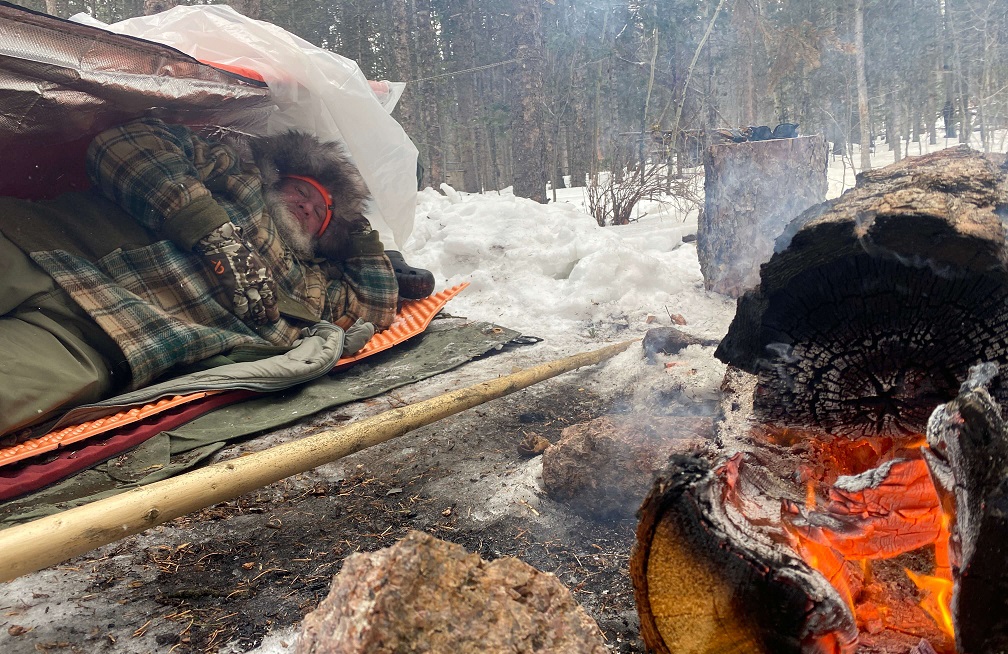
The full Enchantments traverse is roughly eighteen miles, with approximately 4,500 feet of elevation gain depending on the direction and route. Under good conditions, that's already a demanding day. At an average of two miles per hour, eighteen miles takes nine hours. Slow down to one mile per hour, and you're looking at eighteen hours. And that doesn't account for extended breaks, navigation problems, injuries, or a significant change in weather.
We don't know whether the Claborns were attempting the full traverse, so I'm not going to pretend those numbers describe their hike. But they illustrate something important about planning trips into remote areas. Distance isn't just about how far you're capable of walking. It's also about how far you might have to travel when things aren't going according to plan.
I've seen people who are physically capable of covering impressive distances struggle when something unexpected changes the circumstances. Being in excellent shape doesn't necessarily mean you know how to stay warm while sitting in freezing rain, navigate in a snowstorm, or improvise shelter when your original plan falls apart. And being strong doesn't mean you can carry another adult eight miles down a steep mountain trail.
Before committing to a route, ask yourself what happens if someone in your group can't finish. How far are you from help? What are your alternatives? Is there a safe place to stop? Could you protect everyone in your group if you had to remain there overnight? Those questions become considerably more important when you're traveling through an area where the nearest road might be an entire day's walk away.
Understanding Mountain Weather and Its Risks
One of the things that makes this tragedy especially troubling is that a significant weather system had been forecast for the Cascades. Archived National Weather Service discussions issued before September 13 called for widespread precipitation beginning Saturday night and continuing into Sunday, with increasing precipitation expected in the mountains.
That doesn't tell us what forecast the Claborns saw, whether they were already camping in the wilderness, or what weather conditions they encountered when they first entered the area. But it does provide an opportunity to discuss something I see frequently with outdoor recreation.
People check the weather for the town they're visiting, glance at the forecast, and assume it represents what they're going to experience in the mountains. It doesn't. You can leave a trailhead in comfortable temperatures, climb several thousand feet, and find yourself dealing with entirely different conditions. Rain becomes snow. Winds increase. Visibility disappears. The trail that was easy to follow in the morning becomes difficult to identify a few hours later.
That's why I encourage people to check the weather forecast for the elevations they're actually going to travel through. Pay attention to temperature, precipitation, wind, snow levels, and the timing of incoming weather. And remember, forecasts aren't guarantees. Storms can arrive earlier than expected, bring more precipitation than predicted, or become more severe at higher elevations. But don't stop there. If you're standing at the base of a mountain, take a minute to look up. What do you see? Are clouds gathering around the peaks? Can you see snow at higher elevations even though there's none where you're standing? Can you see snow blowing off the ridgelines? These are all clues that conditions higher up may be considerably different from what you're experiencing at the trailhead. You don't have to predict the weather perfectly, but you do need to pay attention to what it's telling you and be prepared to change your plans.
There's another trap worth mentioning here, and it's called normalcy bias. Maybe you've hiked the same trail in September for several years and always enjoyed beautiful weather, or perhaps you've looked at historical weather reports and noticed that conditions were generally favorable around the same time in previous years. Eventually, you become comfortable assuming that's what September in that area looks like. But last year's weather isn't this year's forecast.
Normalcy bias can create a false sense of security. We get accustomed to certain conditions, equipment, and decisions because nothing bad has happened before. Over time, we may even start cutting corners or ignoring warning signs because we've gotten away with it in the past. Then one day, the circumstances change. Experience should help you recognize those differences, not convince you that they aren't important.
I've said this before, and I'll say it again because it's something that gets people into trouble in the backcountry. Sometimes the hardest decision you can make is knowing when to turn around. Imagine spending months planning a trip. You've purchased airline tickets, reserved accommodations, arranged time away from work, and traveled halfway across the country. You've been looking forward to this adventure for a long time, but now you're several miles into the hike, and the weather starts changing.
The wind picks up. Visibility deteriorates. Maybe you're getting wet, and the person hiking with you is starting to fall behind. You know you should probably reconsider the plan, but you're already committed. You've come a long way, and turning around feels like giving up. Besides, other hikers are still pushing ahead, or you're passing people on their way down who tell you how incredible the view was from the summit. Now you're questioning whether the conditions are really that bad or if you're just being overly cautious. Sound familiar?
There's a reason I spend time teaching decision-making alongside survival skills. Knowing how to build a shelter is valuable, but recognizing when you need to stop, turn around, hunker down for the night, or change your plans can prevent a difficult situation from becoming a life-threatening emergency. Sometimes the best decision is to head back, and other times it's to stay put, get yourself protected from the elements, and wait for conditions to improve.
On some routes or adventures, there comes a point where turning around isn't necessarily the safest option anymore. You might have crossed a steep mountain pass, entered exposed terrain, traveled deep into a desert, or crossed a river that's now swollen from heavy rainfall. Even a familiar trail can become dangerous when darkness falls or weather conditions change. Sometimes continuing forward is dangerous, but going back can be just as bad or even worse. That's why you need to recognize these situations early and make decisions while you still have options. Waiting too long can leave you with very few choices, and none of them may be particularly good.
Set turnaround times, but don't rely on the clock alone. If conditions are deteriorating, your equipment is failing, or someone in your group is struggling, reassess the situation. Sometimes turning around is appropriate. Other times, stopping and seeking shelter is the safer decision.
I have no idea whether Sybil and Justin faced a decision like this or what their options were during the storm. Without knowing their route and timeline, assigning them a missed opportunity to turn around would be speculation. But the lesson is still worth considering. Don't let the money you've spent, the distance you've traveled, or the disappointment of changing your plans push you into a situation you're no longer prepared to handle. The mountain will still be there another day.
Something I've learned through years of teaching survival is that an emergency doesn't always begin with one catastrophic event. Sometimes it starts with a series of relatively small problems. You're running a little behind schedule. The temperature drops. It starts raining or snowing, and your clothing becomes damp. You take a wrong turn or spend longer than expected crossing difficult terrain. Someone begins struggling to keep up.
Individually, you might be able to handle each of those problems without much difficulty. But now you're tired, wet, cold, and losing daylight. The mistakes that would have been easy to correct earlier become harder to manage, and every new problem affects your ability to deal with the next one. By the time you realize how serious the situation has become, you may have lost several of your best options.
This is why I encourage people to build some flexibility into their plans. Allow extra time, carry enough food and lighting, have a reliable way to stay warm, protect your insulating layers from moisture, and make sure you can navigate if visibility deteriorates. And make sure someone knows where you're going and when you expect to return. It doesn't take much effort to share your planned route and expected return time with someone you trust. That information can become extremely valuable if you don't make it back when expected.
One more thing. When you're traveling with a group, plan around everyone's abilities, not just the strongest person. If one member of your group becomes injured or exhausted, the entire group has a problem. And don't assume that being part of a group automatically makes you safer. Sometimes it can actually put you at greater risk because you become comfortable and let your guard down. You might notice the weather getting worse or feel that something isn't right, but nobody else seems concerned, so you convince yourself everything is fine. Or perhaps there's someone in the group you believe has more experience, and you assume they would speak up if there were a problem. But what if they're thinking the same thing about someone else? This is how warning signs get overlooked and poor decisions go unchallenged. Everyone in the group needs to pay attention, understand their own limitations, and be willing to speak up when something doesn't feel right. Just because everyone else is comfortable continuing doesn't mean it's the right decision.
Before heading out with a group, I think it's important to have a conversation about everyone's experience, training, and abilities. Who actually knows what they're doing? Is someone a Wilderness First Responder who can handle a medical emergency? Does someone have advanced navigation skills, wilderness survival training, or mountaineering experience? Or is the entire group made up of recreational hikers who enjoy spending time outdoors but have little or no formal training? There's nothing wrong with being inexperienced, but there is something wrong with assuming the group has skills that nobody actually possesses. Establish who is going to lead the group, but also identify who should take charge in specific situations. Someone with medical training may be the best person to handle an injury, while someone with extensive navigation experience may be better suited to getting everyone back on route. And just because someone has been hiking for twenty years doesn't necessarily mean they know how to handle a survival emergency. Having these conversations before you leave can help everyone understand the group's strengths and limitations, establish some clear responsibilities, and avoid confusion when something goes wrong.
My article on assessing injuries in the backcountry takes a closer look at the medical skills discussed here.
Of all the lessons from this tragedy, this may be one of the most important. Justin was able to contact emergency services. The rescuers knew they needed help. They understood the seriousness of Sybil's condition and were actively working to reach the couple. But the weather wouldn't cooperate. Two helicopter rescue attempts were unsuccessful, and the ground team couldn't reach them until approximately ten hours after the initial call.
Think about what those ten hours would mean if you were stranded in wet clothing with freezing temperatures and snow accumulating around you. What would you do? Could you keep yourself and an injured partner warm? Do you have enough shelter and insulation to remain stationary through the night? What if the weather gets worse? What if rescuers can't reach you until the following afternoon?
I strongly encourage people to carry reliable emergency communication equipment, especially when traveling into remote areas. A satellite communicator or a phone capable of reaching emergency services can be an incredibly valuable tool. But communication isn't rescue. Making that call starts the process. Rescuers still have to organize, travel to your location, and deal with the same weather and terrain that may have trapped you in the first place.
Sometimes that takes hours. Sometimes it takes much longer. And sometimes, despite everyone's best efforts, help doesn't arrive in time. You need a plan for what happens between making the emergency call and the moment someone actually reaches you. That plan should begin long before you leave home.
I also examine cold exposure and the challenges of helping a stranded partner in my Mount Katahdin case study.
I wish we had more answers about what happened to Sybil and Justin before that first emergency call. I'd like to know when they entered the wilderness, what their original plans were, and whether the accounts about camping or traveling with other people turn out to be accurate. Maybe those details will eventually become available. Maybe they won't. But I don't need to know every decision they made to recognize how dangerous their circumstances became.
They were miles from safety, caught in severe weather, with soaked clothing and no immediate way out. Justin managed to summon help, but even a coordinated rescue effort couldn't reach them before Sybil died. That's a difficult story to read, and an even more difficult one to imagine experiencing.
I want you to think about your own equipment and preparation for a moment. Picture yourself several miles from the trailhead. The weather is deteriorating, daylight is fading, and someone with you can no longer walk. Now open your pack and consider what you actually have to work with. Not what you wish you had brought, what you left in your vehicle, or the gear sitting in your garage, but what you normally put in your pack. What you would have in that moment.
Could you build a shelter? Could you keep both of you dry and insulated from the ground? Do you have enough clothing and equipment to protect yourselves until morning? What happens if you can't start a fire or rescuers can't reach you? If you don't have good answers, I'd encourage you to reconsider what you're carrying and what you're depending on to get home.
You don't need to carry your entire camping setup on every hike, and you don't need to be an expert in every survival skill. But you should understand the environment you're entering, the problems you might encounter, and what you would realistically be able to do if your original plan failed.
That's why I teach survival. Not because I expect everyone who takes one of my classes to end up stranded in the wilderness, but because I want them to recognize problems before they become emergencies and have the skills and equipment to respond when something goes wrong.
Sybil Claborn was more than another name in a news story about someone dying in the wilderness. She was a wife, a mother of three daughters, and someone who enjoyed spending time outdoors. Her family and friends have described a woman who brought humor, energy, and love into their lives. Her husband survived a night that nobody should have to experience, and their daughters are facing a future without their mother.
I don't want the lessons from this story to overshadow that loss. We can discuss preparation, equipment, decision-making, and rescue limitations without pretending to know everything that happened or assigning blame where the facts don't support it. If anything, I hope examining stories like this encourages people to take a little more time preparing for their next adventure, carry something they might otherwise have left behind, or make a different decision when the weather begins changing.
Sometimes a small decision made before an emergency is the one that gives you more options when things go wrong.
Please remember the family behind this story when discussing what happened. There are still questions we cannot answer, and we should be careful about filling those unknowns with assumptions. What we can do is learn from the circumstances, examine our own preparation, and hopefully help someone else avoid a similar tragedy.
Jason Marsteiner is the founder and lead instructor at The Survival University, where he’s turned his obsession with staying alive into a mission to teach real-world survival skills. Forget fancy gear, Jason’s all about the know-how that gets you through the wild or a city crisis. A published author of Wilderness Survival Guide: Practical Skills for the Outdoor Adventurer, he’s distilled years of hard-earned wisdom into lessons anyone can use.
Raised in Colorado’s rugged mountains, Jason’s survival chops were forged in the wild—from Missouri forests to Arizona deserts to Costa Rican jungles. He’s navigated it all with next to nothing, earning creds like Wilderness First Responder (WFR) and SAR tracking along the way. He’s trained thousands to keep cool when 911’s out of reach, proving survival’s not just for grizzled adventurers, it’s for hikers, parents, and city slickers alike.
Jason’s mantra? Everyone should make it home safe. When he’s not running courses, he’s designing knives, mentoring newbies, or chilling in the city like the rest of us, always sharpening the skills that turn panic into power.
Published: October 19, 2026 On September 13, 2026, Sybil and Justin Claborn found themselves stranded in Washington’s Cascade Mountains as a powerful storm swept through…
Bert Goris’s death on Mount Katahdin raises lessons about hypothermia, weather, exposed terrain, and preparedness. Jason Marsteiner examines how training expands what “everything I could”...
Nash Quinn vanished on a routine ride near Laramie. His story is a powerful reminder of why preparation, communication, and humility in the outdoors matter...